
Light Rail Expansion: Trends, Insights & Future of Urban Transit
Here’s a voiceover-friendly excerpt, tailored for railway professionals:
**Light rail expansion** is transforming urban transit! Learn how careful planning, cutting-edge tech, and community focus are building better, more connected cities.
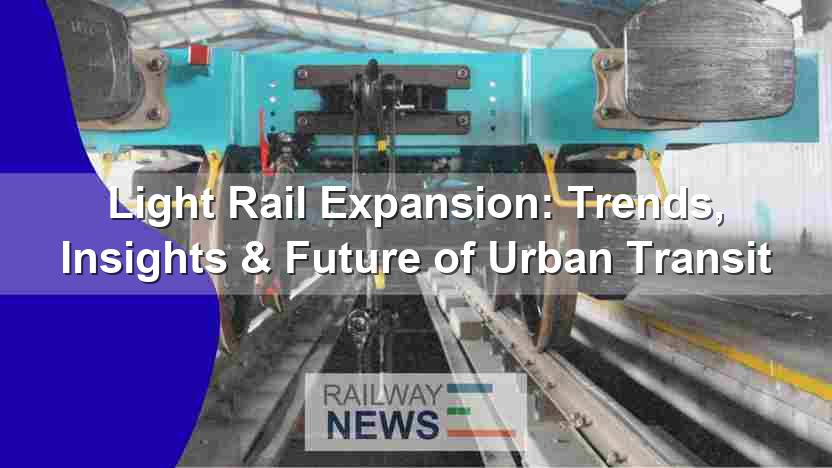
Modernizing Urban Transit: A Deep Dive into Light Rail Expansion
The relentless evolution of urban landscapes demands innovative solutions for public transportation. Among these, light rail systems have emerged as a vital component, offering a compelling blend of efficiency, sustainability, and accessibility. This article explores the intricacies of light rail expansion, exploring the key considerations, challenges, and benefits associated with extending these vital transit arteries. We will examine the planning process, technological advancements, community impact, and economic implications of these ambitious projects. From navigating complex urban environments to fostering economic growth, the expansion of light rail presents a multifaceted challenge and opportunity for cities striving to create more livable and connected communities. We will analyze the factors that contribute to successful light rail projects, providing insights for policymakers, urban planners, and anyone interested in the future of urban mobility.
Planning and Design: Laying the Foundation for Success
The success of any light rail expansion hinges on meticulous planning and design. This process begins with a detailed needs assessment, identifying current and projected ridership demands, assessing existing transportation infrastructure, and evaluating potential routes. Factors such as population density, employment centers, and connectivity to other transit modes (bus, commuter rail, subway) are crucial in route selection. Environmental impact assessments (EIA) are essential to mitigate potential negative effects on the surrounding ecosystems and communities.
The design phase involves detailed engineering considerations, including track alignment, station placement, power supply (overhead catenary system or third rail), and vehicle specifications. Integrating the light rail line seamlessly into the urban fabric requires collaboration with various stakeholders, including local residents, businesses, and government agencies. Public consultations, community meetings, and transparent communication are critical to address concerns, gather feedback, and build public support for the project. This collaborative approach helps ensure that the final design meets the needs of the community and maximizes the system’s effectiveness. The choice of rolling stock (the trains themselves) is also crucial, considering factors like passenger capacity, accessibility, energy efficiency, and compatibility with existing infrastructure. Modern light rail vehicles often incorporate features like low floors for easy boarding, advanced safety systems, and regenerative braking to enhance sustainability.
You might be interested in:
Last October 2018, we published an article about the Muse-Mandalay Railway: A high-speed game-changer for regional connectivity, boosting trade and economic growth. Click here to read – Myanmar Muse-Mandalay Rail: BRI’s High-Speed Future
Technological Advancements: Driving Efficiency and Sustainability
Light rail technology has undergone significant advancements in recent years, enhancing the efficiency, safety, and sustainability of these systems. Innovations in areas such as signaling, communication, and vehicle design are playing a pivotal role in optimizing operations and improving the passenger experience.
_Advanced signaling systems_, such as Communications-Based Train Control (CBTC), allow for more precise train movements, reducing headways (the time between trains) and increasing overall capacity. These systems use continuous communication between the train and the control center, enabling real-time monitoring and adjustments to speed and spacing.
_Vehicle design_ is also evolving, with a focus on energy efficiency and reduced environmental impact. Lightweight materials, regenerative braking systems (which capture energy during deceleration), and aerodynamic designs contribute to lower energy consumption. The use of electric propulsion systems powered by renewable energy sources further enhances the sustainability of light rail. Other technologies, like automated platform gates and real-time passenger information systems, enhance safety and improve the overall travel experience. These technological advancements contribute to a more reliable, efficient, and sustainable mode of urban transportation.
Community Impact and Economic Development
Light rail expansion projects often have a significant impact on the communities they serve, fostering economic development and shaping the urban landscape.
_Increased accessibility_ to jobs, education, and other services can be a major benefit, particularly for residents of underserved areas. Light rail can connect communities to employment centers, universities, and healthcare facilities, creating opportunities for social mobility and economic advancement.
_Transit-oriented development (TOD)_ is a key concept in light rail planning, encouraging mixed-use development near stations. This approach promotes higher-density housing, retail, and office spaces within walking distance of transit stops, reducing reliance on private vehicles and creating vibrant, walkable neighborhoods. Light rail projects can also stimulate economic growth by creating jobs during construction and operation, attracting investment, and increasing property values along the line. Improved public transportation can lead to reduced traffic congestion, air pollution, and greenhouse gas emissions, contributing to a healthier and more sustainable environment. The revitalization of urban corridors and the creation of new public spaces are additional benefits often associated with these projects.
Conclusions
To summarize, the expansion of light rail systems represents a strategic investment in the future of urban mobility. From meticulous planning and innovative design to the implementation of advanced technologies and a focus on community impact, the success of these projects requires a detailed and collaborative approach. We’ve explored the critical role of detailed needs assessments, environmental considerations, and stakeholder engagement in the planning and design phases. The adoption of advanced signaling systems, energy-efficient rolling stock, and other technological innovations underscores the commitment to enhancing efficiency and sustainability. Additionally, the positive impact on community development, including increased accessibility, transit-oriented development, and economic growth, highlights the far-reaching benefits of light rail expansion.
However, the challenges associated with these projects, such as high initial costs, complex construction processes, and potential disruptions, must be carefully managed. Successful projects require robust funding mechanisms, effective project management, and ongoing community engagement. Looking ahead, the integration of smart technologies, such as real-time passenger information and automated operations, will further enhance the efficiency and attractiveness of light rail systems. As cities continue to grow and face increasing pressure to address climate change and traffic congestion, light rail will play an even more critical role in creating sustainable, livable, and connected urban environments. The lessons learned from projects like the *Foothill Gold Line extension* and similar initiatives around the world will continue to shape the future of urban transit, paving the way for more efficient, accessible, and sustainable transportation options for generations to come. Light rail expansion is not just about building tracks and trains; it’s about building better cities.

Railway infrastructure, rolling stock and transport technologies specialist focused on global rail industry developments, high-speed rail systems, signaling technologies and freight transportation. Covering railway investments, public transport modernization, rail operations and international mobility projects across Europe, Asia and North America.
RELATED POSTS

October 8, 2026 1:15 pm
Alstom secured a €1bn contract to build 13 automated trains,...

October 1, 2026 7:09 am
United States regulators confirmed a September 30 deadline for the...

October 4, 2026 5:14 pm
Alstom secured a CA$4.7 billion order from VIA Rail Canada...

October 5, 2026 6:12 pm
AECOM and Jacobs secured a contract in September 2026 to...

October 1, 2026 12:13 am
Illinois approved $1.5 billion annually for the Northern Illinois Transit...

October 4, 2026 11:08 pm
Sound Transit confirmed the September 30 opening of Seattle Pinehurst...