
Lake State Railway Invests Four Tier 4 Locomotives First US Short Line
Lake State Railway Co. acquired four EMD SD70ACe-Tier 4 locomotives, first US short line to operate new Tier 4 units.
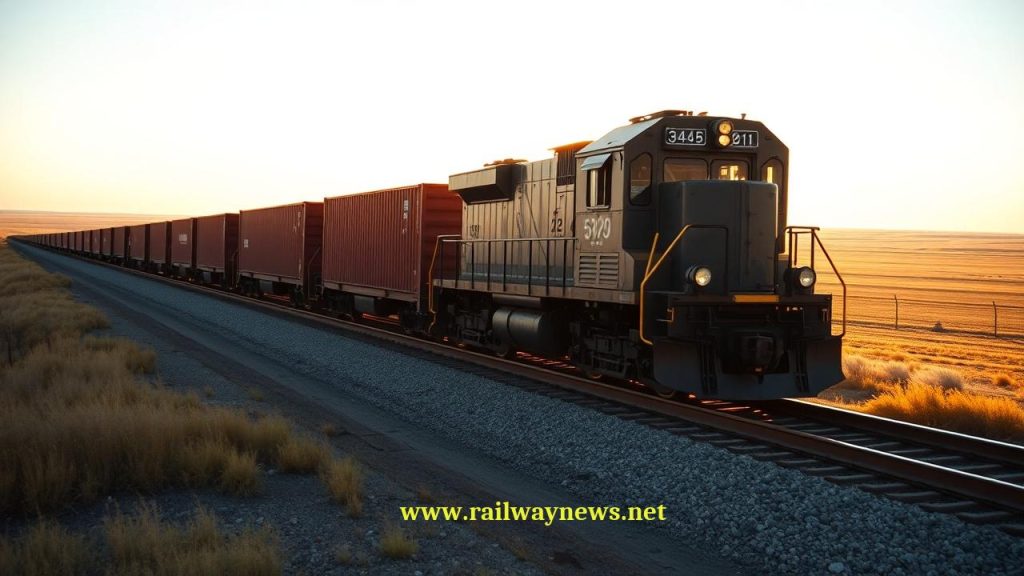
⚡ In Brief: Michigan-based Lake State Railway Co. has acquired four EMD SD70ACe-Tier 4 locomotives to improve fuel efficiency and sustainability, becoming the first short line in the U.S. to operate new high-horsepower Tier 4 units.
SAGINAW, MI – Lake State Railway Co. (LSRC) confirmed it has received four new EMD SD70ACe-Tier 4 locomotives as part of a fleet modernization program. The new units replace five legacy locomotives with an average age of 40 years. The acquisition makes LSRC the first American short-line operator to purchase and deploy new-build, high-horsepower Tier 4-compliant locomotives.
What Are the Technical Specifications?
The acquisition involves four Electro-Motive Diesel (EMD) SD70ACe-Tier 4 freight locomotives, manufactured by Progress Rail, a Caterpillar company. Each unit is rated at 4,400 horsepower and meets the U.S. Environmental Protection Agency’s (EPA) stringent Tier 4 emissions standards, which mandate significant reductions in particulate matter and nitrogen oxides. The locomotives are equipped with data-driven systems for predictive maintenance, intended to increase reliability and operational uptime. The total value of the procurement was not disclosed by the company.
Key Technical Data
| Parameter | Value |
|---|---|
| Technology / System Name | EMD SD70ACe-Tier 4 Locomotive Acquisition |
| Total Value | Not disclosed |
| Parties Involved | Lake State Railway Co., Progress Rail (EMD) |
| Timeline / Completion | Delivery confirmed, in-service date not specified |
| Country / Corridor | United States / Michigan |
Where Does This Technology Stand in the Market?
The EMD SD70ACe-Tier 4 competes directly with Wabtec’s ET44AC locomotive in the North American high-horsepower freight market. While both units deliver 4,400 horsepower and meet Tier 4 standards, Wabtec’s ET44AC (derived from the General Electric ES44AC) has held a dominant market share for new Tier 4 orders since the standard was implemented in 2015. LSRC’s selection of the Progress Rail (EMD) model is notable, as most short-line operators typically acquire older, second-hand locomotives from Class I railroads rather than investing in new-build units. This purchase signals a significant capital investment and confidence in the EMD platform by a regional operator.
Editor’s Analysis
Lake State Railway’s investment in fuel-efficient, high-reliability locomotives is a strategic move to strengthen its competitive position against the trucking industry. This fleet modernization directly addresses shipper concerns over cost volatility and supply chain reliability. As trucking rates are forecasted to see significant increases through 2025, rail’s improved efficiency and capacity can capture a greater share of the freight market (Source: DAT iQ, 2024). LSRC is positioning itself not just as a sustainable operator, but as a more predictable and cost-effective logistics partner.
FAQ
Q: What makes a Tier 4 locomotive more sustainable?
A: Tier 4 locomotives reduce particulate matter and nitrogen oxide emissions by over 90% compared to their Tier 2 predecessors, mandated by the EPA for all new locomotives built since 2015. They also offer superior fuel efficiency, which lowers both operating costs and carbon dioxide output per ton-mile.
Q: How many locomotives did Lake State Railway acquire and replace?
A: LSRC acquired four new EMD SD70ACe-Tier 4 locomotives. This acquisition allowed the railway to retire five older, less efficient legacy locomotives from its active fleet.
Q: Is it common for short-line railroads to buy new locomotives?
A: No, it is relatively uncommon. Most short-line and regional railroads purchase used locomotives cascaded down from larger Class I railroads, making LSRC’s investment in four new-build, high-horsepower units a significant and unusual commitment to fleet modernization.

Railway infrastructure, rolling stock and transport technologies specialist focused on global rail industry developments, high-speed rail systems, signaling technologies and freight transportation. Covering railway investments, public transport modernization, rail operations and international mobility projects across Europe, Asia and North America.
RELATED POSTS

October 8, 2026 1:15 pm
Alstom secured a €1bn contract to build 13 automated trains,...

October 1, 2026 7:09 am
United States regulators confirmed a September 30 deadline for the...

October 8, 2026 12:18 pm
Siemens Mobility signed an agreement with VinSpeed to supply 350...

October 4, 2026 5:14 pm
Alstom secured a CA$4.7 billion order from VIA Rail Canada...

October 5, 2026 6:12 pm
AECOM and Jacobs secured a contract in September 2026 to...

October 1, 2026 12:13 am
Illinois approved $1.5 billion annually for the Northern Illinois Transit...