
Kassel RegioTram Project: Germany’s Tram-Train Integration
Kassel’s RegioTram integrates urban trams and regional railways, improving connectivity and travel. This successful railway sector project offers valuable insights for other cities.
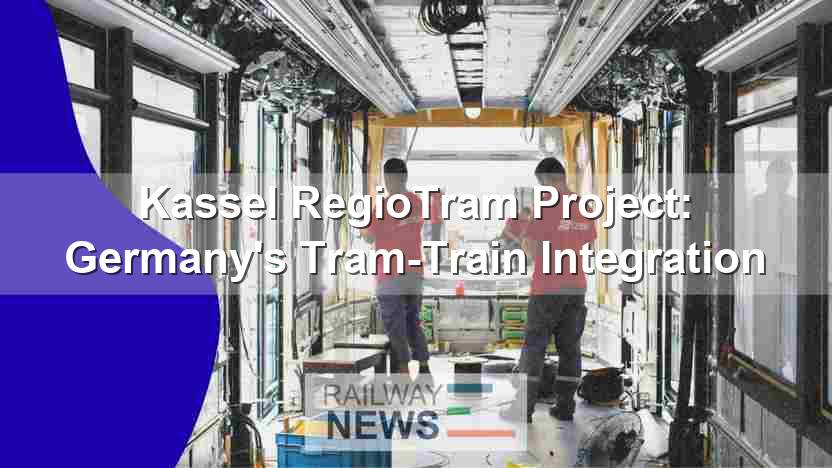
This article explores the successful implementation of the Kassel tram-train system in Germany, a pioneering project demonstrating the integration of urban tramway and regional railway networks. The project aimed to enhance public transportation within Kassel and its surrounding communities by extending existing urban tram services onto previously freight-only lines. This integration was envisioned to improve connectivity, increase service frequency, and offer passengers more seamless travel experiences, reducing the need for transfers. The project’s success is examined through the lenses of its infrastructure development, rolling stock deployment, signaling and communication systems, and its long-term impact on the city’s transportation landscape. The analysis focuses on the challenges faced and solutions implemented, providing valuable insights for other cities considering similar integrated transport solutions. This case study highlights the multifaceted considerations involved in such projects, encompassing technical, financial, and operational aspects.
Infrastructure Development: Bridging the Gap Between Tram and Rail
The Kassel RegioTram network, spanning 122 km, required a significant infrastructure upgrade. This involved the construction of 10 km of new track to extend tram lines onto existing railway lines. Signaling systems were extensively modified to accommodate the increased service frequency required by the tram-train integration. A crucial element involved physically linking the tram and DB (Deutsche Bahn) networks. This was achieved by repurposing part of an existing tram tunnel beneath the Hauptbahnhof (Hbf; Main Train Station) to create three new low-level platforms dedicated to RegioTram services. To compensate for the disruption of existing tram lines caused by the tunnel repurposing, new track was laid between Scheidemann-Platz and Luther-Platz, restoring service to the northwest city center. The integration of the RegioTram services also revitalized the Hauptbahnhof, particularly the RT5 route which now offers increased frequency between the Hbf and the Kassel-Wilhelmsh&öhe station, previously the more significant railway hub due to its ICE (Intercity-Express) high-speed rail connection.
Rolling Stock: A Blend of Technology and Accessibility
The RegioTram system utilizes a fleet of three-car, 75% low-floor Alstom Regio Citadis vehicles built in Salzgitter. These modern, air-conditioned vehicles are divided into two types: two-system electric and hybrid electro-diesel. The two-system electric vehicles (numbers 701-718) operate on both the DB’s 15 kV AC railway network and the Kassel tram system’s 750V DC network. Unlike traditional trams, these RegioTrams are bi-directional. The hybrid electro-diesel vehicles (numbers 751-760), a world first in tram operations, feature roof-mounted diesel engines, allowing operation on non-electrified lines to Wolfhagen, while maintaining the low-floor profile. This innovative approach avoided costly electrification upgrades. Both types boast features enhancing passenger comfort and accessibility, including luggage racks, wheelchair accessibility, and space for bicycles and strollers. The central car offers seating more suitable for longer journeys. The fleet’s aesthetic is further enhanced by interior designs inspired by the Brothers Grimm fairy tales, reflective of Kassel’s cultural heritage.
Signaling and Communication: Seamless Operation Across Networks
The successful integration of the tram-train system required sophisticated signaling and communication solutions. Because the trams use roadways that are also shared with buses, the signalling system employs up to three different displays to cater to different modes of transport. RegioTrams themselves feature an illuminated internal display showing the route progress and audio announcements. Additionally, seamless ticketing is ensured through integration with DB ticketing systems, including the Hessen Ticket (regional ticket), municipal authorities, and the NVV (Nordhessische VerkehrsVerbund; North Hessian Transport Association). Ticket vending machines are also available on board the vehicles.
Project Evaluation and Future Prospects
The Kassel RegioTram project successfully demonstrates a viable model for integrating tram and railway systems. It has significantly improved public transport in Kassel and the surrounding region, enhancing connectivity and offering more efficient and convenient travel. The project, however, came with considerable financial investment. Although the majority of funding was provided by federal and state governments, local authorities also made contributions. The project cost €180 million, with approximate infrastructure and rolling stock costs being €171 million (€95 million for infrastructure and €85 million for rolling stock).
| Project Parameter | Value |
|---|---|
| Project Name | Kassel RegioTram |
| Total Network Length | 122 km |
| New Track Construction | 10 km |
| Total Project Cost | €180 million |
| Infrastructure Cost | ~€171 million (estimate) |
| Rolling Stock Cost | ~€85 million (estimate) |
| Main Funding Sources | Federal and State Governments (90%) & Local Authorities |
| Rolling Stock Supplier | Alstom |
| Number of Vehicles | 28 (2-system and Hybrid) |
| Routes Served | RT2, RT3, RT4, RT5 |
The project’s success lies in its ability to seamlessly integrate different modes of transport, providing a unified and efficient public transportation system. The implementation of innovative rolling stock, coupled with upgraded infrastructure and advanced signaling systems, has significantly improved connectivity and travel times for passengers. The cost-effectiveness of the project, despite its substantial initial investment, highlights the long-term benefits of integrated transport systems. The Kassel RegioTram project has become a benchmark for other cities and transport operators considering similar initiatives, showcasing the positive impact of such detailed transport planning and implementation. The success of this project underlines the importance of integrating urban and regional networks to improve overall transport efficiency and passenger satisfaction. Further development focuses on optimizing service frequency and addressing any remaining minor infrastructure upgrades. The integration achieved in Kassel serves as a significant contribution to sustainable urban and regional mobility, offering a valuable case study for future integrated transit projects worldwide.
Company Information:
- Alstom: A leading global player in rail transport infrastructure, providing rolling stock, signaling, and other railway solutions.
- Bombardier Transportation (formerly involved in trials): A major global manufacturer of railway equipment and systems.
- Deutsche Bahn (DB): Germany’s national railway company.
- Kasseler Verkehrs-Gesellschaft (KVG): Kassel’s local public transport operator.
- Nordhessische VerkehrsVerbund (NVV): The North Hessian Transport Association responsible for regional transport planning.

Railway infrastructure, rolling stock and transport technologies specialist focused on global rail industry developments, high-speed rail systems, signaling technologies and freight transportation. Covering railway investments, public transport modernization, rail operations and international mobility projects across Europe, Asia and North America.