
Jakarta-Bandung HSR: Southeast Asia’s Rail Revolution
Southeast Asia’s first high-speed rail, the Jakarta-Bandung line, is a game-changer. Discover how this groundbreaking project is transforming regional connectivity and setting a new standard for high-speed rail development!
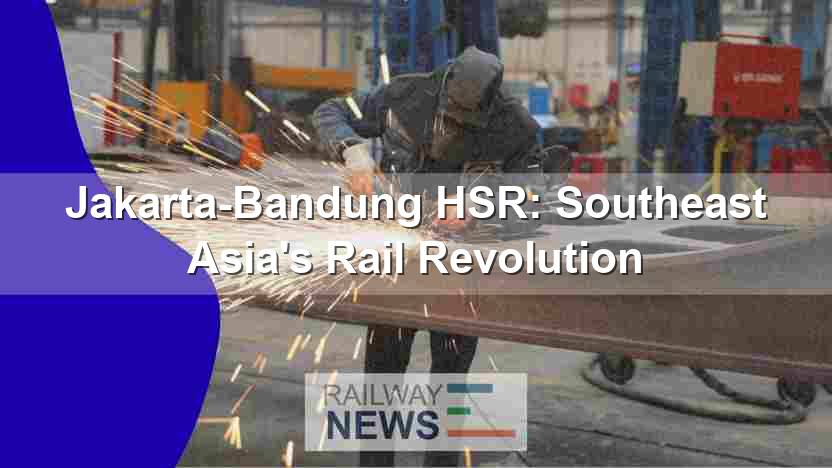
This article explores the landmark Jakarta-Bandung High-Speed Railway (HSR), the first of its kind in Southeast Asia. This ambitious project, a collaborative undertaking between China and Indonesia, represents a significant leap forward in regional infrastructure development. We will examine the project’s technical specifications, the challenges faced during its implementation, its economic impact on Indonesia, and its broader implications for the future of high-speed rail in the region. The successful completion of this project not only promises to revolutionize travel between Jakarta and Bandung but also serves as a critical case study for future HSR initiatives across Southeast Asia, highlighting both the opportunities and the considerable hurdles involved in such large-scale ventures. We will delve into the specifics of the project’s construction, financing, and the transfer of technology and expertise from China to Indonesia. Finally, we will analyze the potential long-term socio-economic benefits for Indonesia, focusing on job creation, technological advancement, and regional development.
Project Overview and Technical Specifications
The Jakarta-Bandung HSR, a 142km rail line connecting Indonesia’s capital, Jakarta, to Bandung, the capital of West Java province, is designed for a maximum operating speed of 350 km/h (kilometers per hour). This significantly reduces travel time between the two cities from over three hours to approximately 40 minutes. The project utilizes Chinese high-speed rail standards, technologies, and equipment, marking the first time these have been implemented on a foreign line on this scale. The construction is undertaken by Kereta Cepat Indonesia China (KCIC), a joint venture between Chinese and Indonesian companies. The project’s four stations are strategically located to optimize passenger flow and connectivity with existing transportation networks. The use of advanced signaling and control systems ensures safe and efficient train operations, while the infrastructure itself is designed to withstand the region’s climatic conditions and seismic activity.
Financing and Implementation Challenges
The substantial financial backing for the project is primarily provided through loans from the China Development Bank. This highlights the significant role of foreign investment in financing large-scale infrastructure projects in developing nations. However, the project’s implementation has not been without its challenges. Initial delays were attributed to issues concerning land acquisition and licensing procedures, common obstacles in large infrastructure developments, particularly in densely populated areas. These delays underscore the importance of robust regulatory frameworks and effective stakeholder engagement in ensuring project timelines are met. The successful navigation of these challenges demonstrates the importance of collaborative problem-solving between the involved governments and corporations.
Economic and Social Impacts
Beyond its immediate impact on travel times, the Jakarta-Bandung HSR is expected to generate significant economic benefits for Indonesia. The project has created thousands of jobs, both directly in construction and indirectly through related industries. CRC (China Railway Corporation) has committed to training local workers, fostering the development of a skilled workforce in high-speed rail technology. Additionally, the improved connectivity is anticipated to stimulate economic activity in West Java, boosting tourism, trade, and investment. The enhanced accessibility is also expected to facilitate regional integration and development, connecting previously isolated communities.
Technological Transfer and Capacity Building
The project represents a significant transfer of technology and expertise from China to Indonesia. The involvement of Chinese companies in construction, operation, and maintenance provides opportunities for Indonesian engineers and technicians to gain valuable experience and skills in high-speed rail technology. This knowledge transfer is crucial for Indonesia’s long-term development and its capacity to undertake similar projects independently in the future. The establishment of training programs and ongoing collaboration ensures the sustainable development of the Indonesian high-speed rail sector. This collaborative approach strengthens bilateral relations and fosters mutual economic growth.
Conclusions
The Jakarta-Bandung High-Speed Railway stands as a pivotal infrastructure project, not just for Indonesia, but for the entire Southeast Asian region. This first-of-its-kind venture showcases the potential of high-speed rail to transform regional connectivity, stimulate economic growth, and create substantial employment opportunities. While the project faced challenges related to financing and land acquisition, its successful implementation, driven by a strong partnership between China and Indonesia, highlights the importance of effective collaboration and strategic investment in large-scale infrastructure initiatives. The project’s lasting impact extends beyond the immediate benefits of reduced travel time; it is a catalyst for technological advancement, capacity building, and regional economic integration. The successful transfer of Chinese high-speed rail expertise and technology to Indonesia creates a blueprint for future HSR projects in the region, paving the way for enhanced connectivity, economic prosperity, and regional development across Southeast Asia. The completion of the Jakarta-Bandung HSR serves as a powerful testament to the transformative potential of high-speed rail and the benefits of international collaboration in addressing significant infrastructure development needs. Further development of similar projects will undoubtedly contribute to economic integration and sustainable development across the region, enhancing regional competitiveness and attracting further foreign investment.

Transport and railway industry editor covering global rail infrastructure, sustainable mobility, urban transit systems and next-generation railway technologies with a focus on accessible and industry-focused reporting.
RELATED POSTS

October 8, 2026 1:15 pm
Alstom secured a €1bn contract to build 13 automated trains,...

October 4, 2026 5:14 pm
Alstom secured a CA$4.7 billion order from VIA Rail Canada...

October 1, 2026 3:12 am
Greenbrier confirmed Brian Comstock as new president and CEO effective...
October 9, 2026 3:11 pm
Wabtec secured a $700 million service deal in Guinea to...
October 1, 2026 8:12 am
Knorr-Bremse expanded its UK rail adhesion trial on Chiltern Railways...

October 9, 2026 6:15 am
Transflo launched a 40 railcar transload terminal in Petersburg, Virginia,...