
Istanbul Metro Project: Railway Technology, Expansion & Modernization
Istanbul’s metro expansion integrates cutting-edge railway technology, boosting efficiency and improving city life. The M2 line’s success showcases this commitment to modern transit.
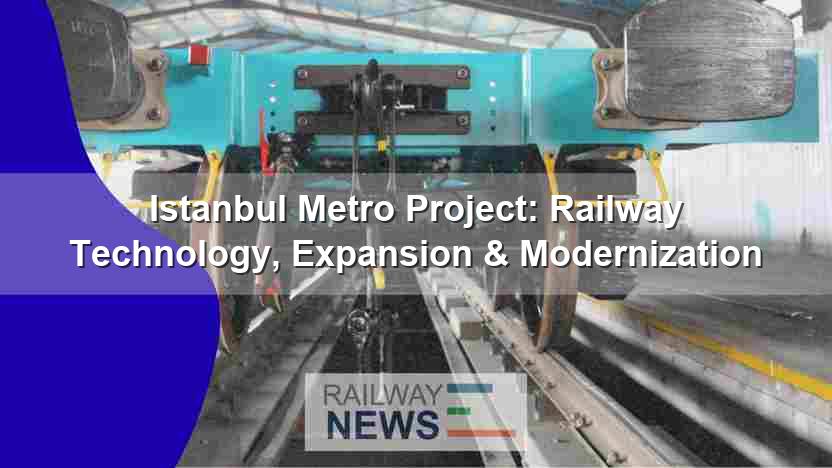
This article explores the technological advancements and infrastructural development of the Istanbul Metro system, focusing on its expansion and modernization efforts. The project aims to analyze the various technological components employed in the construction and operation of the metro lines, highlighting the challenges overcome and the solutions implemented. Additionally, the article will delve into the significant role the Istanbul Metro plays in addressing the city’s growing transportation needs and improving the overall quality of life for its citizens. We will examine the evolution of the system, from its initial lines to its current expansion projects, with a particular emphasis on the integration of cutting-edge technologies and sustainable practices. The analysis will also consider the economic and social impacts of the metro’s expansion, as well as future projections for its continued growth and development within the broader context of Istanbul’s urban planning strategies. The project’s success is measured by its ability to provide efficient, reliable, and safe mass transit, alleviating traffic congestion and contributing to a more environmentally friendly urban environment.
The M2 Line: A Backbone of Istanbul’s Transit System
The M2 line (Kadiköy-Kartal) stands as a testament to Istanbul’s commitment to modernizing its public transportation. Inaugurated in August 2012, this 21.66 km line on the Asian side connects 16 stations, serving an estimated 700,000 passengers daily. The impressive scale of the project is evident in its $1.6 billion budget. The platform lengths, at 180 meters, accommodate the long eight-car trainsets. The use of 1-5kV DC overhead electrification is a standard practice for this type of metro system, ensuring efficient power delivery. The line’s success is a clear demonstration of the effectiveness of investing in robust infrastructure to meet the transport demands of a rapidly growing metropolis. This line’s construction also presented several engineering challenges, including navigating densely populated areas and incorporating measures to minimize disruption to existing infrastructure.
European Side Expansion and Technological Integration
The expansion of the Istanbul Metro system extends beyond the M2 line. Significant investments have been made to extend and upgrade the European side lines. This includes the extension from 4 Levent to Atatürk Oto Sanayi station (officially inaugurated January 30, 2009) and the ambitious Taksim-Yenikapı extension, which aims to integrate the metro with the Marmaray (cross-Bosphorus suburban rail service) and the M1 light metro line. This integration necessitates the seamless implementation of signaling and train control systems to ensure efficient and safe interoperability between different lines and technologies. The Taksim-Yenikapı section, a 5.2 km stretch with four new stations (Taksim, Sishane, Unkapanı, and Yenikapı), encountered delays due to significant archaeological finds during construction, highlighting the complexities of urban infrastructure projects.
Technological Partnerships and Innovations
The Istanbul Metro project benefited from collaborations with leading international companies in the railway technology sector. CAF (Construcciones y Auxiliar de Ferrocarriles) supplied 30 eight-car trainsets for the Kadiköy-Kartal line, each capable of carrying 1,300 passengers. Thales provided the train control and signaling systems, including SelTrac CBTC (Communication-Based Train Control), a cutting-edge technology for enhanced safety and operational efficiency. Siemens AG contributed to the signaling infrastructure, while Alstom played a crucial role in electromechanical works, supplying rolling stock, including air-conditioned railcars with LCD screens, and key components like traction motors and switchgear. Eurotem also contributed significantly by supplying new rolling stock. This collaborative approach leveraged global expertise to implement a technologically advanced and reliable metro system.
Project Summary and Future Outlook
The Istanbul Metro project represents a remarkable achievement in urban transportation development. The table below summarizes key project details:
| Project Details | M2 Line (Asian Side) | European Side Extensions |
|---|---|---|
| Length (km) | 21.66 | 23 (Total Extended Length) |
| Budget (USD million) | 1600 | 593 |
| Type of Project | New Line Construction | Line Extension & Upgrade |
| Connection of Cities | Kadiköy – Kartal | Various locations across European side, connecting with Marmaray and M1 |
| Number of Stations | 16 | Variable, depending on section |
| Track Gauge (European Side) | 1,435 mm (Standard Gauge) | 1,435 mm (Standard Gauge) |
The success of the Istanbul Metro is multifaceted. It showcases a commitment to large-scale infrastructure development, the effective integration of advanced railway technologies from diverse international partners, and a focus on improving the daily lives of Istanbul residents by providing efficient and reliable public transport. The project’s challenges, including archaeological discoveries and the complexities of working within a densely populated urban environment, were addressed effectively through careful planning and collaboration. The ongoing expansion demonstrates a long-term vision for improving Istanbul’s transportation infrastructure and its continuing commitment to sustainable urban development. Future plans should consider further integration with other transport modes, smart ticketing systems, and increased accessibility for all users. The continued success of the Istanbul Metro system will be vital in supporting the city’s growth and development, whilst contributing significantly to a more sustainable and efficient urban environment.
Company Information:
- CAF (Construcciones y Auxiliar de Ferrocarriles): A Spanish rolling stock manufacturer.
- Thales Group: A French multinational company specializing in aerospace, defense, transportation, and security.
- Siemens AG: A German multinational conglomerate corporation active in various fields, including infrastructure and transportation.
- Alstom: A French multinational that designs, manufactures, and maintains rolling stock for railways.
- Eurotem: A Turkish rolling stock manufacturer.

Railway infrastructure, rolling stock and transport technologies specialist focused on global rail industry developments, high-speed rail systems, signaling technologies and freight transportation. Covering railway investments, public transport modernization, rail operations and international mobility projects across Europe, Asia and North America.