
Ireland’s €1 Billion Rail Upgrade: A Nationwide Transformation
Ireland pledges €1 billion over five years to revitalize its national rail network, focusing on modernizing track maintenance, signaling systems, and level crossings while prioritizing safety improvements under regulatory oversight.
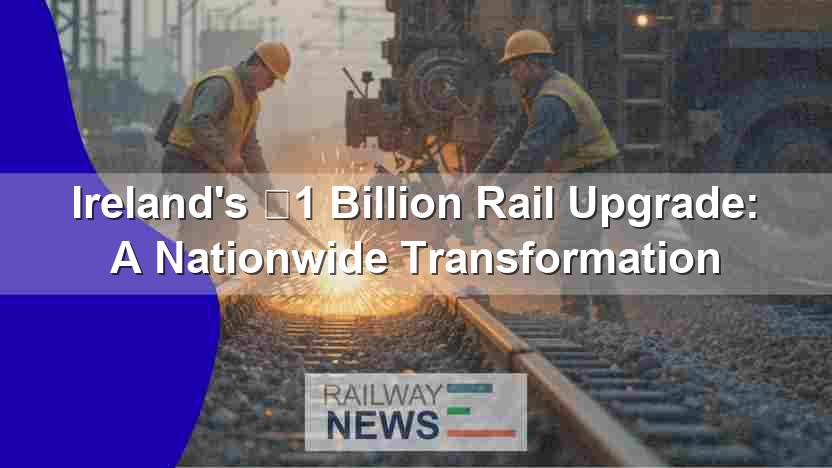
Ireland’s €1 Billion Investment in Rail Infrastructure: A Detailed Overview
This article explores the significant €1 billion investment pledged by the Irish government for the revitalization of its national rail network over a five-year period (2020-2024). This substantial commitment represents a considerable increase in funding compared to previous years, signaling a renewed focus on modernizing and enhancing Ireland’s railway infrastructure. The investment aims to address critical areas such as track maintenance and renewal, signaling system upgrades, and overall safety improvements. The scope of the project is extensive, encompassing the entire Iarnród Éireann (Irish Rail) network, a complex system comprising thousands of kilometers of track, numerous bridges, level crossings, and stations. This investment’s impact extends beyond immediate improvements, promising long-term benefits such as improved journey times, increased passenger capacity, and enhanced safety for both passengers and freight operations. We will examine the key aspects of this investment, its projected impact, and the regulatory framework overseeing its implementation.
Strategic Infrastructure Improvements
The core of the €1 billion investment focuses on essential infrastructure upgrades. This includes extensive track relaying, a crucial process to maintain the structural integrity and operational efficiency of the rail network. Out-of-date signalling systems, often a major bottleneck for railway performance and safety, are slated for complete modernization. This upgrade is expected to improve the overall capacity and reliability of the network, allowing for more frequent and faster train services. Further investment will target improvements to level crossings, enhancing safety for road users and rail traffic. The scale of this undertaking is substantial, considering the extensive length of track and the numerous bridges, tunnels, and other structures within the Iarnród Éireann network.
Safety Enhancements and Regulatory Oversight
Safety is paramount in rail operations. The investment program explicitly addresses safety concerns through improvements to signalling systems, level crossings, and overall track maintenance. This commitment is aligned with international best practices and reflects the Irish government’s commitment to providing safe and reliable rail transportation. The Commission for Rail Regulation, an independent monitoring body, will rigorously oversee the program’s execution in compliance with the European Union (Regulation of Railways) Regulations, 2015, ensuring transparency and adherence to safety standards. This regulatory framework adds a layer of accountability, ensuring efficient and safe implementation of the project.
Economic and Social Impacts
Beyond the direct infrastructure improvements, the €1 billion investment holds significant economic and social implications. The project will create numerous jobs in the construction, engineering, and rail maintenance sectors, stimulating economic growth. Improved rail services are likely to encourage more people to utilize public transport, reducing road congestion and improving air quality. Faster and more reliable rail connections can also boost regional economic development by facilitating trade and tourism. The project’s long-term benefits extend to environmental sustainability, contributing to a greener and more efficient transportation system for Ireland.
Conclusion: A Vision for the Future of Irish Rail
The Irish government’s €1 billion commitment to its rail infrastructure represents a transformative investment with far-reaching consequences. The planned improvements, encompassing track renewal, signaling upgrades, and safety enhancements, are crucial for modernizing and optimizing the Iarnród Éireann network. This ambitious project, overseen by the Commission for Rail Regulation, is designed not only to improve efficiency and safety but also to foster economic growth and enhance the quality of life for Irish citizens. The substantial increase in funding compared to previous periods underlines the government’s long-term commitment to developing a sustainable and efficient rail system. The success of this program hinges on effective project management, adherence to stringent safety standards, and the ability to seamlessly integrate upgrades into the existing network. The €1 billion investment is more than just a financial commitment; it is a strategic vision for the future of rail transport in Ireland, aiming to create a modern, reliable, and safe network for passengers and freight alike. The successful execution of this plan will not only modernize the Irish rail system but also position it as a key component in the country’s sustainable transportation strategy for years to come. The independent monitoring ensures accountability and transparency, further solidifying the commitment to a safe and efficient rail future for Ireland. The multifaceted benefits, ranging from job creation to improved sustainability, clearly demonstrate the transformative potential of this significant investment.

Railway infrastructure, rolling stock and transport technologies specialist focused on global rail industry developments, high-speed rail systems, signaling technologies and freight transportation. Covering railway investments, public transport modernization, rail operations and international mobility projects across Europe, Asia and North America.
RELATED POSTS

October 8, 2026 1:15 pm
Alstom secured a €1bn contract to build 13 automated trains,...

October 1, 2026 7:09 am
United States regulators confirmed a September 30 deadline for the...

October 8, 2026 12:18 pm
Siemens Mobility signed an agreement with VinSpeed to supply 350...

October 4, 2026 5:14 pm
Alstom secured a CA$4.7 billion order from VIA Rail Canada...

October 5, 2026 6:12 pm
AECOM and Jacobs secured a contract in September 2026 to...

October 4, 2026 11:08 pm
Sound Transit confirmed the September 30 opening of Seattle Pinehurst...