
IP Completes 20 km ETCS Signalling on Lisbon Lines
Infraestruturas de Portugal completed 20 km of ETCS/STM signalling on the Lisbon Ring and Northern Lines, exceeding NRRP target and securing €478 million.
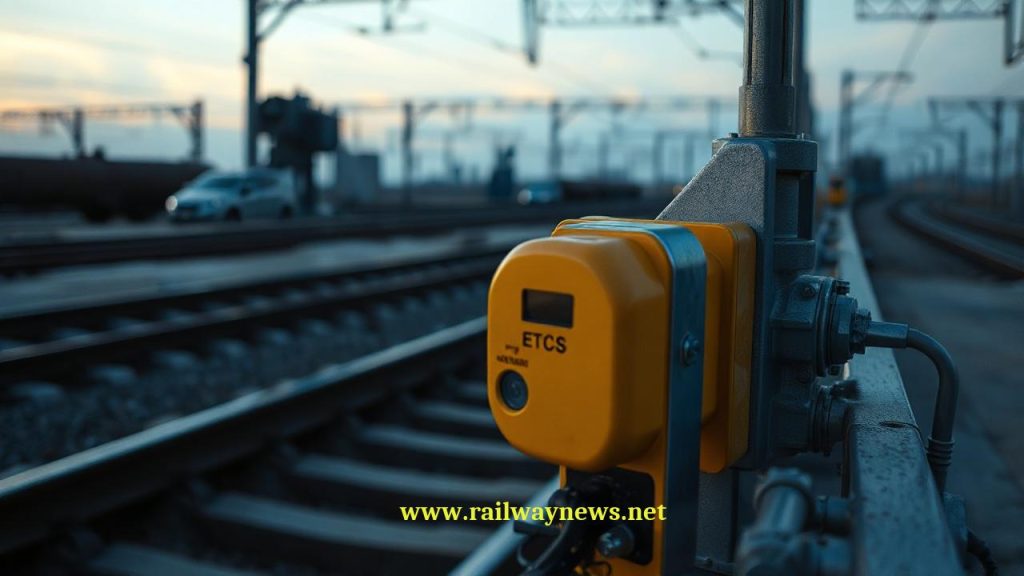
⚡ In Brief: Infraestruturas de Portugal installed 20 km of electronic signaling on the Lisbon Ring and Northern Lines, exceeding its EU NRRP rail digitalisation target ahead of schedule and securing €478 million in European funds to date.
LISBON, Portugal – Infraestruturas de Portugal (IP) completed installation of 20 kilometres of modern electronic signalling across the Lisbon metropolitan area, exceeding one of the main rail digitalisation targets set under Portugal’s National Recovery and Resilience Plan (NRRP) ahead of the official deadline. The work covers track on the Ring Line (Linha de Cintura) and the Northern Line (Linha do Norte), alongside new control and signalling technologies deployed at Campolide, Oriente, Alverca, and Azambuja stations. IP has drawn €478 million in European funds through the NRRP to date, representing the majority of its infrastructure project financing.
What Are the Technical Specifications?
The newly commissioned infrastructure introduces electronic signalling with ETCS/STM (European Train Control System / Specific Transmission Module) capability across 20 km of track in one of Portugal’s busiest rail corridors. ETCS/STM enables trains equipped with onboard STM units to read lineside ETCS balises while retaining compatibility with Portugal’s legacy national train protection system, Convel. The deployment spans four stations — Campolide, Oriente, Alverca, and Azambuja — creating a contiguous digitally signalled segment linking the Lisbon metropolitan ring to the Porto-bound Northern Line. IP confirmed that the systems are fully interoperable with European rail standards, a prerequisite for cross-border services under EU technical specifications for interoperability (TSI). The specific ETCS level installed was not disclosed in the completion report.
Key Technical Data
| Parameter | Value |
|---|---|
| Technology / System Name | ETCS/STM electronic signalling (NRRP Digitalisation Component) |
| Total Value | Not disclosed for this specific segment; IP’s total NRRP allocation: €478 million |
| Parties Involved | Infraestruturas de Portugal (IP), Recuperar Portugal (NRRP monitoring agency), European Commission (funding body) |
| Timeline / Completion | Completed ahead of schedule; installation completion report signed; exact date not disclosed |
| Country / Corridor | Portugal — Lisbon metropolitan area, Linha de Cintura (Ring Line) and Linha do Norte (Northern Line) |
Where Does This Technology Stand in the Market?
The Portugal railway signalling market is projected to sustain steady growth through 2025 and beyond, driven by increasing demand for advanced signalling technologies and infrastructure upgrades aligned with EU interoperability mandates. International collaborations and technology transfers are accelerating deployment timelines across the Iberian Peninsula (Source: Market context, IndexBox/Iberian rail signalling analysis, 2024–2025).
Within the ETCS supplier landscape, three manufacturers dominate the European market. Alstom’s Atlas ERTMS Level 2 system is deployed on over 30,000 km of track across 30-plus countries, supporting speeds up to 500 km/h with Baseline 3 compliance. Siemens Mobility’s Trainguard 300 offers ETCS Level 2 operation for mixed traffic at speeds up to 350 km/h, with significant installed bases in Germany and Spain. CAF Signalling provides ETCS Level 1 and Level 2 solutions concentrated in Spain and Latin America. IP has not publicly named the signalling equipment supplier for this Lisbon corridor deployment — a notable omission given that supplier selection typically signals long-term technology partnership strategy for national networks. (Source: Alstom, 2024; Siemens Mobility, 2023; CAF, 2023)
By comparison, the $2.1 billion Fluor-Walsh joint venture in Chicago — which modernised four stations and replaced over 2 miles of elevated track while maintaining service — demonstrates that urban transit digitalisation investments are scaling globally across both North American and European markets in the 2024–2026 period (Source: Construction Dive, 2026). Portugal’s €478 million NRRP rail allocation, while smaller in absolute terms, represents a proportionally aggressive digitalisation push for a mid-sized EU member state network.
Editor’s Analysis
Portugal’s ahead-of-schedule NRRP milestone delivery sends a calculated signal to Brussels: IP can absorb and deploy EU funds efficiently, strengthening its case for accessing the remaining Recovery and Resilience Facility tranches before the 2026 deadline. The choice to target the Lisbon Ring–Northern Line corridor first makes operational sense — this is the country’s highest-density passenger and freight axis — but the absence of a named signalling supplier raises questions about whether IP is preserving optionality for future tenders or managing a single-source dependency. The strategic sequencing suggests IP will next extend digital signalling northward toward Porto and eastward toward the Spanish border at Vilar Formoso, directly supporting the EU’s Atlantic Corridor TEN-T objectives (Source: European Commission TEN-T corridor maps, 2024).
FAQ
Q: What ETCS level has been installed on the Lisbon Ring and Northern Lines?
A: IP has not publicly specified whether the deployment is ETCS Level 1 or Level 2. The installation includes ETCS/STM functionality, which enables trains with onboard STM units to interface with lineside ETCS balises while maintaining backward compatibility with Portugal’s legacy Convel national signalling system.
Q: How does this affect journey times or capacity on the Lisbon–Porto corridor?
A: Specific journey time improvements or capacity uplifts from the 20 km signalling installation have not been officially published by IP. Electronic signalling typically enables higher line speeds and shorter headways, but the operational timetable impact depends on full corridor rollout and fleet ETCS fitment rates.
Q: Which company supplied the signalling equipment for this project?
A: IP has not publicly disclosed the signalling equipment manufacturer or system integrator for the Lisbon metropolitan area installation. This information was not included in the installation completion report or accompanying statements.

Railway infrastructure, rolling stock and transport technologies specialist focused on global rail industry developments, high-speed rail systems, signaling technologies and freight transportation. Covering railway investments, public transport modernization, rail operations and international mobility projects across Europe, Asia and North America.
RELATED POSTS

October 8, 2026 1:15 pm
Alstom secured a €1bn contract to build 13 automated trains,...

October 1, 2026 7:09 am
United States regulators confirmed a September 30 deadline for the...

October 8, 2026 12:18 pm
Siemens Mobility signed an agreement with VinSpeed to supply 350...

October 4, 2026 5:14 pm
Alstom secured a CA$4.7 billion order from VIA Rail Canada...

October 5, 2026 6:12 pm
AECOM and Jacobs secured a contract in September 2026 to...

October 1, 2026 12:13 am
Illinois approved $1.5 billion annually for the Northern Illinois Transit...