
Inland Rail: Stockinbingal-Parkes Section Nears Completion: Key Trends
Inland Rail project’s Stockinbingal to Parkes section nears completion, boosting freight efficiency and regional economies.
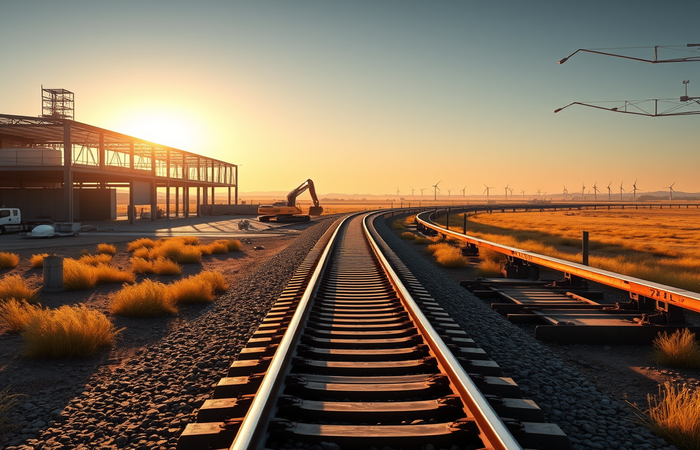
Inland Rail Project Reaches Milestone: Stockinbingal to Parkes Section Nears Completion
The Inland Rail project, Australia’s largest infrastructure undertaking, is steadily progressing. Major construction on the Stockinbingal to Parkes section is nearing completion, with only minor works remaining. This 1,600km rail line aims to connect Melbourne and Brisbane, promising significant improvements to freight efficiency and economic opportunities. This article will examine the recent employment figures associated with the Stockinbingal to Parkes section, demonstrating the project’s impact on local communities and the broader national economy. The completion of this section showcases the dedication and commitment required to bring this vital infrastructure to fruition, while also highlighting the project’s benefits in terms of workforce development and local economic stimulus. The “Who” includes the contractor Martinus Rail, First Nations communities, local residents, and the broader Inland Rail team; “What” is the completion of major works on the Stockinbingal to Parkes section; “When” is the recent past, with figures from February; “Where” is the Stockinbingal to Parkes section of the Inland Rail project; “Why” is to improve freight efficiency and stimulate local economies; “How” is through the deployment of a significant workforce and substantial investment in local businesses.
The Workforce Behind the Infrastructure
The February figures highlight the substantial workforce required to deliver the Stockinbingal to Parkes section. A total of 596 individuals were directly employed by Martinus Rail, the primary contractor for the section, working within the rail corridor. This demonstrates the project’s significant role in creating employment opportunities, particularly within regional areas. The composition of this workforce is also noteworthy; 55 individuals are First Nations people, reflecting a commitment to Indigenous participation, while 184 are local residents, underlining the project’s economic benefits for local communities. Additionally, 60 women were employed, indicating a positive contribution towards gender diversity within the construction sector. The completion of key projects at the Daroobalgie Loop, Lachlan River Bridge, Forbes Station, and Wyndham Avenue has allowed the workforce to gradually diminish as the project’s focus moves to final stages.
Local and Indigenous Economic Impact
Beyond direct employment, the Inland Rail project is generating significant economic activity in the surrounding areas. A total of $12.2 million was spent with local businesses, providing a crucial boost to the regional economy. Additionally, $427,400 was spent with First Nations businesses Australia-wide, showcasing the project’s commitment to Indigenous economic empowerment. This financial investment not only supports the construction effort but also helps to foster sustainable economic growth in the communities along the rail corridor. These numbers provide a tangible view of the broad economic impact of the project, demonstrating how large-scale infrastructure can create benefits that extend beyond simply building a railway line.
Key Infrastructure Upgrades Completed
The completion of major works across key locations along the Stockinbingal to Parkes section represents a substantial achievement. Upgrades to the Daroobalgie Loop, Lachlan River Bridge, Forbes Station, and Wyndham Avenue are now complete. The focus on these specific sites demonstrates the multifaceted nature of the project, which includes not only track laying but also significant investment in essential infrastructure that supports and maintains the railway’s operation. These completed upgrades are significant in establishing a modern and efficient rail network.
Future Construction: Albury to Illabo and Illabo to Stockinbingal
With the Stockinbingal to Parkes section nearing completion, construction activity is set to commence on two new sections later this year. The Albury to Illabo and Illabo to Stockinbingal sections represent the next phases of the project, which will further extend the Inland Rail network. This continuation of construction underscores the long-term vision of the project and the continued commitment to deliver the entire rail line. The seamless transition between sections, and the planned expansion into new areas, is crucial for keeping the overall Inland Rail project on track and contributing to the future of the Australian freight sector.
Conclusion
The Inland Rail project’s progress on the Stockinbingal to Parkes section serves as an important example of the project’s multifaceted impact, highlighting its achievements. The data from the construction site indicates a large number of employees, including many from Indigenous groups. The investments made with local and Indigenous businesses provide a crucial stimulus to those communities, demonstrating that large-scale infrastructure projects can deliver far-reaching benefits. As the project progresses and moves toward new sections such as Albury to Illabo and Illabo to Stockinbingal, the experience of the workforce from the Stockinbingal to Parkes section will play a key role in delivering future parts of the railway. The Inland Rail project is not only transforming the landscape of freight transport, but also creating significant economic and social opportunities in local communities, all while contributing to the overall success of the Australian freight industry. The focus on local development and job creation will be critical to the success of Inland Rail in the long term.

Railway infrastructure, rolling stock and transport technologies specialist focused on global rail industry developments, high-speed rail systems, signaling technologies and freight transportation. Covering railway investments, public transport modernization, rail operations and international mobility projects across Europe, Asia and North America.
RELATED POSTS

October 8, 2026 1:15 pm
Alstom secured a €1bn contract to build 13 automated trains,...
October 6, 2026 2:14 am
Union Pacific launched export rail shipments with Ferromex to deliver...

October 4, 2026 11:08 pm
Sound Transit confirmed the September 30 opening of Seattle Pinehurst...
October 1, 2026 10:14 am
HS2 installed a 55-metre steel span in Birmingham, completing phase...

October 5, 2026 6:12 pm
AECOM and Jacobs secured a contract in September 2026 to...
October 1, 2026 3:12 am
Greenbrier confirmed Brian Comstock as new president and CEO effective...