
Indonesia’s High-Speed Rail: Jakarta-Surabaya Corridor
High-Speed Rail Development in Indonesia: A Significant Investment to Improve Travel Times and Economic Growth Between Jakarta and Surabaya, Representing a Major Infrastructure Project with Japanese Funding and Phase-Planned Implementation.
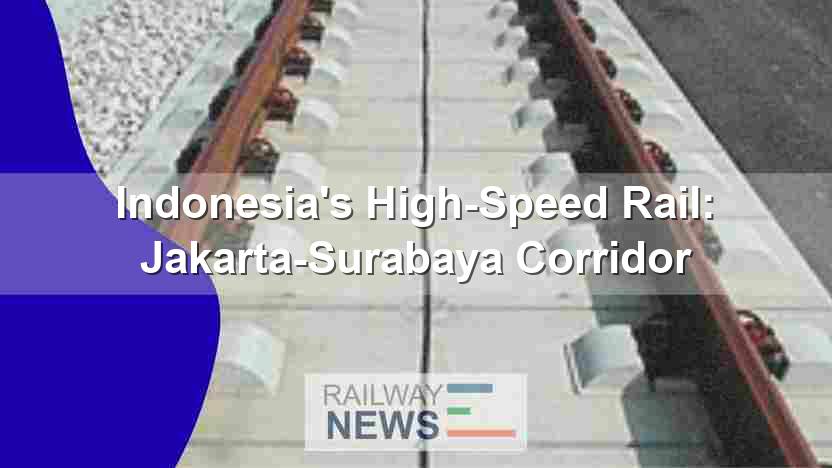
High-Speed Rail Development in Indonesia: The Jakarta-Surabaya Corridor
This article examines the significant undertaking of constructing a high-speed rail link between Jakarta and Surabaya, Indonesia’s two largest cities. This ambitious project, estimated at IDR60tn ($4.3bn), represents a substantial investment in Indonesia’s infrastructure and aims to dramatically improve intercity travel times and stimulate economic growth along the corridor. The project’s financing, primarily through Japanese loans facilitated by the Japan International Cooperation Agency (JICA), underscores the importance of international collaboration in realizing such large-scale infrastructure projects. The project’s phased implementation, technological specifications, and anticipated socio-economic impact will be explored in detail, offering insights into the challenges and opportunities associated with high-speed rail development in a rapidly developing nation.
Project Scope and Financing
The 715km Jakarta-Surabaya high-speed rail project is a substantial undertaking, designed to significantly reduce travel time between Indonesia’s two largest cities. The project’s total cost is estimated at IDR60tn ($4.3bn), with the majority of funding secured through a loan agreement with Japan, brokered through the Japan International Cooperation Agency (JICA). This financial structure highlights the reliance on international partnerships to fund large-scale infrastructure development in emerging economies. The project’s feasibility hinges on effective project management, meticulous cost control, and the successful navigation of potential economic and political complexities.
Phased Implementation and Technological Choices
The project’s implementation is planned in two phases. Phase one focuses on constructing a new line connecting Jakarta to Semarang, the capital of Central Java. This section will utilize a new, narrow-gauge track, a decision likely influenced by Java’s unique geographical characteristics. Phase two involves upgrading the existing track between Semarang and Surabaya, leveraging existing infrastructure to optimize cost and time efficiency. This phased approach allows for a more manageable rollout, reducing the overall risk and allowing for adjustments based on the experience gained in the first phase. The choice of a narrow-gauge railway for the new section is a technical decision that reflects consideration of both terrain suitability and cost-effectiveness. The targeted completion date for the entire project is 2025, with the Jakarta-Semarang section slated for completion by 2024.
Operational Impacts and Economic Benefits
Upon completion, the high-speed rail line will dramatically reduce travel time between Jakarta and Surabaya from approximately nine hours to five and a half hours. This significant improvement in connectivity will have profound impacts. Firstly, it will stimulate economic activity along the corridor, facilitating trade, tourism, and investment. Secondly, it will improve the accessibility of services, particularly healthcare and education, to populations in both cities and along the route. The efficient movement of people and goods will greatly enhance regional integration and support economic growth throughout Central and East Java. The increased efficiency in travel also reduces transportation costs for businesses, boosting competitiveness and potentially attracting foreign investment.
Conclusion
The Jakarta-Surabaya high-speed rail project represents a momentous step in Indonesia’s infrastructure development. The project’s scale and ambition underscore the country’s commitment to modernization and economic growth. The partnership with Japan, secured through JICA funding, signifies the increasing role of international collaboration in such large-scale endeavors. The project’s phased implementation, incorporating both new construction and infrastructure upgrades, reflects a pragmatic approach to risk management and resource allocation. The anticipated reduction in travel time between Jakarta and Surabaya will have far-reaching consequences, impacting economic activity, accessibility of services, and regional integration. However, the success of this venture hinges on several critical factors: the effective management of the project’s complexities, careful monitoring of costs, and proactive mitigation of any potential challenges relating to land acquisition, environmental considerations, and ongoing operational maintenance. While ambitious, the potential economic and social benefits of this high-speed rail project make it a vital investment in Indonesia’s future.

Railway infrastructure, rolling stock and transport technologies specialist focused on global rail industry developments, high-speed rail systems, signaling technologies and freight transportation. Covering railway investments, public transport modernization, rail operations and international mobility projects across Europe, Asia and North America.
RELATED POSTS

October 8, 2026 1:15 pm
Alstom secured a €1bn contract to build 13 automated trains,...

October 1, 2026 7:09 am
United States regulators confirmed a September 30 deadline for the...

October 8, 2026 12:18 pm
Siemens Mobility signed an agreement with VinSpeed to supply 350...

October 4, 2026 5:14 pm
Alstom secured a CA$4.7 billion order from VIA Rail Canada...

October 5, 2026 6:12 pm
AECOM and Jacobs secured a contract in September 2026 to...

October 4, 2026 11:08 pm
Sound Transit confirmed the September 30 opening of Seattle Pinehurst...