
India’s RRTS: High-Speed Rail Revolution
This article examines how the Regional Rapid Transit System (RRTS) project in India, involving collaboration between NCRTC and Bombardier Transportation, showcases innovative train design and manufacturing advancements, emphasizing local job creation and technological development under the “Make in India” initiative.
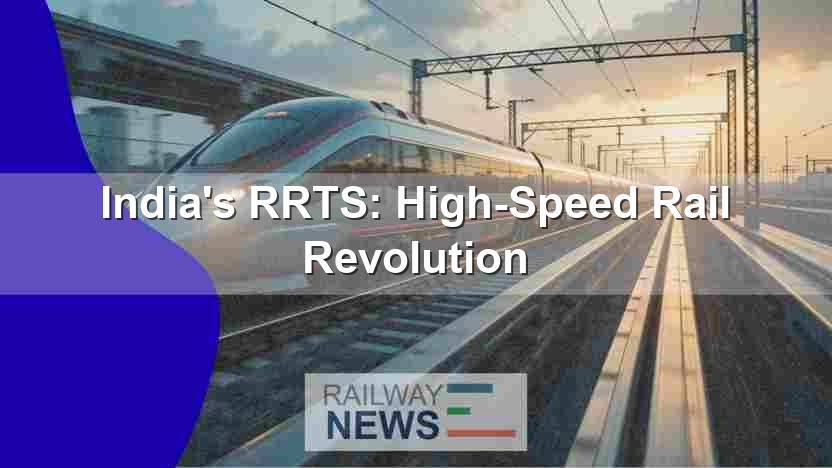
This article explores the development and implementation of the Regional Rapid Transit System (RRTS) in the National Capital Region (NCR) of India, focusing specifically on the innovative train design and manufacturing partnership between the National Capital Region Transport Corporation (NCRTC) and Bombardier Transportation. The project represents a significant advancement in India’s rapid transit infrastructure, aiming to provide efficient and comfortable high-speed commuter rail services. The collaboration leverages Bombardier’s expertise in rolling stock design and manufacturing while adhering to India’s “Make in India” initiative, promoting local job creation and technological development. This analysis will delve into the technical specifications of the trains, the manufacturing process, the project’s impact on the region’s transportation landscape, and the broader implications for future rapid transit development in India.
RRTS Train Design and Features
The NCRTC’s RRTS trains, designed and manufactured by Bombardier Transportation, are designed for a top speed of 180 km/h (112 mph). The trainsets boast a modern stainless-steel body, featuring six wide automatic plug-in doors per car for enhanced passenger flow and accessibility. Inside, passengers will find a comfortable 2+2 transverse seating arrangement, ample overhead luggage racks, and strategically placed grab poles for standing passengers. Each seat is equipped with charging sockets, and the entire train provides onboard Wi-Fi access. Additionally, the design incorporates dedicated business-class seating and a women’s-only carriage to cater to diverse passenger needs. A detailed CCTV system enhances passenger safety and security. In a six-car configuration, the trains can accommodate up to 1,790 passengers.
Manufacturing and “Make in India” Initiative
A crucial aspect of this project is its commitment to the Indian government’s “Make in India” initiative. Bombardier Transportation is manufacturing the entire rolling stock for the Delhi-Ghaziabad-Meerut RRTS corridor at its Savli plant in Gujarat, India. This localization of manufacturing not only contributes to the growth of India’s domestic manufacturing sector but also fosters the development of skilled labor and technological expertise within the country. The selection of Bombardier, a global leader in rail technology, ensures the transfer of advanced manufacturing techniques and best practices to India’s domestic railway industry.
Impact on NCR Transportation and Socio-Economic Development
The 82 km Delhi-Ghaziabad-Meerut RRTS corridor is the first of its kind in India. Upon completion, it is expected to significantly reduce travel time between Delhi and Meerut, cutting it by approximately one-third to around one hour. This improved connectivity will significantly benefit the millions of commuters who travel daily between these cities, reducing congestion on roads and improving overall commute times. The 24 stations along the corridor are strategically located to serve a wide range of communities, contributing to the region’s socio-economic development by improving accessibility to employment, education, and healthcare facilities. The projected daily ridership of 800,000 passengers underscores the immense potential of this system to transform the region’s transportation landscape.
Future Implications for Indian Rail Transit
The successful implementation of the Delhi-Ghaziabad-Meerut RRTS corridor, with its focus on modern train design, high-speed capabilities, and commitment to “Make in India,” sets a new benchmark for future regional rapid transit projects in India. The project serves as a valuable case study demonstrating the potential for public-private partnerships in delivering advanced infrastructure projects. The experience gained in design, manufacturing, and operation will be instrumental in guiding future initiatives, paving the way for the expansion of efficient and high-speed rail networks across India. The success of this project, coupled with the planned expansion to include additional three-car trainsets for local services, positions India as a leader in developing innovative and sustainable transportation solutions.
Conclusions
The collaboration between NCRTC and Bombardier Transportation in developing the RRTS for the Delhi-Ghaziabad-Meerut corridor marks a significant milestone in India’s railway modernization efforts. The project showcases a successful integration of advanced technology, local manufacturing capabilities, and a commitment to improving public transportation. The design of the trainsets, with its focus on passenger comfort, accessibility, and safety, reflects a modern approach to rail transit. The implementation of the “Make in India” initiative ensures local job creation and the transfer of valuable technological expertise, contributing to the long-term growth of India’s railway industry. The projected reduction in travel time and increased passenger capacity will significantly impact the daily lives of millions of commuters, fostering socio-economic development across the NCR. The success of this initial RRTS corridor will undoubtedly serve as a blueprint for future high-speed rail projects in India and other developing nations, demonstrating the potential of strategically leveraging global expertise while prioritizing local capacity building and sustainable development goals. The lessons learned from this project – regarding efficient design, manufacturing optimization, and effective public-private partnerships – will be invaluable in shaping the future of high-speed rail transport in India and globally. The project represents a significant step forward in India’s commitment to modern, efficient, and accessible public transportation, contributing significantly to the nation’s economic and social progress.

Railway infrastructure, rolling stock and transport technologies specialist focused on global rail industry developments, high-speed rail systems, signaling technologies and freight transportation. Covering railway investments, public transport modernization, rail operations and international mobility projects across Europe, Asia and North America.
RELATED POSTS

October 8, 2026 1:15 pm
Alstom secured a €1bn contract to build 13 automated trains,...

October 1, 2026 7:09 am
United States regulators confirmed a September 30 deadline for the...

October 4, 2026 5:14 pm
Alstom secured a CA$4.7 billion order from VIA Rail Canada...

October 8, 2026 12:18 pm
Siemens Mobility signed an agreement with VinSpeed to supply 350...

October 5, 2026 6:12 pm
AECOM and Jacobs secured a contract in September 2026 to...

October 4, 2026 11:08 pm
Sound Transit confirmed the September 30 opening of Seattle Pinehurst...