
India’s Railway Revolution: MTRC Safety & Efficiency
The implementation of the Mobile Train Radio Communication (MTRC) system on Indian Railways’ Western Railway zone has significantly enhanced safety and efficiency by providing real-time, direct communication capabilities that address past limitations of older systems like VHF-based ones, leading to improved response times for emergencies and reduced train delays.
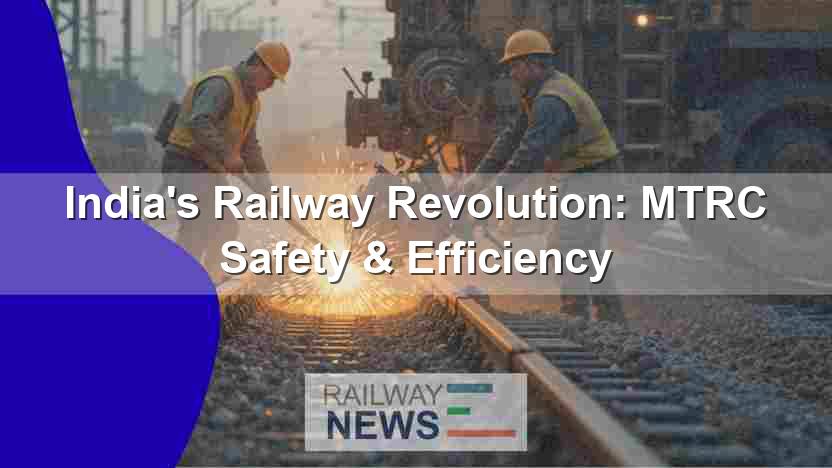
Enhancing Railway Safety and Efficiency: The Implementation of Mobile Train Radio Communication (MTRC) Systems
The Indian Railways’ commitment to safety and operational efficiency is constantly evolving. A significant advancement in this pursuit is the recent implementation of the Mobile Train Radio Communication (MTRC) system on the Western Railway zone. This article explores the specifics of this technological upgrade, exploring its capabilities, benefits, underlying technology, and its potential to revolutionize train operations across the Indian railway network. The introduction of MTRC represents a paradigm shift from older, less reliable communication systems, marking a significant stride towards a safer and more efficiently managed railway infrastructure. We will examine the system’s architecture, its integration with existing infrastructure, and its impact on reducing train delays and mitigating accidents. The analysis will further consider the system’s long-term implications for improved passenger safety and overall operational efficiency, highlighting the potential for wider deployment across the nation’s vast railway network.
Improved Communication and Accident Prevention
The primary objective of the MTRC system is to establish seamless, real-time communication between train crews (drivers and guards) and the control center, as well as station masters. Previous VHF-based systems, such as the Mobile and CUG (Closed User Group) systems, lacked the direct, continuous communication capabilities offered by MTRC. This deficiency often resulted in delayed responses to emergencies and hindered efficient train management. MTRC’s significantly faster connection time (300 milliseconds) compared to older systems dramatically improves response times to unforeseen events, such as emergencies, signal failures, or track obstructions. This enhanced communication is crucial for preventing accidents and minimizing their impact. The system functions similarly to Air Traffic Control (ATC) for aircraft, providing a centralized monitoring and communication hub for optimal train management.
Technological Infrastructure and Integration
The MTRC system leverages Terrestrial Trunk Radio (TETRA) technology, utilizing Time Division Multiple Access (TDMA) for its air interface and an IP-based network architecture with Distributed Switching Architecture. This robust infrastructure ensures reliable communication even in challenging environments. Key features include single-touch dialing, emergency calling, and broadcast capabilities, further enhancing its efficiency and responsiveness. The system’s integration with the existing Train Management System (TMS) is a particularly important feature. This integration allows controllers to communicate directly with specific trains using unique train numbers and cab numbers, enabling precise targeting of messages and reducing confusion in busy environments. The successful integration signifies a strategic move toward a unified, digitally-driven train management system.
Operational Efficiency and Real-Time Data
Beyond accident prevention, the MTRC system contributes significantly to improved operational efficiency. Real-time data on train operation enables proactive management of train schedules and resource allocation. This is particularly valuable during adverse weather conditions, such as monsoon seasons, where timely communication is critical for ensuring safe and timely train operations. The ability to instantly communicate incidents like trespassing or track obstructions allows for immediate intervention, minimizing delays and preventing potential accidents. This quick response mechanism also reduces the ripple effect of delays on subsequent trains, ensuring the smooth flow of rail traffic.
Conclusion: A Stepping Stone Towards Modernized Rail Operations
The successful implementation of the MTRC system on the Western Railway zone represents a pivotal step towards modernizing Indian Railways’ communication infrastructure. The system’s capabilities, ranging from enhanced safety features to improved operational efficiency, demonstrate a significant improvement over older communication technologies. The fast connection times, integration with the Train Management System, and utilization of advanced TETRA technology, all contribute to a more reliable and responsive railway operation. The ability to provide real-time data and facilitate immediate communication in emergencies drastically reduces the risk of accidents and minimizes the impact of unforeseen events. Beyond immediate benefits, the system offers a foundation for future advancements in railway technology, paving the way for further integration of data-driven decision-making and autonomous train operations. The cost of implementation ($820,000 for initial deployment and ongoing maintenance costs), while a substantial investment, is easily justified by the potential for significant savings from accident prevention and improved efficiency. The successful integration and subsequent expansion of the MTRC system across the broader Indian Railways network will undoubtedly enhance passenger safety, operational efficiency, and overall railway management. The future of Indian Railways hinges on embracing technological advancements, and the MTRC system is a testament to this commitment, offering a promising glimpse into a safer and more efficient future for Indian rail transport.

Railway infrastructure, rolling stock and transport technologies specialist focused on global rail industry developments, high-speed rail systems, signaling technologies and freight transportation. Covering railway investments, public transport modernization, rail operations and international mobility projects across Europe, Asia and North America.
RELATED POSTS

October 8, 2026 1:15 pm
Alstom secured a €1bn contract to build 13 automated trains,...

October 1, 2026 7:09 am
United States regulators confirmed a September 30 deadline for the...

October 8, 2026 12:18 pm
Siemens Mobility signed an agreement with VinSpeed to supply 350...

October 4, 2026 5:14 pm
Alstom secured a CA$4.7 billion order from VIA Rail Canada...

October 5, 2026 6:12 pm
AECOM and Jacobs secured a contract in September 2026 to...

October 4, 2026 11:08 pm
Sound Transit confirmed the September 30 opening of Seattle Pinehurst...