
India’s Rail Revolution: Electrification & Automation
The article highlights two key projects in India’s railway infrastructure: Hitachi ABB Power Grids’ electrification contract for Indian Railways, focusing on power components for electric locomotives, and Systra’s consultancy services for the automation of a new metro line in Bengaluru, emphasizing advanced automation technologies. These advancements underscore strategic investments aimed at modernizing India’s railways to enhance efficiency, reduce environmental impact, and improve operational capacity while integrating cutting-edge technology into urban transit systems.
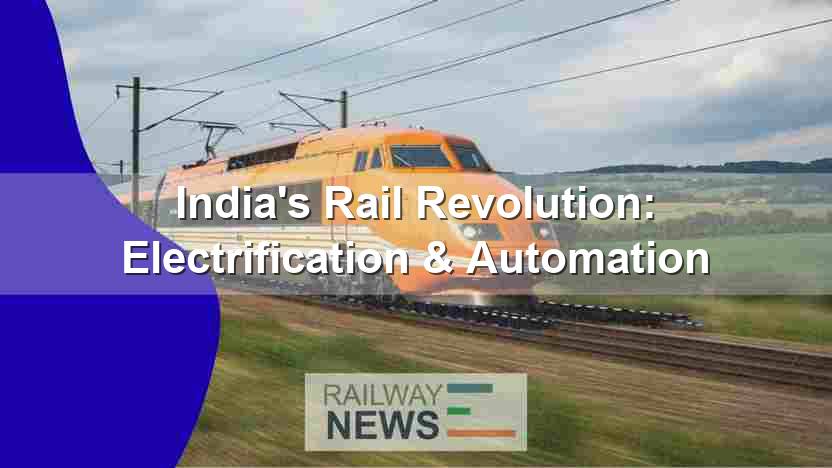
This article examines the significant advancements in India’s railway infrastructure, focusing on two key projects: the electrification of freight locomotives and the automation of a new metro line. The first project, a substantial order awarded to Hitachi ABB Power Grids (formerly ABB Power Products and Systems India), highlights the crucial role of power infrastructure in modernizing India’s vast railway network. This contract underscores the commitment to transitioning towards electric freight locomotives, a pivotal step towards improving efficiency, reducing environmental impact, and enhancing operational capacity. The second project, involving Systra’s consultancy services for Bengaluru’s new metro line, illustrates the increasing focus on advanced automation technologies within India’s expanding urban transit systems. This project emphasizes the integration of Grade of Automation 4 (GoA4), signifying a considerable leap forward in operational efficiency and passenger experience. Analyzing these two projects provides valuable insights into the strategic investments being made to modernize India’s railway sector and its implications for the nation’s economic development and environmental sustainability.
Hitachi ABB Power Grids’ Contribution to Indian Railway Electrification
Hitachi ABB Power Grids (formerly ABB Power Products and Systems India) secured a substantial $21.92 million (Rs 1.6 billion) contract from the Central Organisation for Rail Electrification (CORE) and Chittaranjan Locomotive Works (CLW) to supply critical power components for electric freight locomotives. This order includes the supply of 25kV traction transformers to CLW for WAG 9 locomotives and 132kV trackside transformers to CORE. The traction transformers are integral to the operation of electric locomotives, providing power for various functions including traction (movement), ventilation, braking, lighting, signaling, and communication. The trackside transformers play a crucial role in stepping down the high voltage from the main power supply to the voltage required by the catenary system (overhead power lines) that feeds the locomotives. This contract represents a significant step towards India’s goal of electrifying its freight rail network, reducing reliance on diesel locomotives and subsequently lowering fuel costs and carbon emissions.
The Importance of Trackside and Traction Transformers
The successful implementation of electric freight operations depends heavily on the reliable performance of both traction and trackside transformers. Traction transformers, located within the locomotive, are high-power devices that convert the high-voltage electricity from the catenary into lower voltages suitable for the locomotive’s various systems. Their design must account for the demanding operational conditions faced by locomotives, including vibrations, temperature fluctuations, and high currents. Trackside transformers, on the other hand, are crucial for managing the power distribution network. They efficiently convert the high voltage from the main power grid to the voltage required by the catenary system. Their performance directly impacts the reliability and efficiency of the entire electrification system.
Systra’s Role in Bengaluru Metro’s Automation
In a separate development, Systra, a French transport engineering and consultancy firm, secured a contract from the Bengaluru Metro Rail Corporation Limited (BMRCL) to provide consultancy services for the new elevated yellow line. This project focuses on implementing Grade of Automation 4 (GoA4), a high level of automation in railway operations. Systra’s role involves assisting BMRCL in evaluating the design documents submitted by contractors to ensure compatibility with GoA4 requirements. GoA4 signifies a significant advancement in metro system automation, encompassing fully automated train operation, including train control, signaling, and passenger safety systems. The successful implementation of GoA4 will greatly enhance the efficiency and reliability of the Bengaluru Metro, improving passenger experience and overall operational performance.
The Significance of GoA4 in Modern Metro Systems
The adoption of GoA4 represents a major step forward in urban rail technology. This level of automation allows for driverless train operation, leading to increased operational efficiency, reduced labor costs, and improved safety. GoA4 systems typically incorporate advanced signaling and communication technologies, enabling precise train control and preventing collisions. The implementation of GoA4 also contributes to enhanced punctuality and reliability, providing passengers with a more predictable and comfortable travel experience. This technology is becoming increasingly prevalent in modern metro systems globally, and its adoption in Bengaluru reflects India’s commitment to developing world-class urban transit infrastructure.
Conclusion
The two projects highlighted in this article—Hitachi ABB Power Grids’ supply of transformers for electric freight locomotives and Systra’s consultancy work on Bengaluru Metro’s GoA4 implementation—demonstrate a significant push towards modernization and technological advancement within India’s railway sector. The electrification of freight railways, driven by the Hitachi ABB Power Grids contract, represents a crucial step towards reducing India’s carbon footprint, improving operational efficiency, and lowering transportation costs. The sophisticated power infrastructure provided by Hitachi ABB Power Grids, encompassing both high-power traction transformers for locomotives and trackside transformers for efficient power distribution, is fundamental to this transition. Additionally, the integration of GoA4 technology in the Bengaluru Metro, facilitated by Systra’s expertise, showcases India’s commitment to developing advanced, automated urban transportation systems. This commitment to automation promises improved efficiency, passenger safety, and overall operational reliability. These combined efforts are not only transforming India’s railway infrastructure but are also positioning the country as a leader in adopting cutting-edge technologies within the global rail industry. The successful execution of these projects will significantly enhance the nation’s transportation capabilities, contributing to economic growth and improved quality of life for its citizens. The long-term implications for environmental sustainability, economic competitiveness, and improved passenger experience are substantial and underscore the importance of these ongoing initiatives.

Railway infrastructure, rolling stock and transport technologies specialist focused on global rail industry developments, high-speed rail systems, signaling technologies and freight transportation. Covering railway investments, public transport modernization, rail operations and international mobility projects across Europe, Asia and North America.
RELATED POSTS

October 8, 2026 1:15 pm
Alstom secured a €1bn contract to build 13 automated trains,...

October 1, 2026 7:09 am
United States regulators confirmed a September 30 deadline for the...

October 8, 2026 12:18 pm
Siemens Mobility signed an agreement with VinSpeed to supply 350...

October 4, 2026 5:14 pm
Alstom secured a CA$4.7 billion order from VIA Rail Canada...

October 5, 2026 6:12 pm
AECOM and Jacobs secured a contract in September 2026 to...

October 4, 2026 11:08 pm
Sound Transit confirmed the September 30 opening of Seattle Pinehurst...