
IMechE: Electrification First for UK Rail Decarbonization
IMechE’s new report prioritizes railway electrification, but recognizes hydrogen’s niche role. Discover how a balanced approach can decarbonize Britain’s rail network!
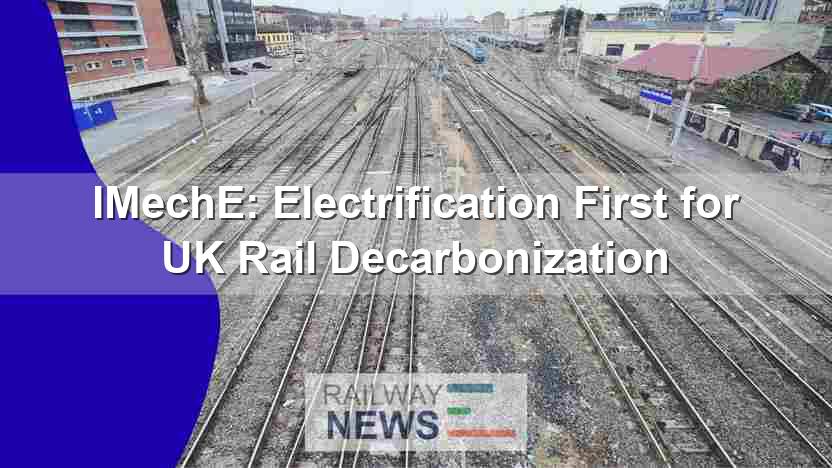
This article explores the Institution of Mechanical Engineers (IMechE)’s recent report on the future of hydrogen trains in the UK. The report advocates for a strategic approach to railway decarbonization, prioritizing electrification while acknowledging the crucial role of hydrogen technology in specific contexts. The IMechE’s stance emphasizes that hydrogen trains should not be seen as a blanket replacement for electrification, but rather as a complementary technology deployed strategically to address specific challenges within the UK rail network. This analysis will examine the technical, economic, and infrastructural considerations underlying this prioritization, exploring the limitations of hydrogen technology in comparison to electrification and the potential for synergistic deployment to achieve a sustainable and efficient railway system. We will also discuss the policy implications and the need for a coordinated, long-term strategy to decarbonize the UK’s railway network while minimizing economic and environmental impacts. The complexities of infrastructure investment, technological advancements, and governmental policy will be examined to provide a detailed overview of the optimal approach to decarbonizing Britain’s railways.
Electrification: The Backbone of Sustainable Rail
Electrification remains the most efficient and sustainable method for powering large-scale rail networks. Electric trains offer significantly higher energy efficiency compared to diesel or hydrogen alternatives. Overhead line electrification (OLE) provides a consistent and reliable power source, reducing operational costs and minimizing the environmental impact associated with localized fuel storage and distribution. Additionally, existing electric traction technology is mature and readily available. The significant upfront capital investment required for electrification is offset by long-term operational cost savings and environmental benefits.
Hydrogen Trains: A Niche Solution
While hydrogen trains offer a zero-emission solution for non-electrified lines, their practicality is limited by several factors. The report highlights the substantial space requirements for hydrogen storage, rendering them unsuitable for freight and high-speed operations where maximizing cargo capacity and speed are paramount. The production, storage, and distribution of hydrogen also present significant logistical and infrastructural challenges, requiring substantial investment in new facilities. While hydrogen is a clean fuel at the point of use, the processes associated with its production and transportation can also contribute greenhouse gas emissions, depending on the source of energy used. Therefore, its overall environmental benefit is contingent upon the method of hydrogen production.
Economic and Policy Considerations
The IMechE report emphasizes the economic implications of both electrification and hydrogen adoption. The upfront costs of electrification are substantial, but the long-term operational savings and reduced maintenance requirements make it a financially viable option for heavily trafficked routes. The high initial investment costs for hydrogen infrastructure, coupled with the technological challenges and limitations in capacity, warrant a cautious approach. Governmental policy plays a critical role in guiding investment decisions. The report calls for a reconsideration of cancelled electrification projects and a long-term strategy for infrastructure development, ensuring coordination between technological advancement and infrastructure investment.
The Path Forward: A Balanced Approach
The IMechE advocates for a balanced strategy combining electrification and targeted hydrogen deployment. Electrification should remain the primary method for decarbonizing the majority of the rail network, given its efficiency and scalability. However, hydrogen technology offers a valuable solution for those lines where electrification is not feasible due to economic or technical constraints. This requires a nuanced approach that considers the specific characteristics of each rail line, traffic volume, and economic viability. Further research and development are crucial to improve the efficiency and cost-effectiveness of hydrogen train technology, focusing on improved storage solutions and production methods with minimal environmental impact.
Conclusion
The IMechE’s report provides a timely and insightful analysis of the optimal path toward decarbonizing the UK’s railway network. The report clearly articulates the limitations and advantages of both electrification and hydrogen train technology, advocating for a pragmatic approach that prioritizes electrification for mainline services while acknowledging the niche role of hydrogen for specific lines where electrification is impractical. The report’s emphasis on long-term strategic planning, coordinated infrastructure investment, and continuous technological advancement is crucial for achieving a sustainable, efficient, and cost-effective railway system. The success of this endeavor will depend on collaborative efforts between government, industry, and research institutions to overcome technological and economic challenges. A balanced strategy, as proposed by IMechE, provides a roadmap for achieving significant emission reductions while maintaining a robust and economically viable railway network for the UK. The long-term benefits of reduced environmental impact, coupled with the economic advantages of efficient operation, justify a detailed and coordinated investment strategy. Ultimately, the future of the UK’s railways hinges on a commitment to sustainable practices and a strategic approach that combines the best of both electric and hydrogen technologies.

Railway infrastructure, rolling stock and transport technologies specialist focused on global rail industry developments, high-speed rail systems, signaling technologies and freight transportation. Covering railway investments, public transport modernization, rail operations and international mobility projects across Europe, Asia and North America.
RELATED POSTS

October 1, 2026 7:09 am
United States regulators confirmed a September 30 deadline for the...

October 8, 2026 1:15 pm
Alstom secured a €1bn contract to build 13 automated trains,...

October 4, 2026 5:14 pm
Alstom secured a CA$4.7 billion order from VIA Rail Canada...

October 1, 2026 12:13 am
Illinois approved $1.5 billion annually for the Northern Illinois Transit...
October 6, 2026 2:14 am
Union Pacific launched export rail shipments with Ferromex to deliver...

October 1, 2026 6:10 am
Amtrak approved a System Expansion Committee on July 30 to...