
HS2: UK’s High-Speed Rail Revolution
The High-Speed 2 (HS2) project in the UK aims to create a high-speed rail network connecting London to the Midlands and North, significantly improving intercity travel times and boosting regional economic growth through substantial investment, complex engineering challenges, and wide-ranging impacts on various sectors including construction, employment, environmental considerations, and social implications.
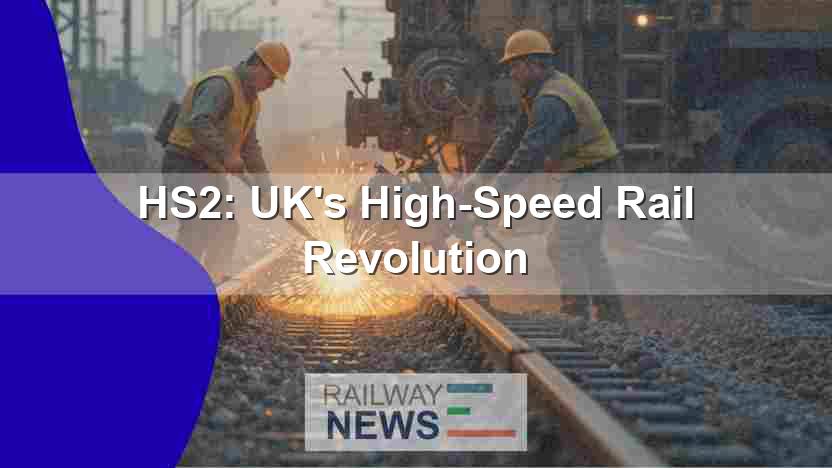
High-Speed Rail in the UK: The HS2 Project
This article examines the High-Speed 2 (HS2) project, a significant undertaking in the UK’s railway infrastructure development. The project aims to create a high-speed rail network connecting London to the Midlands and the North, significantly improving intercity travel times and boosting regional economic growth. This ambitious plan involves substantial investment, complex engineering challenges, and a wide-ranging impact on various sectors, from construction and employment to environmental considerations and social implications. We will delve into the various stages of the project, examining its current status, future prospects, and the potential long-term consequences for the UK’s transportation network and economy. The analysis will cover the project’s phased rollout, the technological advancements involved, the economic impact, and the environmental considerations that accompany such a large-scale infrastructure project.
Project Initiation and Early Stages
The HS2 project, initially conceived as a high-speed rail line connecting London and Birmingham, has undergone years of planning, feasibility studies, and environmental impact assessments. After securing government approval and securing funding, the project officially commenced construction in September 2020. This marked a significant milestone, initiating the physical construction phase of the project’s Phase One, encompassing the London-West Midlands section. This initial phase alone anticipates creating around 22,000 jobs, providing a much-needed boost to the UK economy during its recovery from the COVID-19 pandemic. The issuance of a Notice to Proceed (NtP) by the Department for Transport (DfT) to the four Main Works Civils Contractors (MWCCs) enabled the commencement of this phase.
Construction and Engineering Challenges
The HS2 project presents significant engineering challenges. The construction of the Phase One high-speed rail line from London to the West Midlands involves over 30 miles of tunnels and approximately 10 miles of viaducts. This necessitates advanced tunneling techniques, sophisticated ground engineering solutions to mitigate ground instability and environmental impact, and stringent quality control measures to ensure the longevity and safety of the railway. The project involves meticulous planning and coordination across multiple sites and contractors to ensure efficient progress and effective management of resources.
Economic and Social Impacts
The economic implications of HS2 are multifaceted. While the initial construction phase creates substantial employment, the long-term impact is expected to be even more substantial. Improved connectivity between major cities is anticipated to boost economic activity in the Midlands and the North, facilitating increased trade, tourism, and investment. This, in turn, could lead to job creation in various sectors and a more balanced regional economic landscape. However, the high cost of the project (estimated at £45 billion) requires careful consideration and assessment of the return on investment. Social impacts include improvements in accessibility for residents in connected regions and potential displacement of communities affected by the construction.
Future Prospects and Conclusion
The HS2 project, currently in its construction phase, is a transformative endeavor for the UK’s transportation infrastructure. Phase One, connecting London and Birmingham, is expected to become operational between 2029 and 2033, offering high-speed rail services across a dedicated 134-mile track. The project’s success hinges on several factors, including effective project management, adherence to budgets and timelines, and the successful mitigation of environmental and social concerns. While the project’s high cost is a significant concern, the potential economic benefits for the country, particularly in terms of improved regional connectivity and economic growth in the Midlands and North, are considerable. Additionally, the collaboration with UKRRIN (UK Rail Research and Innovation Network) signifies a commitment to innovation and the development of cutting-edge technologies within the railway industry. The long-term success of HS2 will depend on the careful consideration of all stakeholders’ needs and a commitment to sustainable and inclusive development. Ultimately, HS2’s legacy will be determined by its ability to deliver on its ambitious promises of improved connectivity, economic growth, and a modernized railway system for the UK.

Railway infrastructure, rolling stock and transport technologies specialist focused on global rail industry developments, high-speed rail systems, signaling technologies and freight transportation. Covering railway investments, public transport modernization, rail operations and international mobility projects across Europe, Asia and North America.
RELATED POSTS

October 8, 2026 1:15 pm
Alstom secured a €1bn contract to build 13 automated trains,...

October 1, 2026 7:09 am
United States regulators confirmed a September 30 deadline for the...

October 8, 2026 12:18 pm
Siemens Mobility signed an agreement with VinSpeed to supply 350...

October 4, 2026 5:14 pm
Alstom secured a CA$4.7 billion order from VIA Rail Canada...

October 5, 2026 6:12 pm
AECOM and Jacobs secured a contract in September 2026 to...

October 4, 2026 11:08 pm
Sound Transit confirmed the September 30 opening of Seattle Pinehurst...