
HS2 Launches Final TBM for 7.2-Kilometer Euston Tunnel
HS2 Ltd launched its final TBM for the 7.2-kilometer Euston tunnel connecting Old Oak Common and Euston.
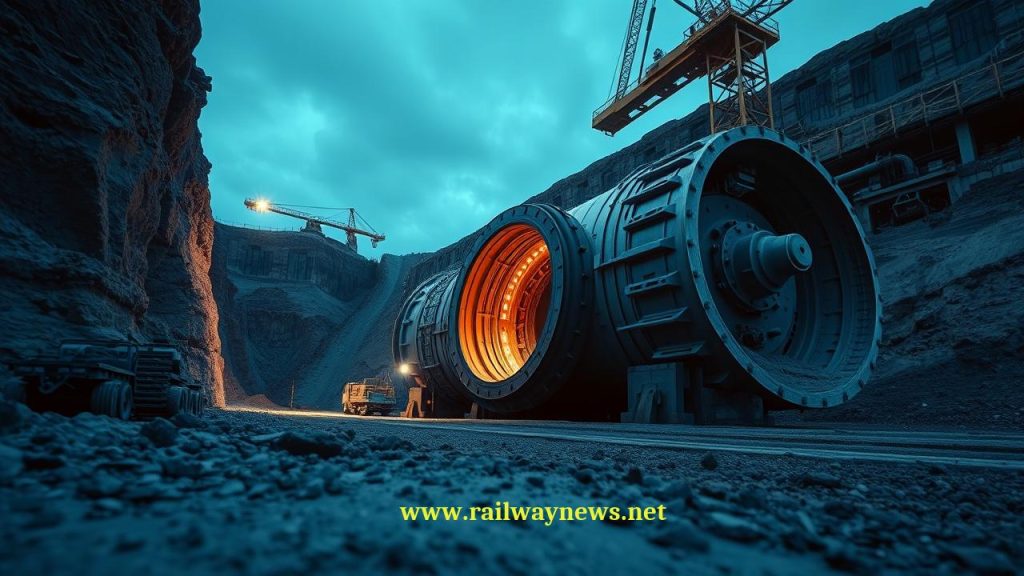
⚡ In Brief: HS2 Ltd has launched its final tunnel boring machine (TBM) to construct the second of two 7.2-kilometer Euston tunnels, connecting Old Oak Common station with the high-speed line’s central London terminus at Euston.
LONDON, UK – The Skanska Costain Strabag joint venture has launched the final of 11 tunnel boring machines for the High Speed 2 (HS2) project. The TBM, named ‘Karen’, will excavate the second 7.2-kilometer high-speed rail tunnel between Old Oak Common and Euston Station. The machine will install 48,294 concrete segments and remove 1.5 million tons of spoil.
What Is the Full Scope of This Project?
The project involves the construction of a twin-bore tunnel connecting the Old Oak Common super-hub in west London with the HS2 terminus at Euston. The 198-meter-long Herrenknecht TBM will operate 24/7, reaching a maximum depth of 66 meters below ground. Logistical support is provided by a separate 853-meter temporary logistics tunnel, which allows for the delivery of materials and removal of spoil by conveyor to a rail depot, taking an estimated 135,000 trucks off local roads.
Key Project Data
| Parameter | Value |
|---|---|
| Project / Contract Name | HS2 Euston Tunnel |
| Total Value | Not disclosed in announcement |
| Parties Involved | HS2 Ltd, Skanska Costain Strabag JV, Herrenknecht AG (TBM Supplier), Srabag (Segment Manufacturer), Avanti West Coast (Launch Ceremony) |
| Timeline / Completion | Not disclosed in announcement |
| Country / Corridor | United Kingdom / Old Oak Common – Euston |
How Does This Compare to Similar Projects?
The Euston Tunnel is one of the largest single civil engineering undertakings within the broader HS2 project. While its specific contract value is not public, its scale can be contextualized against other major UK infrastructure procurements. For instance, the Environment Agency’s upcoming Collaborative Delivery Framework (CDF2) for flood and coastal works is valued at up to £5.5 billion over eight years, with individual project contracts potentially reaching £150 million, demonstrating the significant capital outlay common for national infrastructure schemes in the UK. (Source: Construction News, 2024).
Editor’s Analysis
The launch of the final TBM for the London tunnels marks a critical execution milestone for HS2, shifting focus from enabling works to core infrastructure delivery on its most complex urban section. This project aligns with a wider European trend of heavy investment in electrified rail to enhance capacity and meet decarbonisation goals. Germany, for example, is now spending $148 billion annually on its energy transition, a significant portion of which is directed towards sustainable transport systems like urban and intercity rail. (Source: edie.net).
FAQ
Q: What is the TBM’s name and what is its primary function?
A: The Tunnel Boring Machine is named ‘Karen’. Its function is to excavate the 7.2-kilometer Euston tunnel while simultaneously installing rings of concrete segments to form the tunnel lining.
Q: How is the excavated material being managed?
A: The 1.5 million tons of spoil will be moved via a conveyor belt through a logistics tunnel to the Willesden Euro Terminal. From there, it will be transported by rail for reuse in construction and restoration projects in Kent, Cambridgeshire, and Warwickshire.
Q: Who is building the Euston Tunnel?
A: The tunnel is being constructed by a joint venture composed of three engineering firms: Skanska, Costain, and Strabag, working on behalf of the client, HS2 Ltd.

Railway infrastructure, rolling stock and transport technologies specialist focused on global rail industry developments, high-speed rail systems, signaling technologies and freight transportation. Covering railway investments, public transport modernization, rail operations and international mobility projects across Europe, Asia and North America.
RELATED POSTS

October 1, 2026 7:09 am
United States regulators confirmed a September 30 deadline for the...

October 4, 2026 5:14 pm
Alstom secured a CA$4.7 billion order from VIA Rail Canada...

October 6, 2026 2:14 am
Union Pacific launched export rail shipments with Ferromex to deliver...

October 1, 2026 12:13 am
Illinois approved $1.5 billion annually for the Northern Illinois Transit...

October 1, 2026 6:10 am
Amtrak approved a System Expansion Committee on July 30 to...
October 1, 2026 3:12 am
Greenbrier confirmed Brian Comstock as new president and CEO effective...