
HS2: £78M Skanska Contract & Project Update
The £78 million contract to Skanska represents a significant financial commitment in the HS2 project’s phase one development, highlighting the dynamic nature of large-scale construction projects and emphasizing the continuous need for adaptation and robust project management.
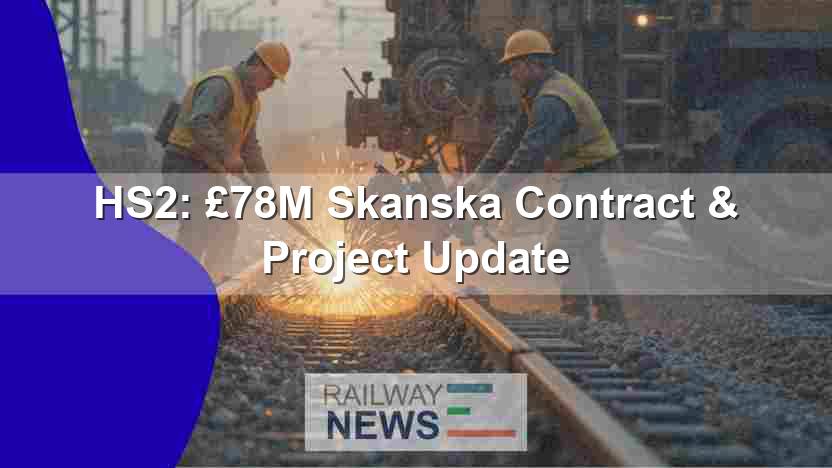
The High Speed 2 (HS2) project, a significant undertaking in the UK’s railway infrastructure development, exemplifies the complexities and challenges inherent in large-scale construction projects. This article explores the recent awarding of a £78 million contract to Skanska, part of the Skanska Costain Strabag joint venture (SCS JV), to further contribute to the HS2’s phase one development. The contract, an extension of a pre-existing agreement, underscores the evolving nature of such massive projects, the continuous need for adaptation, and the significant economic impact on both the construction industry and the broader UK economy. We will explore the scope of this latest contract, its implications for the overall HS2 project timeline and budget, and the broader logistical and engineering considerations involved in constructing such a complex high-speed rail network. The case study of Skanska’s involvement will serve as a lens through which to examine the challenges and successes in delivering major rail infrastructure projects.
The £78 Million Contract: Scope and Significance
The recently awarded £78 million contract to the SCS JV represents a significant addition to the already substantial commitment made by Skanska to the HS2 project. This contract falls under the existing agreement, reflecting the dynamic nature of large-scale construction projects. Changes to the original scope of works, necessitating this supplemental contract, highlight the importance of robust project management and the ability to adapt to unforeseen challenges or refinements in design during construction. The contract’s inclusion in Skanska’s Q2 2022 order bookings for Europe underscores its substantial financial impact and contribution to the company’s overall performance. The specifics of the work included in this additional contract are not fully detailed in publicly available information, however, it is likely related to the ongoing earthworks, tunnel construction, and logistical support that are integral to the project’s success. The completion date of 2026 reinforces the long-term investment and planning involved in such undertakings.
The Broader HS2 Context: Challenges and Opportunities
The HS2 project, in its entirety, presents numerous logistical and engineering challenges. The construction of high-speed rail lines requires meticulous planning and execution, encompassing complex earthworks, tunnel boring (TBM) operations, and the integration of advanced signaling and communications systems. The creation of new rail transportation logistics hubs, as seen in this project, aims to mitigate the environmental impact by reducing reliance on road transportation. This illustrates a broader shift toward sustainable infrastructure development. Further challenges relate to managing the project’s substantial workforce (currently 3,500 employees on this section alone) and ensuring adherence to strict safety regulations and environmental protection measures. The scale of the project also poses financial management challenges, requiring efficient resource allocation and meticulous cost control across multiple contractors and subcontractors.
Engineering and Technological Considerations
The HS2 project demands cutting-edge engineering solutions. The use of TBMs for tunnel construction is a prime example. These sophisticated machines require specialized expertise to operate and maintain effectively. Moreover, the design and construction of the London Euston terminus, a key component of the project, present unique challenges due to the complexities of working within an established urban environment. Integration of modern signaling systems and other advanced technologies is crucial to ensure the high-speed railway’s operational efficiency and safety. Effective project management requires seamless coordination between different engineering disciplines, from geotechnical engineering to structural engineering and signaling systems implementation.
Project Management and Risk Mitigation
Successful completion of the HS2 project hinges on robust project management. This includes risk mitigation strategies to address potential delays or cost overruns. Effective communication and coordination between HS2 Ltd., the SCS JV, and other stakeholders are vital. Regular monitoring of progress, coupled with proactive issue resolution, is crucial to keep the project on track. The additional contract awarded to Skanska exemplifies the need for flexibility in adapting to evolving project requirements and unforeseen circumstances. A strong emphasis on health and safety is paramount, given the scale and complexity of the construction activities involved, encompassing rigorous adherence to industry best practices and appropriate risk assessments throughout the project lifecycle.
Conclusions
The awarding of the £78 million contract to Skanska, as part of the SCS JV, for further work on the HS2 project highlights several key aspects of large-scale infrastructure development. This contract extension exemplifies the dynamic nature of such projects, where unforeseen circumstances or design refinements necessitate adaptation and flexibility. The project’s success hinges on robust project management, effective risk mitigation, and seamless collaboration among various stakeholders. The integration of advanced engineering solutions and a commitment to sustainable practices, as evidenced by the creation of the new logistics hub to reduce road traffic, showcase a forward-thinking approach to infrastructure development. While challenges undoubtedly remain, the progress made, particularly in earthworks and TBM assembly, suggests a positive trajectory. The completion of the project in 2026 will not only significantly enhance the UK’s rail network but also provide valuable lessons and insights into managing the complexities of future mega-projects in the rail infrastructure sector. The sheer scale and the innovative technological applications involved in the HS2 project set a benchmark for future high-speed rail initiatives globally, showcasing the importance of planning, collaboration, and continuous adaptation in achieving ambitious infrastructure goals.

Railway infrastructure, rolling stock and transport technologies specialist focused on global rail industry developments, high-speed rail systems, signaling technologies and freight transportation. Covering railway investments, public transport modernization, rail operations and international mobility projects across Europe, Asia and North America.
RELATED POSTS

October 8, 2026 1:15 pm
Alstom secured a €1bn contract to build 13 automated trains,...

October 1, 2026 7:09 am
United States regulators confirmed a September 30 deadline for the...

October 8, 2026 12:18 pm
Siemens Mobility signed an agreement with VinSpeed to supply 350...

October 4, 2026 5:14 pm
Alstom secured a CA$4.7 billion order from VIA Rail Canada...

October 5, 2026 6:12 pm
AECOM and Jacobs secured a contract in September 2026 to...

October 4, 2026 11:08 pm
Sound Transit confirmed the September 30 opening of Seattle Pinehurst...