
Hitachi Rail Launches Modular French-Made BV700 Validator
Hitachi Rail launched its modular French-made BV700 validator, succeeding the 50,000-unit selling BV600 model.
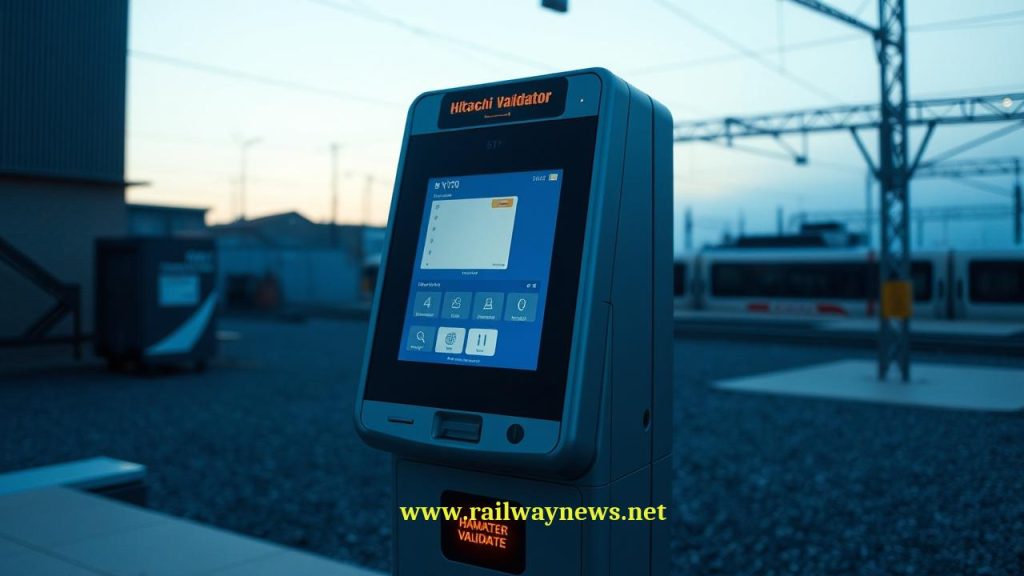
⚡ In Brief: Hitachi Rail has launched its new French-manufactured BV700 ticket validator, featuring a modular design and two touchscreen sizes to succeed the BV600 model, which has sold over 50,000 units across ten countries.
LONDON, UK – Hitachi Rail has officially unveiled the BV700, a new-generation ticket validator designed for multimodal public transport networks. The device, designed and manufactured in France, was introduced at the Transport Ticketing Global event in London on March 17 and succeeds the company’s BV600 model, which has over 50,000 units currently in service.
What Are the Technical Specifications?
The BV700 validator is engineered with a modular architecture, allowing for individual component upgrades without replacing the entire unit. It is offered with two touchscreen options, a 5-inch and a 7-inch model, to accommodate different installation environments. As part of Hitachi’s ticketing portfolio, the device integrates with the TRANSCITY platform, which is used to manage complex fare systems across various modes of transport. The design explicitly focuses on facilitating maintenance to reduce operational downtime and extend the product’s service life.
Key Technical Data
| Parameter | Value |
|---|---|
| Technology / System Name | Hitachi Rail BV700 Validator |
| Total Value | Not disclosed |
| Parties Involved | Hitachi Rail |
| Timeline / Completion | Public unveiling March 17-18; general availability not disclosed |
| Country / Corridor | Designed and manufactured in France; for global deployment |
Where Does This Technology Stand in the Market?
The BV700 enters a competitive market for fare collection hardware dominated by established players. Its key advertised differentiator is modularity, aimed at lowering total cost of ownership and reducing e-waste. This contrasts with many legacy systems that require full hardware replacement for major upgrades. Competitor Cubic Transportation Systems, a leader in major cities like London and New York, offers deeply integrated, large-scale fare collection solutions, but Hitachi is positioning the BV700 as a more sustainable and adaptable long-term asset. Similarly, Germany’s Scheidt & Bachmann provides highly reliable validators across Europe, but the BV700’s emphasis on component-level upgrades presents a direct challenge to the traditional “rip and replace” cycle common in the industry.
Editor’s Analysis
Hitachi Rail’s launch of the BV700 is strategically timed to capitalize on two major industry trends: sustainability and operational efficiency. The modular design directly addresses operator concerns over long-term capital expenditure and electronic waste, a growing factor in procurement decisions. The product’s French origin provides a strong foothold in a domestic market that is committing to significant rail modernization investment through 2025, creating an ideal proving ground for the new technology (Source: France High-Speed Rail Investment Data). This move aligns with a broader push for intelligent mobility platforms that integrate multiple transport modes and payment types, a field where data-driven solutions are becoming critical for urban planning (Source: Miovision).
FAQ
Q: What is the main difference between the BV700 and the older BV600 model?
A: The BV700 introduces a modular design for easier component upgrades, a more powerful processor, and offers touchscreen interaction on two screen sizes (5 and 7 inches). It is also engineered for simpler maintenance to reduce downtime compared to its predecessor.
Q: What types of payment can the BV700 accept?
A: The device is designed to accept multiple payment media, which typically includes contactless bank cards (cEMV), mobile payments via NFC, and closed-loop transit authority smart cards. The specific payment types enabled are configured by the transport operator during implementation.
Q: How does the BV700’s modular design benefit transport operators?
A: The modular architecture allows operators to upgrade specific components, such as the payment reader or processor, without replacing the entire validator. This approach aims to reduce long-term capital costs, minimize electronic waste, and shorten the time vehicles are out of service for maintenance.

Railway infrastructure, rolling stock and transport technologies specialist focused on global rail industry developments, high-speed rail systems, signaling technologies and freight transportation. Covering railway investments, public transport modernization, rail operations and international mobility projects across Europe, Asia and North America.
RELATED POSTS

October 1, 2026 7:09 am
United States regulators confirmed a September 30 deadline for the...

October 8, 2026 1:15 pm
Alstom secured a €1bn contract to build 13 automated trains,...

October 4, 2026 5:14 pm
Alstom secured a CA$4.7 billion order from VIA Rail Canada...

October 1, 2026 12:13 am
Illinois approved $1.5 billion annually for the Northern Illinois Transit...

October 6, 2026 2:14 am
Union Pacific launched export rail shipments with Ferromex to deliver...

October 1, 2026 6:10 am
Amtrak approved a System Expansion Committee on July 30 to...