
High-Speed Rail Future: Innovations & Infrastructure
High-speed rail is evolving rapidly, navigating tech advancements and infrastructure hurdles. Discover how new propulsion systems and signaling technologies are reshaping the future of rail travel!
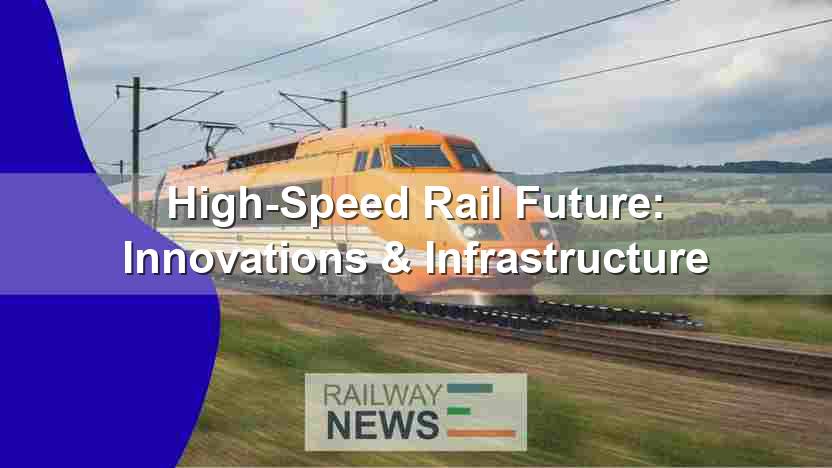
The global rail industry is undergoing a period of significant transformation, driven by technological advancements and the imperative to enhance efficiency, sustainability, and passenger experience. This article explores the key elements shaping the future of high-speed rail, examining the opportunities presented by emerging technologies and the challenges associated with their implementation and integration into existing infrastructure. From innovative propulsion systems to advanced signaling and control technologies, we will explore the multifaceted landscape of high-speed rail development, highlighting the crucial role of public-private partnerships and regulatory frameworks in fostering sustainable growth. The potential for disruptive innovations like the hyperloop transportation system will also be evaluated, acknowledging both their promise and potential limitations.
The Evolution of High-Speed Rail Propulsion Systems
Historically, high-speed rail relied primarily on electric traction. However, recent advancements in propulsion technologies are pushing the boundaries of speed and efficiency. Magnetic levitation (Maglev) systems, while promising, face challenges in terms of cost and track construction. Further exploration of superconducting Maglev (SCM) technology holds potential for significantly higher speeds, but significant capital investment remains a hurdle. Hybrid propulsion systems combining electric motors with alternative energy sources, such as hydrogen fuel cells, are attracting interest due to their potential for reduced emissions and greater flexibility in energy sourcing. The optimization of existing electric traction systems, through the use of more powerful motors and advanced control systems, also remains a crucial area of research. The viability and scalability of these various options depend on factors such as energy costs, infrastructure compatibility, and environmental considerations.
The Integration of Advanced Signaling and Control Technologies
Modern high-speed rail systems require highly sophisticated signaling and control systems to maintain safe and efficient operation at high speeds. The transition from conventional signaling systems to advanced digital technologies, including CBTC (Communication-Based Train Control) and ETCS (European Train Control System) offers substantial improvements in safety, efficiency, and capacity. These systems enable precise control of train movements, reducing reaction time in emergency situations, increasing overall throughput and allowing for tighter scheduling. The integration of these technologies requires significant investment in infrastructure upgrades, as well as the training and qualification of personnel to operate and maintain these complex systems. Additionally, compatibility between different national and regional signaling systems is crucial to facilitating cross-border high-speed rail networks and seamless passenger flow.
Addressing Infrastructure Challenges in High-Speed Rail Development
The development of high-speed rail infrastructure is a complex undertaking requiring significant investment and meticulous planning. Effective route selection, considering factors such as environmental impact, land acquisition, and local community concerns is essential for project success. Tunneling, bridging, and tracklaying present substantial engineering challenges, demanding sophisticated techniques and specialized expertise. The impact on existing infrastructure, particularly when integrating with existing rail lines, demands careful planning and management. Optimization of track geometry, including curves and gradients, is vital to achieving high speeds and maintaining safety standards. These infrastructure-related challenges often become magnified when operating in densely populated areas and necessitate creative and innovative solutions.
The Role of Public-Private Partnerships and Regulatory Frameworks in Sustainable Growth
High-speed rail projects often involve substantial capital expenditure, making public-private partnerships (PPPs) a crucial component of their feasibility and successful execution. Clear and transparent regulatory frameworks are essential to manage risks associated with these projects, encourage private investment, and foster responsible development. These frameworks should address key aspects such as environmental protection, safety standards, and the equitable distribution of benefits. Governments play a vital role in creating a conducive environment for private sector participation, facilitating the exchange of knowledge and expertise. Additionally, a detailed evaluation of the long-term social and economic impact of these projects, encompassing factors such as job creation, economic growth, and environmental sustainability, should underpin the decision-making process.
Conclusions: Shaping the Future of High-Speed Rail
The future of high-speed rail hinges on a complex interplay of technological advancement, infrastructure development, and public policy. Significant progress has been made in developing more efficient propulsion systems, and integrating advanced signaling and control technologies. However, challenges remain in addressing infrastructure limitations and integrating existing rail networks. The successful development of high-speed rail requires a holistic approach encompassing meticulous route selection, environmental considerations, and social impact assessments. Public-private partnerships and robust regulatory frameworks play a crucial role in facilitating sustainable and responsible growth. Ultimately, high-speed rail systems have the potential to revolutionize transportation, offering significant advantages in terms of reduced travel times, enhanced passenger experience, and environmental sustainability. The emerging potential of hyperloop transportation further complicates and enriches the conversation, adding another dimension to the evolution of high-speed rail. While challenges remain in terms of infrastructure and cost-effectiveness, the ongoing advancements in propulsion, signaling, and integration strategies offer a promising outlook for the future of rail travel, particularly as this industry faces the need for more sustainable and efficient solutions. This transformation is likely to be marked by the continued development of high-speed rail, alongside emerging technologies such as the hyperloop transportation system, offering new avenues for passenger and freight transport.
You might be interested in:
Last April 2019, we published an article about the renewed rail link between Cambodia and Thailand. Click here to read – Cambodia-Thailand Rail Link Resumes After 45 Years

Railway infrastructure, rolling stock and transport technologies specialist focused on global rail industry developments, high-speed rail systems, signaling technologies and freight transportation. Covering railway investments, public transport modernization, rail operations and international mobility projects across Europe, Asia and North America.
RELATED POSTS

October 8, 2026 1:15 pm
Alstom secured a €1bn contract to build 13 automated trains,...

October 5, 2026 6:12 pm
AECOM and Jacobs secured a contract in September 2026 to...

October 1, 2026 12:13 am
Illinois approved $1.5 billion annually for the Northern Illinois Transit...

October 4, 2026 11:08 pm
Sound Transit confirmed the September 30 opening of Seattle Pinehurst...
October 5, 2026 1:13 pm
New York MTA confirmed a late 2026 DEIS release for...
October 8, 2026 1:17 am
Alstom secured a contract in August 2025 to supply automated...