
High-Speed Rail Future: Innovations, Infrastructure & Global Trends
Here are a few voiceover-friendly excerpts based on your text and guidelines:
**Option 1 (Focus on Innovation):**
> High-speed rail is revolutionizing travel, thanks to cutting-edge rail technology. From sleek trains to advanced signaling, discover how!
**Option 2 (Focus on Infrastructure):**
> Building high-speed rail requires dedicated infrastructure, from specialized tracks to powerful electrification systems. Learn the secrets to speed!
**Option 3 (Broader Overview):**
> High-speed rail is transforming our world. Explore the innovations and challenges shaping the future of rail technology.
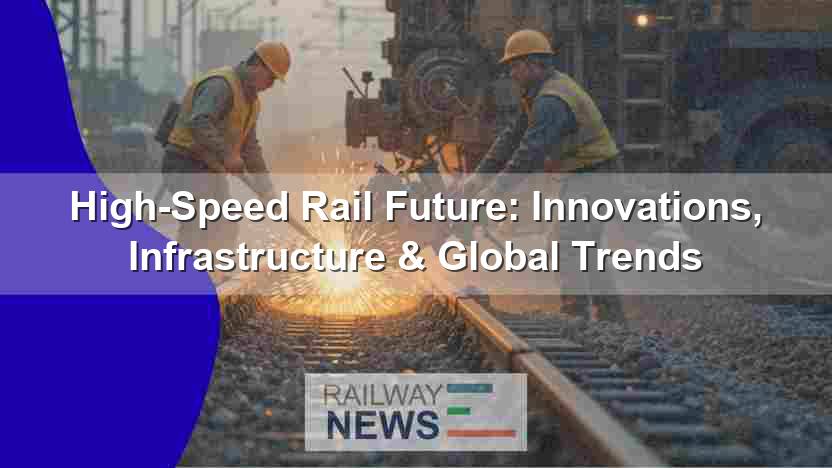
The Future of High-Speed Rail: Innovations and Challenges
The relentless march of progress has brought about transformative changes across industries, and perhaps nowhere is this more evident than in the evolution of transportation. High-speed rail (HSR), once a futuristic concept, has become a tangible reality, reshaping how we connect cities and traverse vast distances. This article explores the multifaceted landscape of HSR, exploring the core technologies, the pivotal role of infrastructure, the intricate web of operational considerations, and the complex interplay of economic and environmental factors that shape its trajectory. We will examine the innovations propelling HSR forward, the challenges it confronts, and the potential it holds for a more sustainable and interconnected future. From the sleek bullet trains of Japan to the burgeoning HSR networks of Europe and China, we will dissect the components that make these systems function, and the impact they have on the economic landscape.
Rail Technology: The Engines of Speed
The heart of any HSR system lies in its advanced rail technology. This encompasses a wide array of innovations, all working in concert to achieve unprecedented speeds and operational efficiency.
* _Rolling Stock:_ The trains themselves are marvels of engineering, designed to minimize aerodynamic drag, ensure passenger comfort, and maintain stability at high speeds. Lightweight materials, such as aluminum alloys and carbon fiber composites, are used extensively to reduce weight, while sophisticated suspension systems provide a smooth ride. The power systems are also critical, relying on high-voltage AC electrification to deliver the necessary energy for propulsion.
* _Track and Signaling Systems:_ Specialized track construction is paramount, including continuously welded rails, concrete sleepers, and carefully designed curves and gradients. Precision track alignment is essential to prevent derailments at high speeds. Signaling systems are equally important, incorporating advanced train control systems (such as European Train Control System – ETCS) that automatically manage train movements, maintain safe separation distances, and optimize speed based on track conditions and other factors.
* _Station Design and Infrastructure:_ The design of stations and surrounding infrastructure, like the integration of the HSR lines with other transportation networks is vital to the proper functionality of the system. Station designs consider passenger flow, security, and ease of access, ensuring a seamless experience for travelers.
You might be interested in:
Last October 2018, we published an article about Ansaldo STS’s signaling advancements in Malaysia. Click here to read – Ansaldo STS: Malaysia Rail Signaling Advancements
The Crucial Role of Infrastructure
Building and maintaining the necessary infrastructure is arguably the most capital-intensive aspect of HSR development. The construction of dedicated tracks, tunnels, bridges, and stations demands substantial investment and meticulous planning.
* _Track Construction:_ HSR tracks require a higher degree of precision than conventional rail lines. This includes using heavier rails, tighter tolerances, and advanced track laying techniques. The use of concrete sleepers and continuously welded rails minimizes vibrations and ensures a smoother ride.
* _Electrification:_ Electrification systems, including overhead catenary systems (OCS) or third-rail systems, are crucial for powering HSR trains. These systems require robust infrastructure and maintenance to ensure a reliable power supply.
* _Signaling and Communications:_ Advanced signaling and communication systems are also essential. These systems include automatic train protection (ATP) and automatic train operation (ATO) to manage train movements, prevent collisions, and optimize performance.
Operational and Safety Considerations
Operating HSR systems safely and efficiently involves a complex array of considerations.
* _Train Control and Safety Systems:_ Sophisticated train control systems are essential to manage train movements, maintain safe separation distances, and prevent accidents. These systems incorporate features such as automatic train protection (ATP) and automatic train operation (ATO).
* _Maintenance and Reliability:_ Regular maintenance is critical to ensure the reliability and longevity of HSR infrastructure and rolling stock. This includes periodic inspections, preventative maintenance, and timely repairs.
* _Security:_ Security measures, including surveillance systems, passenger screening, and emergency response protocols, are crucial to protect passengers and infrastructure.
Economic and Environmental Implications
The implementation of HSR has significant economic and environmental implications.
* _Economic Benefits:_ HSR can stimulate economic growth by creating jobs, improving connectivity, and promoting tourism. It can also reduce congestion on roads and in airports, leading to greater efficiency and reduced travel times.
* _Environmental Impact:_ HSR can significantly reduce carbon emissions compared to air travel and private vehicles. It can also improve air quality and reduce noise pollution.
* _Financial Investment:_ The high initial cost of HSR infrastructure can be a significant barrier to entry. However, the long-term economic benefits, including increased tax revenues and reduced congestion costs, can often justify the investment.
Conclusion: Riding the Rails to a Sustainable Future
To summarize, high-speed rail represents a pivotal shift in the evolution of transportation. The innovations in _rail technology_ have enabled the creation of incredibly efficient and rapid systems, from advanced signaling to revolutionary rolling stock designs. However, the realization of HSR’s potential depends not only on technological prowess but also on robust infrastructure, rigorous operational strategies, and careful consideration of economic and environmental factors. The construction of dedicated tracks, the establishment of advanced signaling systems, and the implementation of detailed safety protocols are essential for the success of these systems. The impact of HSR on the economic landscape is undeniable, offering a significant catalyst for job creation, tourism, and regional development, contributing to the economic prosperity of the regions. The environmental benefits are equally compelling, with HSR offering a greener alternative to air travel and private vehicles, contributing to reduced carbon emissions and a cleaner environment. While the initial investment can be substantial, the long-term benefits of HSR, from increased connectivity to reduced congestion and carbon footprint, make it a worthwhile endeavor. As the world grapples with the challenges of climate change and the demand for efficient travel grows, high-speed rail stands poised to become an even more integral part of the global transportation landscape. It is a journey that will undoubtedly shape the future of travel, offering a pathway towards a more connected, sustainable, and prosperous world.

Railway infrastructure, rolling stock and transport technologies specialist focused on global rail industry developments, high-speed rail systems, signaling technologies and freight transportation. Covering railway investments, public transport modernization, rail operations and international mobility projects across Europe, Asia and North America.
RELATED POSTS

October 4, 2026 5:14 pm
Alstom secured a CA$4.7 billion order from VIA Rail Canada...

October 4, 2026 11:08 pm
Sound Transit confirmed the September 30 opening of Seattle Pinehurst...

October 8, 2026 12:18 pm
Siemens Mobility signed an agreement with VinSpeed to supply 350...
October 1, 2026 10:14 am
HS2 installed a 55-metre steel span in Birmingham, completing phase...

October 1, 2026 3:12 am
Greenbrier confirmed Brian Comstock as new president and CEO effective...

October 5, 2026 6:12 pm
AECOM and Jacobs secured a contract in September 2026 to...