
High-Speed Rail: EU Leaders Drive Future, Rail Innovation Trends
EU rail leaders in Warsaw push for strategic rail investment and procurement reforms, focusing on high-speed network development.
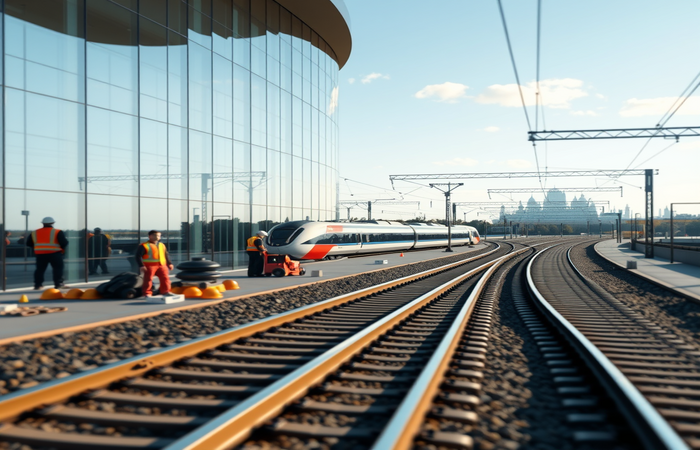
EU Rail Leaders Unite in Warsaw, Urge Strategic Investment and Procurement Reform
The European rail industry convened in Warsaw this week, as UNIFE, the Association of the European Rail Supply Industry, hosted its 34th General Assembly. The event, held on June 12, 2025, brought together leading figures from across the EU rail sector, including senior executives, policymakers, and new members, to address critical challenges and opportunities. The primary focus was on securing substantial investment, streamlining procurement processes, and developing a clear, strategic vision for a pan-European high-speed rail network. The assembly served as a crucial platform for industry leaders to advocate for policies that would foster innovation, enhance competitiveness, and solidify rail’s position as the primary mode of transport in Europe. The assembled leaders underscored the urgent need for action to meet growing passenger demand, promote sustainability, and capitalize on the economic benefits of a connected rail network.
Securing the Future of the European High-Speed Rail Network
UNIFE Director General Enno Wiebe opened the assembly with a strong call to action, urging a coordinated industry response to upcoming decisions regarding the EU Budget and future initiatives, particularly those concerning the European High-Speed Rail Network. The central message was the critical need for strategic investment to prevent stagnation and accommodate the growing demands of passenger and freight traffic. The association reiterated its commitment to a robust high-speed rail network but stressed the necessity for clarity in financing mechanisms to ensure that economic benefits are fully realized by both EU member states and the rail supply industry. This includes not only funding for infrastructure but also support for the latest advancements in rail technology such as the European Train Control System (ETCS) to improve safety and capacity across the continent.
Navigating Global Competitiveness and Procurement Reform
A significant portion of the assembly was dedicated to addressing challenges related to global competitiveness and the need for reforms in public procurement processes. UNIFE voiced concerns about the sector’s ability to compete with global players and advocated for the recognition of the rail supply sector as a strategic industry. They proposed preferential treatment for rail supply companies in EU tenders to foster domestic growth and innovation. This would also encourage investments in research and development (R&D), essential for keeping Europe at the forefront of rail technology. The importance of the IRIS Certification® (International Railway Industry Standard) and the ongoing work of the Europe’s Rail Joint Undertaking were also highlighted, urging their continuation in the next EU budget cycle.
Poland’s Role and Infrastructure Investment
Poland played a prominent role in the assembly, reflecting its growing importance in the European rail landscape. Dariusz Joński MEP praised the industry as a driving force of innovation, sustainability, and competitiveness, emphasizing the need for EU support and strategic investment. Alan Beroud, CEO of PKP (Polish State Railways) and Chair of UIC (International Union of Railways), and Piotr Wyborski, President of PKP Polskie Linie Kolejowe (Polish National Railway Infrastructure Manager), discussed Poland’s commitment to infrastructure investment, including projects funded by the TEN-T (Trans-European Transport Network). Wyborski highlighted the significant financial commitment, stating that “2024 and 2025 mark a strong comeback, with over €6.9 billion in tenders already launched.” Poland’s National Implementation Plan outlines the aim to equip 9,800 km of TEN-T rail lines with ETCS Level 2 by 2050, with the older SHP (Polish Train Protection System) system being phased out by 2048. The implementation of ETCS will modernize Poland’s rail network, improving safety and capacity and aligning it with EU standards.
Insights from Key Stakeholders
The assembly benefited from the participation of key figures, including Oana Gherghinescu, the newly appointed Executive Director of the European Union Agency for Railways, Keir Fitch of DG MOVE (Directorate-General for Mobility and Transport), and Giorgio Travaini of Europe’s Rail Joint Undertaking. Their presentations provided valuable insights into the latest policy developments and strategic priorities of the EU. Michael Peter, UNIFE Chair and CEO of Siemens Mobility, underscored the assembly’s significance, noting that the Warsaw event facilitated “real progress” and supported countries like Poland in becoming “new driving forces in a connected European rail network.” The event also welcomed 13 new members, signaling continued industry growth and confidence in UNIFE’s mission.
Conclusion
The 34th UNIFE General Assembly in Warsaw served as a pivotal moment for the European rail supply industry, galvanizing efforts to secure funding, drive procurement reform, and champion a clear strategy for a connected European high-speed rail network. The event’s emphasis on strategic investment, global competitiveness, and technological advancements highlighted the industry’s commitment to shaping the future of rail transport. Poland’s active participation and substantial investment plans further demonstrated the momentum for modernizing Europe’s rail infrastructure. The advocacy for transparent procurement processes and the promotion of the IRIS Certification® underscored the industry’s commitment to quality and safety. The significant interest from stakeholders, including the newly joined members, shows that UNIFE plays a vital role in advancing rail as a preferred mode of transport in the EU. As the industry looks ahead, it is clear that continued collaboration between policymakers, rail operators, and the supply chain is essential to realize the vision of a sustainable, interconnected, and competitive European rail network. The next General Assembly will be held in Brussels on June 10–11, 2026.

Railway infrastructure, rolling stock and transport technologies specialist focused on global rail industry developments, high-speed rail systems, signaling technologies and freight transportation. Covering railway investments, public transport modernization, rail operations and international mobility projects across Europe, Asia and North America.
RELATED POSTS

October 8, 2026 1:15 pm
Alstom secured a €1bn contract to build 13 automated trains,...

October 1, 2026 7:09 am
United States regulators confirmed a September 30 deadline for the...

October 8, 2026 12:18 pm
Siemens Mobility signed an agreement with VinSpeed to supply 350...

October 4, 2026 5:14 pm
Alstom secured a CA$4.7 billion order from VIA Rail Canada...

October 1, 2026 12:13 am
Illinois approved $1.5 billion annually for the Northern Illinois Transit...
October 5, 2026 1:13 pm
New York MTA confirmed a late 2026 DEIS release for...