
Helsinki’s €400M Tram Expansion: A Sustainable Future
The €400 million project by the European Investment Bank invests heavily in Helsinki’s public transportation infrastructure, focusing on a new light rail line extending to eastern suburbs along with an integrated tram and bus depot, aiming to enhance connectivity, sustainability, and quality of life for residents.
Introduction
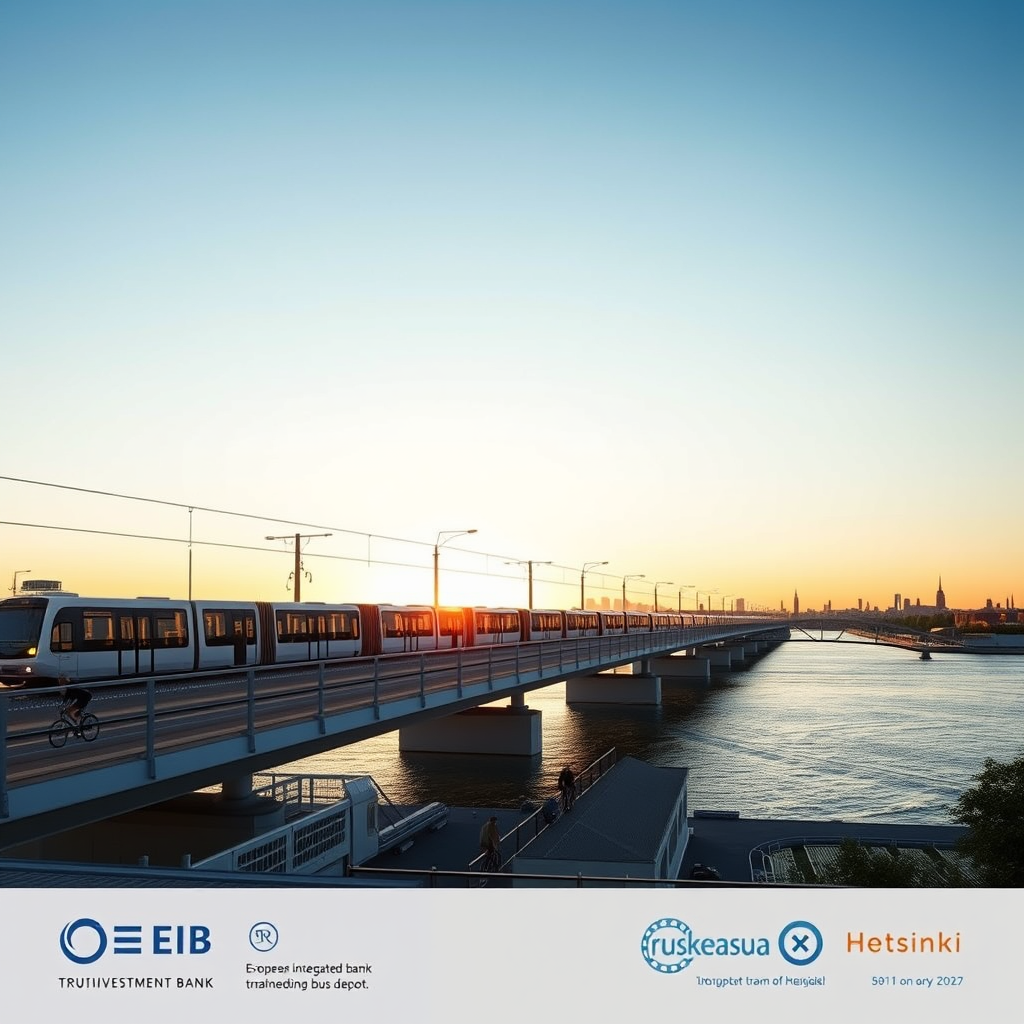
This article examines the significant investment by the European Investment Bank (EIB) in Helsinki’s public transportation infrastructure. The €400 million ($453 million USD) project focuses on the construction of a new light rail (tram) line extending to the eastern suburbs of Helsinki, Finland, along with the creation of a state-of-the-art integrated tram and bus depot. This initiative represents a crucial step towards enhancing public transport connectivity, promoting sustainable urban development, and improving the quality of life for Helsinki’s residents. The project’s scope encompasses not only the construction of the new tram line, traversing several substantial bridges, but also the creation of dedicated cycling and pedestrian infrastructure, signifying a holistic approach to urban mobility. The article will delve into the technical aspects of the project, its economic implications, and its contribution to Helsinki’s broader sustainable transportation goals. The integration of the tram and bus depot, a first for Finland, will be explored, highlighting its efficiency and operational benefits. Finally, the article will place this project within the wider context of European investment in sustainable transportation infrastructure.
Helsinki’s Eastern Suburb Light Rail Expansion
The core of the project involves extending Helsinki’s tram network to serve the currently underserved eastern suburbs of Laajasalo, Korkeasaari, and Kalasatama. This expansion is projected to significantly reduce commute times to approximately 20 minutes, offering a compelling alternative to private car usage. The route’s design necessitates the construction of three major bridges: the Kruunuvuorensilta Bridge (1,200m long with a 135m pylon), the Merihaansilta Bridge (400m), and the Finkensilta Bridge (300m). Each bridge incorporates dedicated cycling and pedestrian lanes, reflecting a commitment to multimodal transportation solutions. This strategic expansion will not only improve accessibility but also contribute to reducing traffic congestion and carbon emissions within the city.
The Ruskeasuo Integrated Tram and Bus Depot
A key component of the project is the development of the Ruskeasuo depot, a first-of-its-kind integrated tram and bus depot in Finland. This facility will accommodate approximately 80 trams and provide detailed maintenance and repair services. The integration of bus operations within the same depot promises significant operational efficiencies, streamlining maintenance schedules, resource allocation, and overall operational costs. This centralized approach reflects modern best practices in public transportation management, optimizing resource utilization and minimizing environmental impact.
Financing and Economic Impact
The EIB’s substantial investment of €400 million represents a significant commitment to Helsinki’s sustainable transportation vision. The funding is divided into a €150 million loan to the City of Helsinki and a €250 million loan to Metropolitan Area Transport Ltd (Paakaupunkiseudun Kaupunkiliikenne Oy). This financial injection not only funds the construction and infrastructure development but also contributes to the procurement of new, modern trams, crucial for maintaining a high standard of service. The economic impact extends beyond the immediate construction phase, creating numerous jobs and stimulating related industries. The improved accessibility provided by the expanded tram network will also boost economic activity in the eastern suburbs.
Sustainable Transportation and Urban Development
The Helsinki tramline expansion project aligns perfectly with broader European Union objectives for sustainable transportation and urban development. By promoting public transport, the project directly addresses issues of traffic congestion, air pollution, and climate change. The integration of cycling and pedestrian infrastructure further emphasizes the project’s commitment to multimodal transport and creating a more environmentally friendly and livable urban environment. The project showcases a model for other cities aiming to achieve similar objectives by integrating sustainable infrastructure development with efficient public transportation solutions. The success of this project could serve as a blueprint for other urban areas looking to improve connectivity and sustainability.
Conclusions
The European Investment Bank’s €400 million investment in Helsinki’s new tramline and integrated tram and bus depot marks a substantial step forward in sustainable urban development. The project’s multifaceted approach, encompassing the extension of the light rail network to the eastern suburbs, the construction of three major bridges with integrated pedestrian and cycling infrastructure, and the establishment of Finland’s first integrated tram and bus depot at Ruskeasuo, demonstrates a detailed strategy for enhancing public transport and promoting sustainable urban mobility. The project not only improves public transport connectivity, reducing travel times and providing better access to previously underserved areas but also addresses crucial environmental concerns. By reducing reliance on private vehicles, the project contributes to lowering carbon emissions and mitigating air pollution. The integration of the tram and bus depot represents a significant step towards operational efficiency and cost-effectiveness in public transportation management. The economic impact, encompassing job creation during the construction phase and enhanced economic activity in the served areas, is an added benefit. This Helsinki project serves as a model for other cities seeking to build sustainable and efficient public transport systems, showcasing the importance of strategic investment in integrated infrastructure and multimodal transportation solutions. The successful completion of this initiative will significantly enhance the quality of life for Helsinki’s residents and contribute to the city’s overall sustainability goals. The long-term benefits, including reduced congestion, improved air quality, and increased economic activity, solidify the significance of this investment in both the present and future of Helsinki’s urban landscape.

Railway infrastructure, rolling stock and transport technologies specialist focused on global rail industry developments, high-speed rail systems, signaling technologies and freight transportation. Covering railway investments, public transport modernization, rail operations and international mobility projects across Europe, Asia and North America.
RELATED POSTS

October 8, 2026 1:15 pm
Alstom secured a €1bn contract to build 13 automated trains,...

October 1, 2026 7:09 am
United States regulators confirmed a September 30 deadline for the...

October 8, 2026 12:18 pm
Siemens Mobility signed an agreement with VinSpeed to supply 350...

October 4, 2026 5:14 pm
Alstom secured a CA$4.7 billion order from VIA Rail Canada...

October 5, 2026 6:12 pm
AECOM and Jacobs secured a contract in September 2026 to...

October 1, 2026 12:13 am
Illinois approved $1.5 billion annually for the Northern Illinois Transit...