
GTX-A: Ricardo Rail’s High-Speed Rail Engineering Triumph
Ricardo Rail’s involvement in the System Engineering Support for GTX-A exemplifies the crucial need for comprehensive engineering support in large-scale rail infrastructure projects like the GTX-A Line A, ensuring compliance with international safety standards and seamless integration of various subsystems.
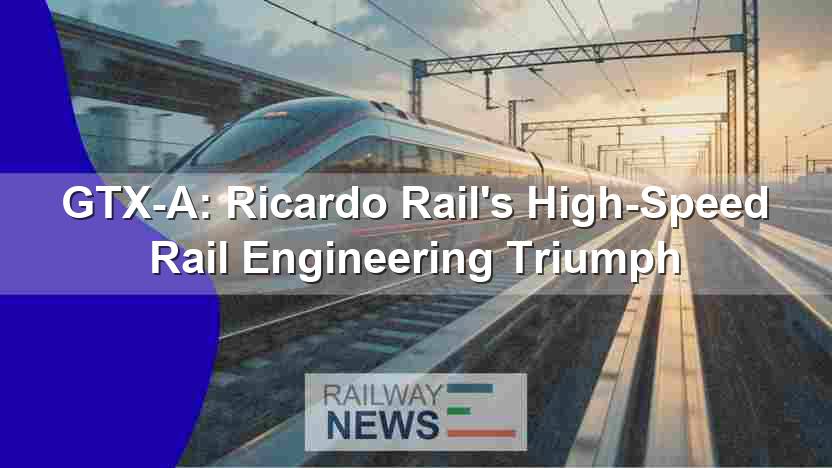
This article examines the crucial role of system engineering and safety assessment in the development of high-speed rail networks, using the Great Train eXpress (GTX) Line A in South Korea as a case study. The selection of Ricardo Rail by SG Rail (a Special Purpose Vehicle created for the GTX-A project) to provide these essential services highlights the growing importance of rigorous engineering and safety practices in mega-infrastructure projects. We will explore the scope of Ricardo Rail’s involvement, the technical challenges inherent in such projects, the importance of international safety standards, and the broader implications for future high-speed rail development globally. The article will delve into the specific services provided, the complexities of integrating various systems, and the long-term benefits of a robust and reliable high-speed rail network for Seoul and its surrounding regions. The impact on commuter travel, economic development, and environmental sustainability will also be considered.
Ricardo Rail’s System Engineering Support for GTX-A
Ricardo Rail’s engagement with the GTX-A project exemplifies the critical need for detailed system engineering support in large-scale rail infrastructure developments. Their contract with SG Rail encompasses a wide array of services, including Independent Safety Assessment (ISA), which ensures compliance with international safety standards. This is paramount given the high speeds involved (180 kmph) and the potential consequences of system failures. Beyond ISA, Ricardo Rail is providing oversight of integration management, crucial for ensuring the seamless interaction of the various subsystems – civil works, track, railway systems, and rolling stock – within the overall GTX-A network. Their expertise in areas such as reliability, availability, maintainability (RAM), noise and vibration management, electromagnetic compatibility (EMC), and interface management are vital to the success of the project.
Addressing the Challenges of High-Speed Rail Integration
The construction of high-speed rail networks presents unique engineering challenges. The GTX-A line, connecting Unjeong to Dongtan, is no exception. The integration of various systems requires meticulous planning and execution. Challenges include ensuring interoperability between different components, managing complex interfaces, and mitigating potential risks associated with high-speed operation. Ricardo Rail’s role in managing these interfaces, especially in anticipation of the integration with GTX-B and GTX-C lines, is significant. Their expertise in reliability and maintainability is crucial for minimizing downtime and maximizing the long-term operational efficiency of the network.
The Significance of International Safety Standards
Adherence to international safety standards is non-negotiable for high-speed rail projects. Ricardo Rail’s ISA services play a crucial role in guaranteeing that the GTX-A meets these stringent requirements. This involves rigorous testing and validation of all systems, ensuring the safety of passengers and railway personnel. The application of internationally recognized standards promotes consistency, reliability, and safety across different rail systems globally. The benefits extend beyond immediate safety; adherence to standards facilitates easier future expansion and upgrades. This proactive approach to safety is essential for public trust and the long-term success of the GTX network.
Long-Term Impacts and Future Considerations
The GTX-A project, with its anticipated completion in 2024, represents a significant investment in Seoul’s transport infrastructure. The high-speed rail link will significantly improve connectivity between Seoul and surrounding regions, boosting economic activity and improving the quality of life for commuters. The project’s success, facilitated by the system engineering and safety assessment services provided by Ricardo Rail, will serve as a model for future high-speed rail projects worldwide. The lessons learned, particularly concerning integration management and the application of international safety standards, can be invaluable for future undertakings. Ricardo Rail’s expertise in anticipating engineering challenges and facilitating seamless integration across multiple lines underlines the importance of proactive, holistic planning in these complex mega-projects.
Conclusions
The collaboration between SG Rail and Ricardo Rail on the GTX-A project showcases the vital role of detailed system engineering and rigorous safety assessment in the successful delivery of high-speed rail networks. Ricardo Rail’s contribution extends beyond simple technical support; their expertise in integration management, reliability, availability, maintainability (RAM), and adherence to international safety standards (through ISA) are crucial for ensuring a safe, efficient, and sustainable high-speed rail system. The challenges inherent in integrating various subsystems, managing complex interfaces, and mitigating risks associated with high-speed operation are considerable. However, Ricardo Rail’s involvement mitigates these challenges through their proactive approach and extensive experience. The anticipated benefits of GTX-A—improved connectivity, enhanced economic activity, and increased commuter satisfaction—underscore the importance of investment in robust rail infrastructure. The project serves as a valuable case study highlighting best practices for future high-speed rail developments worldwide. The emphasis on international safety standards, holistic system integration, and proactive risk management demonstrated in this project establishes a benchmark for future large-scale infrastructure projects, ensuring both immediate safety and long-term operational success. The successful implementation of GTX-A, significantly aided by Ricardo Rail’s expertise, holds valuable lessons for urban planning and transportation systems globally, illustrating the vital role of systematic planning and rigorously applied safety standards in high-speed rail development.

Railway infrastructure, rolling stock and transport technologies specialist focused on global rail industry developments, high-speed rail systems, signaling technologies and freight transportation. Covering railway investments, public transport modernization, rail operations and international mobility projects across Europe, Asia and North America.
RELATED POSTS

October 8, 2026 1:15 pm
Alstom secured a €1bn contract to build 13 automated trains,...

October 1, 2026 7:09 am
United States regulators confirmed a September 30 deadline for the...

October 8, 2026 12:18 pm
Siemens Mobility signed an agreement with VinSpeed to supply 350...

October 4, 2026 5:14 pm
Alstom secured a CA$4.7 billion order from VIA Rail Canada...

October 5, 2026 6:12 pm
AECOM and Jacobs secured a contract in September 2026 to...

October 4, 2026 11:08 pm
Sound Transit confirmed the September 30 opening of Seattle Pinehurst...