
GTR Completes 60 Station Projects Under £1.7M DfT Fund
Govia Thameslink Railway completed 60 station improvements across its network with a £1.7m DfT fund and secured an equal sum for the 2026–27 funding cycle.
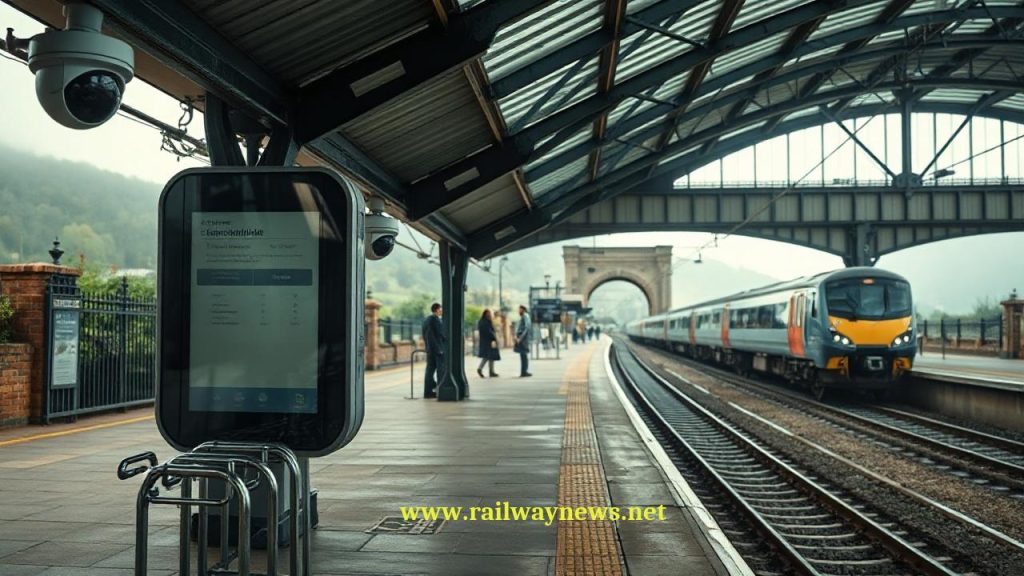
⚡ In Brief: GTR completed 60 station improvement projects funded by a £1.7m Department for Transport allocation across the Thameslink, Southern and Great Northern network in the past year, with an equal sum secured for the coming year.
LONDON, UK – Govia Thameslink Railway (GTR) delivered 60 station improvement projects across its three-brand network in the 2025–2026 period, backed by a £1.7 million allocation from the Department for Transport’s Minor Works and Station Improvement Funds. A further £1.7 million has been confirmed for the coming year. The upgrades span interactive information screens, enhanced CCTV systems, expanded cycle storage, and 3D station mapping to support accessibility planning from Rye to Royston.
How Is the Funding Structured?
The Minor Works and Station Improvement Funds are annual DfT-administered allocations ring-fenced for small-scale station environment enhancements, not rolling stock or track infrastructure. GTR confirmed that £1.7 million was drawn down for 60 projects completed in the past 12 months, with an identical sum approved for the next funding cycle. No individual project cost breakdown was provided, and GTR did not disclose which specific stations received upgrades.
Key Funding Data
| Parameter | Value |
|---|---|
| Fund / Programme Name | Minor Works and Station Improvement Funds |
| Total Value (Two-Year) | £3.4 million (£1.7M allocated per annum) |
| Parties Involved | Govia Thameslink Railway (GTR), Department for Transport (DfT) |
| Timeline / Completion | 60 projects completed 2025–2026; next tranche due 2026–2027 |
| Country / Corridor | United Kingdom (Thameslink, Southern, Great Northern network) |
How Does This Compare to Similar Funding Programs?
The £1.7 million annual GTR station fund sits at the opposite end of the DfT spending spectrum from the department’s major corridor commitments. The Lower Thames Crossing project received an additional £174 million in June 2026, bringing total government investment to £1.655 billion — roughly 970 times the annual GTR station improvement budget (Source: Construction News, 2026). In parallel, East West Rail is procuring a strategic delivery partner for a £300 million consultancy framework to complete the Oxford–Cambridge route, with actual work orders forecast between £150 million and £200 million from August 2027 through August 2039 (Source: Safer Highways, 2025). The GTR Minor Works Fund allocates less than 0.6% of what the East West Rail consultancy framework alone is expected to deliver in work orders. Broader market data underscores the gap: the global rolling stock market was valued at $53.57 billion in 2025 (Source: Fortune Business Insights, 2025), while the railway traction battery segment reached an estimated $280.3 million in the same year (Source: Grand View Research, 2025). Station-level passenger-experience funding remains a fraction of total rail capital expenditure in the UK.
Editor’s Analysis
The bifurcation between mega-project capital and station-level passenger-experience funding is widening across UK rail. While DfT channels billions into corridor schemes like East West Rail and the Lower Thames Crossing, operators rely on modest annual grants to address the “last metre” of customer interaction — information screens, secure cycle parking, and accessibility mapping. Louis Rambaud, GTR’s Chief Customer Officer, framed this correctly: individual station changes appear small, but aggregated across 60 sites they shape daily travel perception. The risk for DfT is that sustained underinvestment in station environments — relative to headline infrastructure spending — erodes passenger satisfaction metrics that operators are increasingly measured against.
FAQ
Q: Which stations received improvements under the £1.7 million fund?
A: GTR stated that improvements were delivered across the network from Rye to Royston, but a full station-by-station list has not been published. The 60 projects were distributed across the Thameslink, Southern, and Great Northern brands.
Q: How is the Minor Works Fund different from major DfT infrastructure spending?
A: The Minor Works Fund is capped at small-scale station environment upgrades — screens, CCTV, cycle storage, accessibility mapping — whereas major DfT capital goes to track, signalling, rolling stock, and new corridor construction such as the £1.655 billion Lower Thames Crossing or the East West Rail consultancy framework valued at £300 million.
Q: What does the coming year’s £1.7 million allocation cover?
A: GTR has not disclosed a detailed project list for the 2026–2027 tranche. Based on the previous cycle, the funding will likely target further station accessibility improvements, CCTV enhancements informed by crime data, and continued rollout of 3D station mapping across the network.

Railway infrastructure, rolling stock and transport technologies specialist focused on global rail industry developments, high-speed rail systems, signaling technologies and freight transportation. Covering railway investments, public transport modernization, rail operations and international mobility projects across Europe, Asia and North America.
RELATED POSTS

October 8, 2026 1:15 pm
Alstom secured a €1bn contract to build 13 automated trains,...

October 1, 2026 7:09 am
United States regulators confirmed a September 30 deadline for the...

October 4, 2026 5:14 pm
Alstom secured a CA$4.7 billion order from VIA Rail Canada...

October 5, 2026 6:12 pm
AECOM and Jacobs secured a contract in September 2026 to...

October 1, 2026 12:13 am
Illinois approved $1.5 billion annually for the Northern Illinois Transit...

October 4, 2026 11:08 pm
Sound Transit confirmed the September 30 opening of Seattle Pinehurst...