
Great Northern Completes 70,000 ETCS Services Northern City Line
Great Northern completed 70,000 ETCS digital services on London’s Northern City Line since May 2025, advancing the UK East Coast Digital Programme.
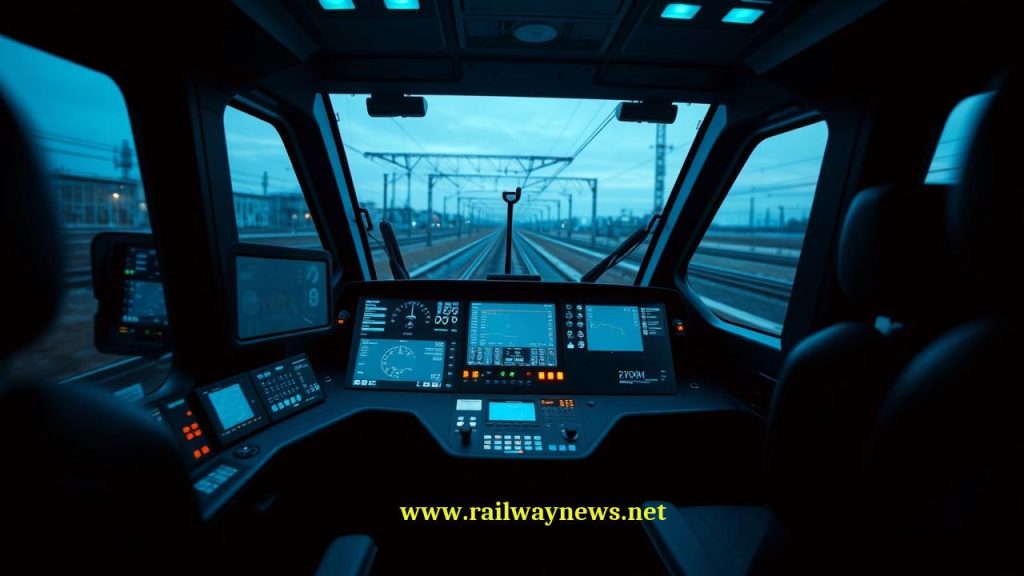
⚡ In Brief: Great Northern has operated 70,000 train services using Siemens ETCS digital in-cab signalling on London’s Northern City Line since May 2025, marking a critical milestone for the UK’s £1.4 billion East Coast Digital Programme.
LONDON, United Kingdom – Great Northern has successfully operated 70,000 commuter train services using digital in-cab signalling on the Northern City Line since May 2025, eliminating traditional lineside signals. This pathfinder deployment forms the operational foundation of the £1.4 billion East Coast Digital Programme, which will migrate the East Coast Main Line to digital signalling starting in late 2026. The milestone coincides with wider UK rail reforms that will transition Great Northern’s parent operations into public ownership by May 31, 2026.
What Are the Technical Specifications?
The Northern City Line digital migration utilizes European Train Control System Level 2 technology integrated with Siemens Mobility’s Class 717 suburban electric multiple units. By transitioning from an “overlay” phase—where trains could run on either digital or conventional lineside signals—to a strictly digital system, the route has eliminated physical trackside signals entirely. A total of 138,000 services have run under ETCS control when including the initial overlay phase. Specific software baseline versions and precise cost allocations for the Northern City Line phase itself were not officially disclosed by the project partners.
Key Technical Data
| Parameter | Value |
|---|---|
| Technology / System Name | Siemens Mobility Trainguard ETCS (Level 2) |
| Total Value | £1.4 billion (Total ECDP funding; NCL-specific allocation not disclosed) |
| Parties Involved | Govia Thameslink Railway (GTR), Network Rail, Siemens Mobility, LNER, ASLEF |
| Timeline / Completion | NCL migration completed May 2025; ECML rollout starting late 2026; GTR public transition by May 31, 2026 |
| Country / Corridor | United Kingdom / Northern City Line (NCL) & East Coast Main Line (ECML) |
Where Does This Technology Stand in the Market?
The East Coast Digital Programme is one of the most complex legacy-to-digital rail migrations globally due to its dense commuter and high-speed mixed traffic. The Northern City Line project serves as a regional benchmark for replacing lineside signals entirely. In comparison, Denmark’s Banedanmark nationwide signalling programme represents a larger-scale €2.7 billion investment to convert its entire network to ETCS Level 2, although it faced significant initial software and integration delays (Source: Banedanmark, 2022). On a global scale, Norway’s Bane NOR is executing a NOK 20 billion (€1.7 billion) national ERTMS rollout to standardize signalling across 4,200 kilometres of track by 2034 (Source: Bane NOR, 2023).
Siemens Mobility’s Trainguard ETCS system competes directly with Alstom’s Atlas ETCS solution, which is deployed across Germany’s Stuttgart Digital Node and supports high-capacity automatic train operation over ETCS (Source: Alstom, 2024). Additionally, Hitachi Rail offers its own ETCS Level 2 system, which has been selected for Australia’s Queensland commuter network to handle high-frequency suburban traffic, showing comparable capacity capabilities but differing in its integration with regional traffic management systems (Source: Hitachi Rail, 2023).
Editor’s Analysis
The successful stabilization of ETCS on the Northern City Line demonstrates that digital-only commuter operations can run reliably on high-density legacy corridors. However, GTR’s scheduled transition to public ownership by May 31, 2026, introduces a layer of structural complexity just as the larger East Coast Main Line rollout begins. This transition reflects a broader UK trend toward state-directed rail management, supported by strong government backing to phase out vulnerable lineside assets in favor of software-defined networks (Source: Office of Rail and Road, 2024).
FAQ
Q: What is the main benefit of removing physical lineside signals on the Northern City Line?
A: Removing physical signals improves overall service reliability by reducing trackside equipment failures and providing drivers with real-time speed profiles directly inside the cab. It also decreases long-term maintenance costs for Network Rail.
Q: When will passenger trains on the East Coast Main Line start using this digital system?
A: The first digitally signalled passenger trains are scheduled to begin operating on the East Coast Main Line in late 2026. This follows the successful pathfinder testing conducted on the Northern City Line.
Q: How much did the digital signalling migration for the Northern City Line specifically cost?
A: The specific cost allocation for the Northern City Line phase was not officially disclosed. However, the project is funded under the broader £1.4 billion East Coast Digital Programme.

Railway infrastructure, rolling stock and transport technologies specialist focused on global rail industry developments, high-speed rail systems, signaling technologies and freight transportation. Covering railway investments, public transport modernization, rail operations and international mobility projects across Europe, Asia and North America.
RELATED POSTS

October 1, 2026 7:09 am
United States regulators confirmed a September 30 deadline for the...

October 1, 2026 12:13 am
Illinois approved $1.5 billion annually for the Northern Illinois Transit...

October 1, 2026 6:10 am
Amtrak approved a System Expansion Committee on July 30 to...

October 4, 2026 5:14 pm
Alstom secured a CA$4.7 billion order from VIA Rail Canada...

October 6, 2026 2:14 am
Union Pacific launched export rail shipments with Ferromex to deliver...
October 1, 2026 3:12 am
Greenbrier confirmed Brian Comstock as new president and CEO effective...