
Grand Paris Express Line 18: Rail Tech & Parisian Transit Evolution
First Grand Paris Express Line 18 train unveiled, a key step toward 2026 launch. Fully automatic, electric, and connecting Massy-Palaiseau and Saclay.
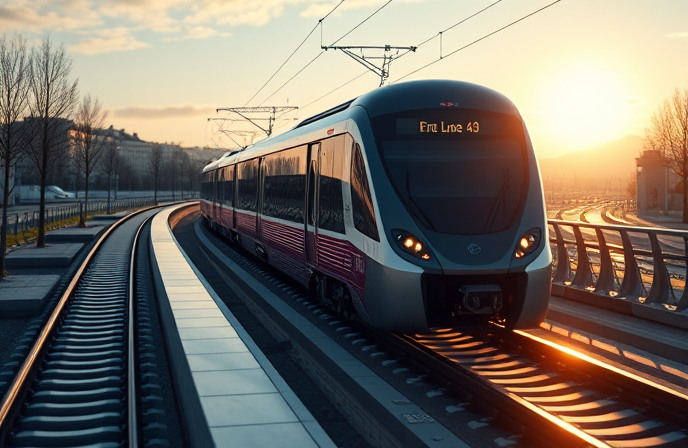
First Trainset Unveiled for Grand Paris Express Line 18: A Milestone for Parisian Transit
The future of Parisian public transportation is taking shape as the first trainset for the Grand Paris Express Line 18 has been delivered. Unveiled at the Palaiseau operating centre, the event on June 20, 2025, signifies a crucial step toward the fully automatic and electric line’s entry into its testing phase, with an anticipated launch in the last quarter of 2026. This new line, spanning 33 kilometers and connecting Massy – Palaiseau and Christ de Saclay, represents a significant investment by Île-de-France Mobilités and Société des grands projets. The project aims to dramatically improve transport for residents, students, researchers and employees. This article will explore the key features of Line 18, its technological advancements, the strategic partnership behind its development, and its expected impact on the Parisian transport network.
Rolling Stock Design and Manufacturing
The trainsets for Line 18, designed and manufactured by Alstom, feature a three-carriage configuration, capable of accommodating up to 350 passengers. The design, a collaborative effort involving Île-de-France Mobilités, Société des grands projets, and Egis Rail, prioritizes safety, comfort, and inclusivity. The trains are equipped with features such as large windows, wider doors for improved accessibility, ergonomic seating, intelligent air conditioning, LED lighting, USB sockets, and real-time passenger information screens. Design is particularly notable for its innovative use of a third rail system that does away with the need for a catenary. This design has earned the GOOD DESIGN Award, recognizing the innovation in its industrial and graphic design. The rolling stock is being assembled at Alstom’s Valenciennes site, supported by five other French locations. The manufacturing process and the train’s overall design represent Alstom’s commitment to providing an advanced and passenger-focused travel experience.
Advanced Technological Integration: The Automatic Train Control System
Line 18 will utilize a fully automatic train control system, offering a train interval of just 90 seconds during peak hours. This technology, a key component of the contract awarded to Alstom in September 2021, ensures high-frequency service and efficient operation. The centralised control system, managed from the Palaiseau operating centre, provides real-time oversight of the entire line. The advanced ITS (Intelligent Transportation Systems) will monitor train movements, manage station operations, and provide up-to-the-minute passenger information. Alstom is currently installing and coordinating the supervision systems to ensure seamless integration of rolling stock with infrastructure elements. Additionally, the line will incorporate energy recovery from train braking systems, enhancing its environmental performance. This holistic approach to technology promises a modern and efficient railway system.
Testing and Infrastructure Compatibility
As of June, Alstom initiated static rolling stock tests following thorough assessments at their site and the Valenciennes rail testing centre. The centralized command post at the Palaiseau operating centre will be fully operational by spring 2025 and will oversee all testing phases. These tests will focus on verifying the compatibility of the rolling stock with the infrastructure, including platform facades, passenger information systems, and communication networks. The first ten trainsets will serve the initial section of Line 18, with an additional five sets designated for the extension to Orly Airport, scheduled to commence operations by the end of 2027. This detailed testing process is vital for ensuring the safety, reliability, and overall performance of the new line.
Conclusion
The delivery of the first trainset for Grand Paris Express Line 18 marks a pivotal moment in the ongoing transformation of the Parisian transport network. The project, a collaboration between Île-de-France Mobilités, Société des grands projets, and Alstom, leverages cutting-edge technology, passenger-centric design, and innovative environmental solutions. With the anticipated launch in late 2026, the line promises to deliver enhanced connectivity and efficient public transport to the Île-de-France region. The success of Line 18 has industry implications, serving as a potential model for other urban transit projects globally, particularly in the adoption of automated systems and sustainable practices. The investment in a third rail system eliminates the need for overhead catenary infrastructure, enhancing the landscape and providing a streamlined aesthetic. The implementation of these advanced systems and passenger-focused designs indicates a shift toward integrated and high-performance railway solutions. Further expansion and upgrades such as those currently being implemented by Alstom in Seville, Spain, suggest a commitment to providing reliable and secure operations, and underscore the evolution of railway technologies and the ongoing efforts to enhance efficiency and improve the passenger experience. The future outlook suggests that the expansion of intelligent transport systems, automated control, and environmentally responsible operations will further shape the railway sector.

Railway infrastructure, rolling stock and transport technologies specialist focused on global rail industry developments, high-speed rail systems, signaling technologies and freight transportation. Covering railway investments, public transport modernization, rail operations and international mobility projects across Europe, Asia and North America.
RELATED POSTS

October 8, 2026 1:15 pm
Alstom secured a €1bn contract to build 13 automated trains,...

October 1, 2026 7:09 am
United States regulators confirmed a September 30 deadline for the...

October 4, 2026 5:14 pm
Alstom secured a CA$4.7 billion order from VIA Rail Canada...

October 1, 2026 12:13 am
Illinois approved $1.5 billion annually for the Northern Illinois Transit...

October 5, 2026 1:13 pm
New York MTA confirmed a late 2026 DEIS release for...
October 6, 2026 9:17 am
Illinois approved $1.1M in state funds to upgrade two McHenry...