
Grand Est Invests €418 Million Capacity Upgrade Sillon Lorrain
Grand Est invested €418 million to upgrade the Sillon Lorrain rail corridor, launching 16 Alstom double-decker trains increasing capacity by 77%.
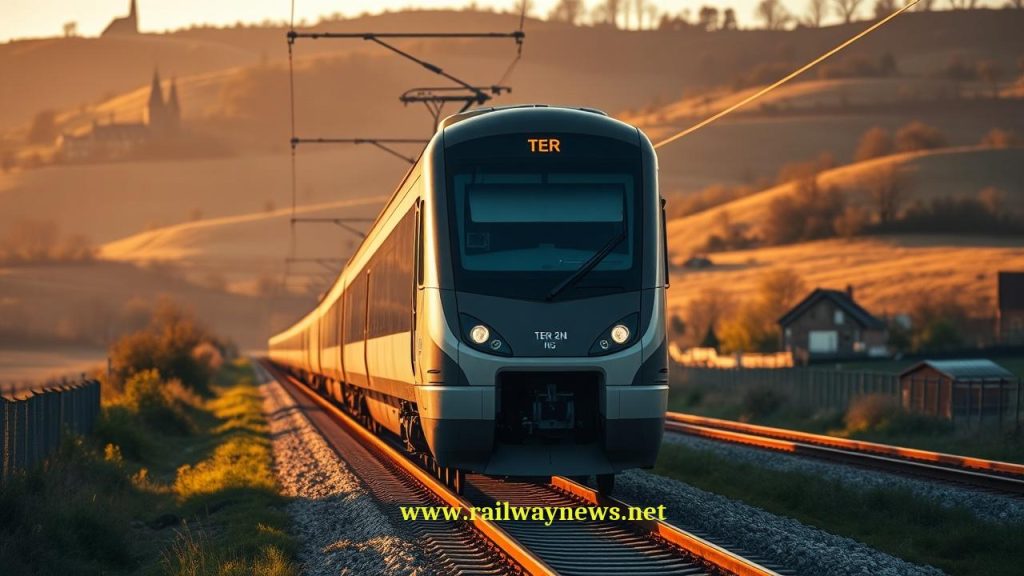
⚡ In Brief: France’s Grand Est region is investing over €418 million to upgrade the Sillon Lorrain rail corridor, introducing 16 new Alstom double-decker trains that increase seating capacity by 77% per train on the critical cross-border route to Luxembourg.
METZ, FRANCE – The Grand Est region has formally launched new five-car Alstom TER 2N NG double-decker trains for its Fluo Grand Est services connecting northeastern France with Luxembourg. The new rolling stock, which entered service on April 29, 2026, is part of a multi-faceted €418 million investment program to increase capacity and modernise infrastructure on one of France’s busiest non-Parisian rail corridors.
What Is the Full Scope of This Project?
The region’s strategy involves a total investment of at least €418 million across three core initiatives to enhance the Sillon Lorrain corridor. This includes the acquisition of 16 high-capacity trains for €118 million, an ongoing €180 million mid-life refurbishment of 41 existing trainsets, and a new €120 million maintenance facility in Montigny-lès-Metz, co-financed by Luxembourg. The primary goal is to address severe overcrowding on the Metz-Luxembourg line, which serves over 12,000 cross-border commuters daily, by increasing peak hour seating capacity by approximately 50% by early 2027.
Key Project Data
| Parameter | Value |
|---|---|
| Project / Contract Name | Sillon Lorrain Corridor Capacity Enhancement |
| Total Value | €418 Million (across rolling stock, modernisation, and maintenance facility) |
| Parties Involved | Grand Est Region, Normandy Region, Alstom, SNCF Réseau, Grand Duchy of Luxembourg |
| Timeline / Completion | New trains phased in from April 2026; capacity target by late 2026/early 2027 |
| Country / Corridor | France-Luxembourg / Sillon Lorrain (Nancy-Metz-Thionville-Luxembourg) |
How Does This Compare to Similar Projects?
The Grand Est’s procurement of 16 trains for €118 million, equating to approximately €7.4 million per five-car trainset, is a targeted regional investment. For comparison, the much larger RER NG project for the Paris region, operated by Île-de-France Mobilités, involves a €3.7 billion contract with an Alstom-led consortium for 255 new-generation double-decker trains. This results in a significantly higher unit cost of around €14.5 million per train, reflecting their longer 6- and 7-car configurations and more complex technical specifications required for the dense Parisian network (Source: Alstom, 2021). The Grand Est project demonstrates a more focused, inter-regional rolling stock transfer and acquisition strategy to address a specific cross-border capacity issue. Independent verification of the specific service inauguration details for May 2026 was not available from public transport data sources at the time of publication.
Editor’s Analysis
This substantial investment in passenger capacity on the Sillon Lorrain corridor highlights a strategic prioritisation of cross-border commuter traffic over freight. The move to alleviate passenger overcrowding comes as the French rail freight market is forecast to decline by 18% in 2025-2026, reflecting a wider European trend (Source: Truck industry overview, 2026 edition). By dedicating resources to passenger services, the Grand Est region and its partners are betting on the continued growth of the Luxembourg employment hub and the long-term value of shifting commuters from road to rail, even as the outlook for freight on the same strategic European corridor weakens.
FAQ
Q: Why are new trains needed on the line to Luxembourg?
A: The new trains are required to address severe overcrowding on a route used by over 12,000 cross-border commuters daily. Each new Alstom train offers 554 seats, a 77% increase over the 313 seats in the older rolling stock they replace.
Q: What is the total investment in the Sillon Lorrain rail line?
A: The total confirmed investment across multiple projects is €418 million. This figure includes €118 million for 16 new trains, €180 million for modernising the existing fleet, and €120 million for a new maintenance workshop.
Q: Will this investment in passenger trains affect freight traffic?
A: The primary source does not state a direct negative impact on freight services, as the corridor already handles up to eight trains per hour. However, the focus on boosting passenger capacity comes at a time when the French rail freight market is projected to contract, indicating a strategic focus on commuter mobility for this corridor.

Railway infrastructure, rolling stock and transport technologies specialist focused on global rail industry developments, high-speed rail systems, signaling technologies and freight transportation. Covering railway investments, public transport modernization, rail operations and international mobility projects across Europe, Asia and North America.
RELATED POSTS

October 8, 2026 1:15 pm
Alstom secured a €1bn contract to build 13 automated trains,...

October 1, 2026 7:09 am
United States regulators confirmed a September 30 deadline for the...

October 4, 2026 5:14 pm
Alstom secured a CA$4.7 billion order from VIA Rail Canada...

October 5, 2026 6:12 pm
AECOM and Jacobs secured a contract in September 2026 to...

October 1, 2026 12:13 am
Illinois approved $1.5 billion annually for the Northern Illinois Transit...

October 4, 2026 11:08 pm
Sound Transit confirmed the September 30 opening of Seattle Pinehurst...