
Global Rail M&A: Alstom, Siemens, Bombardier Insights
Major railway players like Alstom, Siemens, and Bombardier are reshaping the industry through strategic mergers and acquisitions. Discover how these deals are driving innovation and modernization in rail!
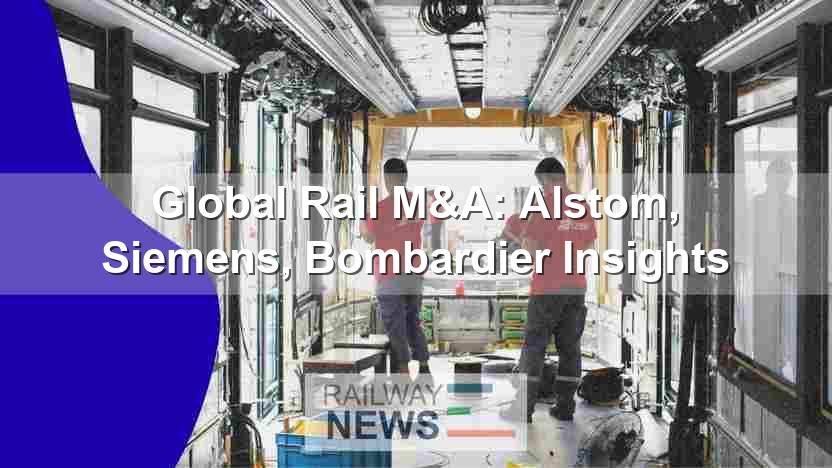
The global railway industry is a dynamic sector characterized by continuous technological advancements and evolving infrastructure needs. This necessitates significant investments in rolling stock, signaling systems, and infrastructure upgrades. This article will explore recent significant deals and mergers & acquisitions (M&A) activity within the industry, focusing on key players such as Alstom, Siemens Mobility, Bombardier Transportation Australia, and others. We will examine the strategic implications of these transactions, considering their impact on market share, technological innovation, and the overall landscape of railway system provision. The analysis will delve into the specifics of each contract, highlighting the type of rolling stock involved, the geographical location of the projects, and the potential implications for future railway development. Additionally, the article will explore the broader trends driving these M&A activities, including the push for modernization, sustainable transport solutions, and the increasing demand for efficient and reliable railway networks globally.
Alstom’s Expansion in France
Alstom secured a €14m ($16.2m) contract from Bordeaux Métropole for five additional Citadis trams. These 44m-long trams will augment Bordeaux’s existing fleet, which already includes 25 Citadis trams currently under production at Alstom’s La Rochelle facility. This contract underscores Alstom’s strong presence in the French market and its continued success in supplying modern, efficient light rail vehicles (LRVs).
Siemens Mobility’s Success in the United States
Siemens Mobility won a contract from the Orange County Transportation Authority (OCTA) in California for eight S70 streetcars, along with spare parts and equipment. The contract includes an option for ten additional streetcars. This deal highlights Siemens Mobility’s expansion into the North American market and its ability to provide detailed solutions, including system support and operator training. The delivery of these streetcars by 2021 will contribute to enhancing public transport in Orange County.
Bombardier Transportation Australia and Victorian Government Collaboration
Bombardier Transportation Australia received a design contract from the Victorian Government for new standard-gauge bogies for VLocity trains to be operated on the North East Line. This forms part of a larger A$848.5m ($627m) investment plan. The project demonstrates the Victorian Government’s commitment to upgrading regional rail infrastructure and Bombardier’s expertise in designing and manufacturing rolling stock components for Australia’s rail network. The focus on design signifies a move toward customized solutions tailored to the specific needs of the Victorian rail system. The 12-month timeline for accreditation and testing reflects the rigorous standards employed in the Australian rail industry.
Consolidation and Acquisitions in the Rail Sector
The acquisition of Austrak by Vossloh, and the acquisition of Knorr-Bremse RailServices and Kiepe Electric by Mutares, exemplify the ongoing consolidation within the railway industry. Vossloh’s acquisition enhances its manufacturing capabilities for pre-stressed concrete sleepers, while Mutares’ acquisition broadens its portfolio in railway technology services. These mergers and acquisitions reflect the industry’s pursuit of greater efficiency, technological synergy, and broader market reach.
Conclusion
The recent deals and M&A activities analyzed in this article illustrate the dynamism and strategic shifts within the global railway industry. Alstom’s continued success in France, Siemens Mobility’s expansion in the US, and Bombardier’s contribution to the Victorian Government’s rail modernization project showcase the diverse opportunities and challenges facing major players. The acquisitions by Vossloh and Mutares underscore a broader trend of consolidation aimed at increasing efficiency and expanding capabilities within the sector. The contracts highlight the importance of both rolling stock and infrastructure upgrades in modernizing existing railway networks and developing new lines. The emphasis on sustainable solutions and efficient operations, evident in the choices of light rail vehicles and the strategic investments in regional rail expansion, points to a future where railway transportation plays an even more significant role in addressing global transportation challenges. The success of these ventures depends not only on technical expertise but also on effective collaboration between governments, private companies, and other stakeholders involved in railway system development and maintenance. This interconnectedness makes the ongoing evolution of the railway industry a fascinating area for future observation and analysis. The long-term impact of these deals and acquisitions will be felt throughout the industry, ultimately shaping the future of railway infrastructure and technology across the globe.

Railway infrastructure, rolling stock and transport technologies specialist focused on global rail industry developments, high-speed rail systems, signaling technologies and freight transportation. Covering railway investments, public transport modernization, rail operations and international mobility projects across Europe, Asia and North America.
RELATED POSTS

October 8, 2026 1:15 pm
Alstom secured a €1bn contract to build 13 automated trains,...

October 1, 2026 7:09 am
United States regulators confirmed a September 30 deadline for the...

October 4, 2026 5:14 pm
Alstom secured a CA$4.7 billion order from VIA Rail Canada...

October 5, 2026 6:12 pm
AECOM and Jacobs secured a contract in September 2026 to...

October 1, 2026 12:13 am
Illinois approved $1.5 billion annually for the Northern Illinois Transit...

October 4, 2026 11:08 pm
Sound Transit confirmed the September 30 opening of Seattle Pinehurst...