
Virginia Gets $414M Rail Bypass to Ease Congestion, Boost Efficiency
Virginia gets $414M rail bypass to ease congestion, boost efficiency.
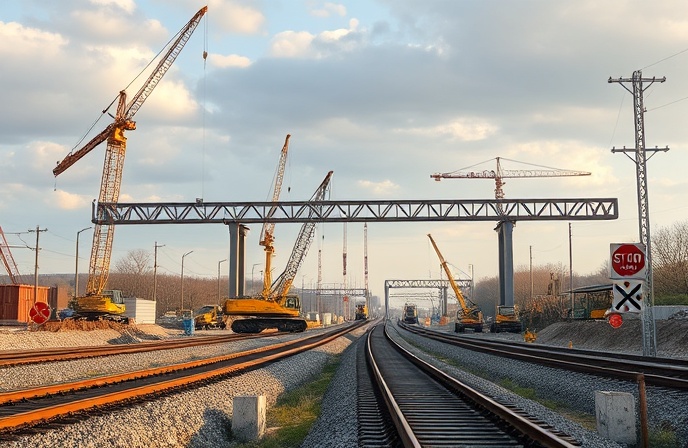
Franconia-Springfield Bypass Project Awarded to JV for $414 Million
The Virginia Passenger Rail Authority (VPRA) has awarded a $414 million contract to a joint venture (JV) composed of FlatironDragados and Herzog for the construction of the Franconia-Springfield Bypass in Virginia. This crucial infrastructure project, announced on July 24, 2025, will significantly enhance rail efficiency and safety. The Franconia-Springfield Bypass, located along the Richmond, Fredericksburg and Potomac rail corridor, aims to eliminate delays for passenger trains accessing the Virginia Railway Express (VRE) Franconia-Springfield station. The project addresses a critical freight bottleneck by constructing a rail flyover that will allow passenger trains to bypass two main freight tracks. This article will delve into the project’s scope, its impact on the rail network, the construction methodology, and its anticipated benefits, along with the potential for increased efficiency for both passenger and freight operations.
Addressing Rail Congestion: The Heart of the Project
The primary objective of the Franconia-Springfield Bypass is to alleviate congestion and improve operational efficiency within the busy rail corridor. Currently, passenger trains face delays as they intersect the freight lines. The new bypass is designed to eliminate these bottlenecks, a major issue along the Fredericksburg to Washington, D.C. corridor. The project’s impact on overall efficiency extends beyond simply reducing passenger train delays; it also improves the flow of freight trains. By separating the passenger and freight train paths, the project promises to enhance the capacity of the entire rail system, providing greater flexibility and reliability.
Project Scope and Infrastructure Developments
The project involves the construction of approximately 1.4 miles of new passenger railroad track and a 0.6-mile rail flyover bridge. This flyover will span the existing CSX freight tracks. The bridge’s design and construction will be critical to the project’s success, requiring precision engineering to ensure structural integrity and minimal disruption to existing rail services during construction. The addition of this new infrastructure will be the key element in untangling the existing rail network. The infrastructure will be integrated into the existing signals and control systems, as well as ITS infrastructure.
Construction and Stakeholder Collaboration
Construction is scheduled to commence in July 2025, with completion expected in 2029. The JV, comprising FlatironDragados and Herzog, will be responsible for project delivery. A key aspect of the project will be collaboration among the JV, VPRA, CSXT, Amtrak, and VRE. This collaborative approach is crucial to ensure a smooth and coordinated construction process, minimizing disruptions to ongoing rail operations. FlatironDragados executive vice president Jim Schneiderman has emphasized the importance of this collaboration, underscoring the commitment to finding innovative solutions throughout the project’s lifecycle.
Strategic Implications and Long-Term Benefits
The Franconia-Springfield Bypass is a strategic investment in the region’s transportation infrastructure, with broader implications for the overall transportation network. By improving rail efficiency, the project is expected to encourage greater ridership on passenger services. Reducing congestion in the corridor will enhance the reliability of freight services, which is critical for businesses that rely on rail transport. The project contributes to a more sustainable transportation system, by enhancing rail capacity.
Conclusion
The Franconia-Springfield Bypass project represents a significant step forward in modernizing Virginia’s rail infrastructure. By constructing this bypass, the VPRA is addressing critical congestion points and laying the groundwork for improved passenger and freight rail operations. This project has the potential to streamline operations and to benefit both passenger and freight rail stakeholders. The success of the project hinges on effective collaboration among the various stakeholders, including FlatironDragados, Herzog, and VPRA, to ensure that the construction phase progresses smoothly. With construction set to begin in July 2025, the Franconia-Springfield Bypass project stands to become a transformative project within the region’s rail landscape. The project’s completion is expected to usher in an era of increased rail efficiency and reliability, positively impacting the region’s economy and transportation sector. Further developments will be worth watching as the project moves forward.
Company Summary
FlatironDragados is a joint venture that combines the expertise of Flatiron, a major US infrastructure construction company with extensive experience in rail projects, and Dragados, a global leader in infrastructure development. Flatiron is known for its complex civil projects, and Dragados, a part of the ACS Group, brings a wealth of global expertise in large-scale infrastructure endeavors. This partnership brings together technical capabilities to deliver complex transportation projects.
Herzog is a well-established railway construction and maintenance company. Herzog has a long-standing reputation for delivering railroad projects on time and on budget. Its expertise in track construction, maintenance, and signaling systems makes it a key partner in this and similar projects.

Railway infrastructure, rolling stock and transport technologies specialist focused on global rail industry developments, high-speed rail systems, signaling technologies and freight transportation. Covering railway investments, public transport modernization, rail operations and international mobility projects across Europe, Asia and North America.
RELATED POSTS

October 1, 2026 7:09 am
United States regulators confirmed a September 30 deadline for the...

October 8, 2026 1:15 pm
Alstom secured a €1bn contract to build 13 automated trains,...

October 4, 2026 5:14 pm
Alstom secured a CA$4.7 billion order from VIA Rail Canada...

October 1, 2026 12:13 am
Illinois approved $1.5 billion annually for the Northern Illinois Transit...
October 6, 2026 2:14 am
Union Pacific launched export rail shipments with Ferromex to deliver...

October 1, 2026 6:10 am
Amtrak approved a System Expansion Committee on July 30 to...