
EU’s €117M Rail Investment: Greener, Quieter Europe
The European Union’s investment in 39 major transport projects, totaling €117 million through the Connecting Europe Facility, focuses on enhancing cross-border railway links to promote sustainable and efficient transportation across the continent.
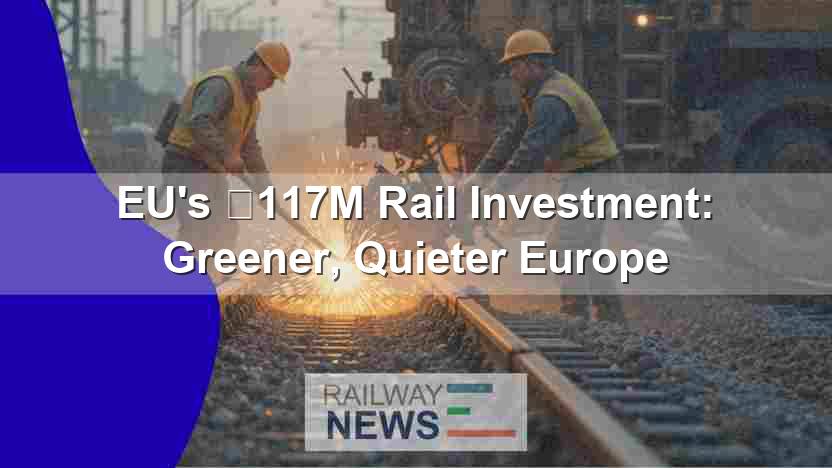
The European Union’s Investment in Cross-Border Rail Connectivity: A Strategic Analysis
The European Union’s (EU) commitment to sustainable and efficient transportation is evident in its recent €117 million investment in 39 major transport projects. This substantial financial commitment, channeled through the Connecting Europe Facility (CEF), a financial instrument supporting transport infrastructure, underscores the EU’s strategic goal of enhancing cross-border railway links. This article will delve into the specifics of this initiative, analyzing the projects’ focus areas, their potential impact on the European rail network, and the broader implications for sustainable transportation across the continent. The analysis will explore the multifaceted nature of the investment, encompassing noise reduction, infrastructure upgrades, and the promotion of interoperability between different national rail systems. Further, we will consider the long-term benefits, challenges, and the overall significance of this investment in shaping the future of European rail transportation.
Noise Reduction and Environmental Improvements
A significant portion of the EU’s investment targets noise reduction from freight trains. Eight projects, totaling a substantial investment, focus on upgrading braking systems on 75,000 freight railway cars. These upgrades are not merely about noise abatement; they also contribute to improved energy efficiency. Reduced noise pollution directly improves the quality of life for communities located near railway lines, demonstrating the EU’s commitment to environmental sustainability alongside economic development. This is a crucial aspect as the reduction in noise pollution has significant public health benefits, mitigating the negative impacts of constant train noise on residential areas. The improved energy performance of the upgraded braking systems is an added benefit, contributing to the EU’s broader climate change mitigation goals. This exemplifies a holistic approach to infrastructure improvement, combining environmental considerations with economic benefits.
Cross-Border Connectivity and Interoperability
The investment also prioritizes enhancing cross-border railway connections. Specific examples include funding for studies on the electrification of the Vienna-Hungarian border railway line (€2.9 million) and the development of the Bremen (Germany)-Groningen (Netherlands) cross-border section (€12.7 million). These initiatives are crucial for fostering seamless rail transport across national borders, improving efficiency, and promoting the growth of freight and passenger traffic. The focus on interoperability, the ability of different railway systems to seamlessly interact, is paramount for creating a truly integrated European rail network. This involves not only technical aspects, such as track gauge and signaling systems, but also regulatory and operational harmonization.
Port Infrastructure Upgrades and Multimodality
A considerable portion of the funded projects focuses on modernizing EU port infrastructure to bolster multimodality (the combined use of various transport modes). This strategy aims to reduce greenhouse gas emissions and other pollutants by optimizing the transfer of goods between rail and sea transport. Investments in port infrastructure are directly linked to the efficiency and sustainability of the overall transportation network. By enhancing the integration between rail and maritime transport, the EU aims to reduce reliance on road transport, a less environmentally friendly option. This integrated approach is key to achieving sustainable and efficient logistics across the EU.
Conclusions
The EU’s €117 million investment in cross-border railway links represents a significant step toward creating a more sustainable, efficient, and integrated European transport system. The strategic focus on noise reduction, improved cross-border connectivity, and enhanced port infrastructure demonstrates a holistic approach that considers environmental, economic, and social factors. The projects, funded through the CEF (Connecting Europe Facility), directly address key challenges facing the European rail network, such as noise pollution, interoperability issues, and the need for more sustainable transportation solutions. The upgrades to freight train braking systems not only reduce noise pollution but also improve energy efficiency, highlighting the synergy between environmental responsibility and economic benefits. The investment in cross-border rail lines facilitates the seamless movement of goods and passengers across national borders, boosting trade and promoting regional development. Finally, the modernization of port infrastructure enhances multimodality, reducing reliance on road transport and contributing to a greener transport ecosystem. This detailed approach to infrastructure development positions the EU favorably for future growth while prioritizing environmental sustainability and enhancing the quality of life for its citizens. The success of this initiative will hinge on effective project management, robust monitoring mechanisms, and continued commitment to fostering collaboration between member states. This ambitious investment signals a clear commitment from the EU to prioritizing sustainable and efficient transport solutions, setting a benchmark for other global initiatives seeking to modernize and green their transportation infrastructure.

Railway infrastructure, rolling stock and transport technologies specialist focused on global rail industry developments, high-speed rail systems, signaling technologies and freight transportation. Covering railway investments, public transport modernization, rail operations and international mobility projects across Europe, Asia and North America.
RELATED POSTS

October 8, 2026 1:15 pm
Alstom secured a €1bn contract to build 13 automated trains,...

October 1, 2026 7:09 am
United States regulators confirmed a September 30 deadline for the...

October 8, 2026 12:18 pm
Siemens Mobility signed an agreement with VinSpeed to supply 350...

October 4, 2026 5:14 pm
Alstom secured a CA$4.7 billion order from VIA Rail Canada...

October 5, 2026 6:12 pm
AECOM and Jacobs secured a contract in September 2026 to...

October 4, 2026 11:08 pm
Sound Transit confirmed the September 30 opening of Seattle Pinehurst...