
Europe’s Rail: Mastering Extreme Conditions with EN 50125-2
Ensure railway reliability with EN 50125-2. This standard defines environmental conditions for fixed electrical installations, guaranteeing safety and performance.
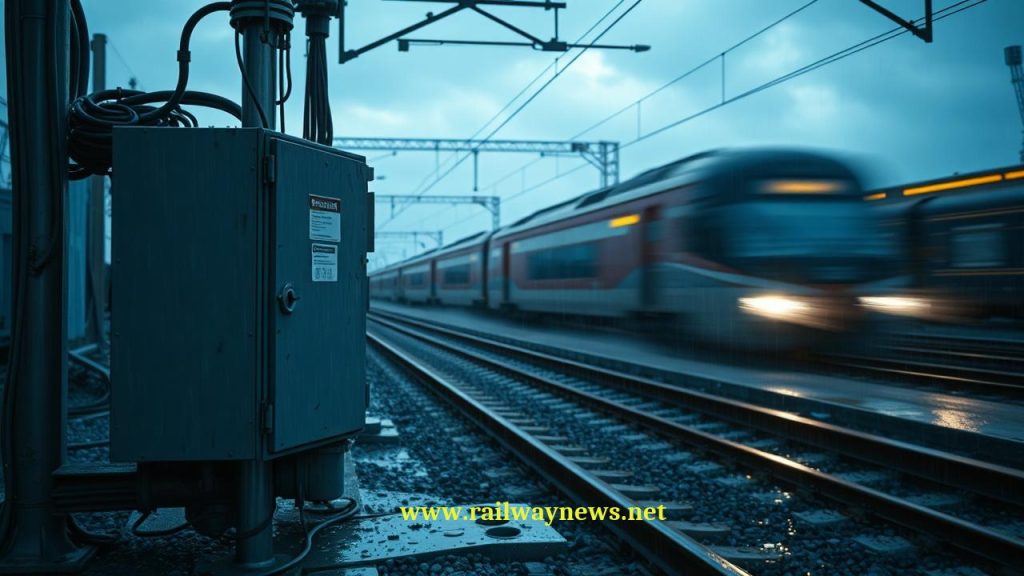
Understanding EN 50125-2: Environmental Conditions for Fixed Railway Electrical Installations
EN 50125-2 is a European standard that specifies the environmental conditions for fixed electrical installations used in railway applications. Its purpose is to provide a unified framework for manufacturers, system integrators, and railway operators to ensure that critical stationary equipment operates with high reliability, safety, and a long service life, regardless of its location within the network.
This standard is a cornerstone for designing and deploying robust railway infrastructure. It dictates the minimum requirements for equipment to withstand the often harsh and demanding environments found alongside railway lines, in substations, and within control centers. Adherence to EN 50125-2 is essential for guaranteeing the integrity of systems vital to train operations, such as signalling, power supply, and telecommunications.
Scope and Importance in the Railway Sector
While the broader EN 50125 series covers various aspects of railway environments, Part 2 is exclusively focused on fixed installations. This is a critical distinction, as the environmental stresses on stationary equipment differ significantly from those on rolling stock (covered by EN 50125-1).
The scope of EN 50125-2 includes, but is not limited to:
- Signalling equipment (trackside signals, point machines, axle counters).
- Power supply equipment (transformers, rectifiers, switchgear in substations).
- Telecommunication systems and trackside cabinets.
- Overhead line equipment and components.
- Equipment installed within technical buildings or outdoor enclosures.
By defining a common set of environmental parameters, the standard facilitates interoperability and a competitive market, allowing suppliers to design products for specific, well-defined conditions.
Key Environmental Parameters Defined in EN 50125-2
The standard systematically breaks down the environment into several categories of influence, providing specific values and classes for each. Designers must consider these parameters during the development and testing phases.
Climatic Conditions
These are the most fundamental parameters and directly influence thermal management, material selection, and insulation design.
- Ambient Temperature: The standard defines several temperature classes to accommodate different global climates where the equipment might be installed. These classes specify both operating and storage temperature ranges. For example, equipment for Siberia will have vastly different requirements than equipment for Southern Spain.
- Humidity: Specifies ranges for relative humidity and considers the possibility of condensation, which can lead to corrosion and electrical short circuits. Equipment must be designed to either prevent condensation or withstand its effects.
- Air Pressure (Altitude): Defines conditions for various altitudes. Higher altitudes result in lower air density, which reduces the cooling efficiency of air-convection systems and can decrease the dielectric strength of air, affecting electrical insulation.
- Solar Radiation: For outdoor equipment, the standard specifies a level of solar radiation. This impacts the surface temperature of enclosures (thermal load) and can cause degradation of materials like plastics and coatings due to UV exposure.
- Precipitation: Considers the effects of rain, snow, and ice. This parameter is directly linked to the required Ingress Protection (IP) rating of enclosures, ensuring that water and solid particles cannot damage internal components.
Special Climatic and Mechanical Conditions
Beyond standard weather, EN 50125-2 addresses more specific and often more damaging environmental factors.
- Pollution: It defines different pollution degrees caused by dust, salt spray (in coastal areas), or chemically active substances (in industrial zones). This is critical for preventing corrosion and ensuring the long-term reliability of electrical contacts and circuit boards.
- Vibration and Shock: Although the equipment is “fixed,” it is subject to significant vibration and shock, primarily from passing trains. The standard defines severity levels for random vibration and shock that equipment must withstand without physical damage or operational failure. This influences mechanical design, component mounting, and connector selection.
Classes of Environmental Conditions: A Comparison
To provide practical guidance, EN 50125-2 defines classes for key parameters. The temperature classes are among the most frequently cited. The table below provides a simplified comparison of the nominal outdoor air temperature classes.
| Class | Operating Temperature Range | Typical Application Environment | Key Design Considerations |
|---|---|---|---|
| T1 | -25 °C to +40 °C | Temperate climates, typical for much of Central and Western Europe. | Standard component selection and thermal management are often sufficient. |
| T2 | -40 °C to +35 °C | Colder climates, such as those found in Scandinavia or mountainous regions. | Requires components rated for low-temperature operation; heating elements may be needed in enclosures. |
| T3 | -25 °C to +55 °C | Hot climates, including Mediterranean regions and desert environments. Can be extended to +70°C for equipment under direct solar radiation. | Advanced thermal management, such as forced air cooling, heat shields, or active cooling, is critical to prevent overheating. |
| TX (Special) | Defined by project | Extreme environments outside T1-T3, like arctic or severe desert conditions. | Requires a completely custom thermal and mechanical design approach based on specific local data. |
Application and Relationship with Other Standards
EN 50125-2 is not used in isolation. It serves as a foundational document that informs the application of other standards.
- Design & Selection: Engineers use the classes in EN 50125-2 to specify requirements for equipment. For example, a tender for a trackside cabinet in Norway would likely specify Class T2 temperature and a high pollution degree.
- Testing: The environmental conditions specified in this standard become the test parameters for verification. The actual test procedures are typically defined in other standards, such as the IEC 60068 series (Environmental testing).
- System Integration: It is part of the larger EN 5012x family of standards for railway applications, which includes EN 50121 (EMC), EN 50124 (Insulation Coordination), and EN 50129 (Safety for Signalling Systems). Together, they form a detailed suite for ensuring railway system safety and reliability.
Conclusion
EN 50125-2 is an indispensable standard for the modern railway industry. By providing a clear and detailed definition of the environmental conditions for fixed electrical installations, it establishes a robust baseline for equipment design, testing, and deployment. Its classification system allows for a tailored, cost-effective approach to engineering, ensuring that critical infrastructure can perform safely and reliably for decades, whether it is situated in a temperate urban environment or a harsh, remote landscape. For any professional involved in the design, procurement, or maintenance of railway infrastructure, a thorough understanding of EN 50125-2 is not just beneficial—it is essential.

Railway infrastructure, rolling stock and transport technologies specialist focused on global rail industry developments, high-speed rail systems, signaling technologies and freight transportation. Covering railway investments, public transport modernization, rail operations and international mobility projects across Europe, Asia and North America.