
Europe’s EN 16186-2: Integrating Cabs for Safer, Smarter Rail
EN 16186-2 revolutionizes railway cab design. It integrates displays and controls, enhancing safety, reducing driver workload, and minimizing human error through human-centered ergonomics.
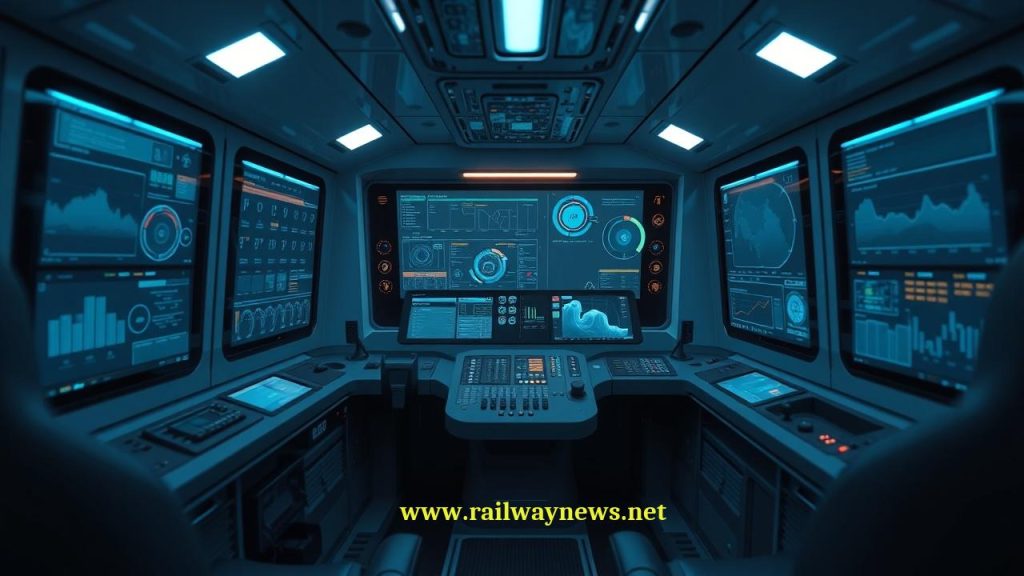
Understanding EN 16186-2: Ergonomics and Integration in the Railway Driver’s Cab
EN 16186-2 is a European Standard that specifies the requirements for the integration of displays, controls, and indicators within a railway vehicle’s driver’s cab. It forms a crucial part of the EN 16186 series, which focuses on driver’s cab design to enhance safety, usability, and operator comfort. The primary goal of this standard is to ensure that all human-machine interface (HMI) elements work together cohesively, presenting information clearly and enabling intuitive operation to minimize driver workload and reduce the potential for human error.
This standard provides a framework for arranging and harmonizing the various systems a driver interacts with, from the train control and monitoring system (TCMS) to advanced signalling systems like ERTMS/ETCS. It addresses the ergonomic principles governing how information is displayed, how controls are grouped, and how feedback is provided to the driver.
Core Principles of EN 16186-2
The standard is built upon several key ergonomic and safety principles. Its application ensures that the driver’s cab is not merely a collection of individual components, but a fully integrated and optimized operational environment.
Human-Centered Design and Workload Management
At its heart, EN 16186-2 advocates for a human-centered design approach. This means the design process must prioritize the driver’s capabilities, limitations, and needs. Key objectives in this area include:
- Minimizing Cognitive Load: Information should be presented in a logical, hierarchical manner. Critical alerts must be immediately distinguishable from routine status updates, preventing information overload, especially in high-stress situations.
- Reducing Physical Strain: Controls must be positioned based on their frequency of use and importance. Frequently used controls should be within easy reach, while critical controls must be protected against accidental activation.
- Ensuring Clarity and Unambiguity: The meaning of symbols, colors, and auditory signals must be consistent and easily understood, aligning with established railway conventions.
Consistency and Standardization
The standard promotes consistency across different rolling stock fleets. When drivers operate various types of trains, a consistent HMI philosophy reduces the time needed for adaptation and minimizes the risk of negative habit transfer—where a driver performs an action learned on one system that has a different, potentially unsafe, outcome on another.
Integration with Safety-Critical Systems
A significant aspect of EN 16186-2 is its role in governing the integration of complex safety systems. This is particularly relevant for the European Rail Traffic Management System (ERTMS) and the European Train Control System (ETCS). The standard provides the rules for how the ETCS Driver Machine Interface (DMI) should be integrated with other cab displays, ensuring that its vital information is always prioritized and displayed without being obscured by less critical data.
Key Technical Requirements for Integration
EN 16186-2 outlines specific technical guidelines for achieving a successfully integrated driver’s cab HMI.
Information Display and Hierarchy
The standard defines how visual information should be structured. This includes the physical layout of screens and the logical organization of data on those screens. Information is typically categorized into different levels of importance:
- Level 1 (Critical): Information requiring immediate action (e.g., emergency brake application, overspeed warning). This must be presented in the driver’s primary field of view and use salient visual and auditory cues.
- Level 2 (Important): Information related to normal operational tasks that require a timely response (e.g., upcoming speed restrictions, signal aspects).
- Level 3 (Advisory): Status information that does not require immediate action (e.g., system health, upcoming station information).
Grouping and Arrangement of Controls and Indicators
Controls and their associated indicators must be grouped logically to support driver tasks. The standard emphasizes the following principles:
- Functional Grouping: Controls related to the same function (e.g., traction, braking, doors) should be located together.
- Sequence of Use: Controls that are used in a sequence should be laid out in that order.
- Feedback and Indication: Every control action should provide clear feedback. This can be visual (a light on a button), auditory (a chime), or haptic (a click). The indicator should be located close to its corresponding control.
Comparison of Compliant vs. Non-Compliant Cab Design
The following table illustrates the practical differences between a driver’s cab designed in accordance with EN 16186-2 and a traditional or non-compliant design.
| Aspect | EN 16186-2 Compliant Approach | Non-Compliant / Traditional Approach |
|---|---|---|
| Information Display | Information is prioritized and displayed hierarchically on an integrated DMI. Critical alerts override non-essential data. Consistent color-coding and symbology are used. | Multiple, separate displays from different suppliers with inconsistent interfaces. Driver must scan various locations to gather information. Information overload is common. |
| Control Layout | Controls are grouped by function and frequency of use. Critical controls are protected from inadvertent activation. Ergonomically optimized for reach and operation. | Controls are placed where space is available, without a logical grouping. This can lead to confusion and increased physical movement to perform tasks. |
| Alarm Management | A centralized alarm system prioritizes warnings. Auditory and visual alerts are distinct and unambiguous, preventing alarm fatigue. | Multiple, uncoordinated alarm sources (beeps, buzzers, flashing lights) can overwhelm the driver, making it difficult to identify the most critical issue. |
| System Feedback | Every driver action receives immediate, clear, and consistent feedback. The system state is always evident. | Feedback is inconsistent or absent. The driver may be unsure if a command has been accepted by the system, leading to repetitive actions or errors. |
Conclusion: A Standard for a Safer and More Efficient Future
EN 16186-2 is more than just a set of guidelines; it is a foundational standard for modern railway HMI design. By mandating a systematic and ergonomic approach to the integration of displays, controls, and indicators, it directly contributes to enhancing operational safety, improving driver efficiency, and reducing stress. As railway systems become more complex and automated, the principles defined in this standard will become even more critical in ensuring the driver remains a capable, informed, and effective operator at the heart of the system.

Railway infrastructure, rolling stock and transport technologies specialist focused on global rail industry developments, high-speed rail systems, signaling technologies and freight transportation. Covering railway investments, public transport modernization, rail operations and international mobility projects across Europe, Asia and North America.