
Europe’s EN 15624: Essential for Freight Braking Safety
EN 15624 standardizes empty-loaded changeover devices, crucial for railway braking. These systems adjust force based on vehicle weight, ensuring safety, efficiency, and preventing damage.
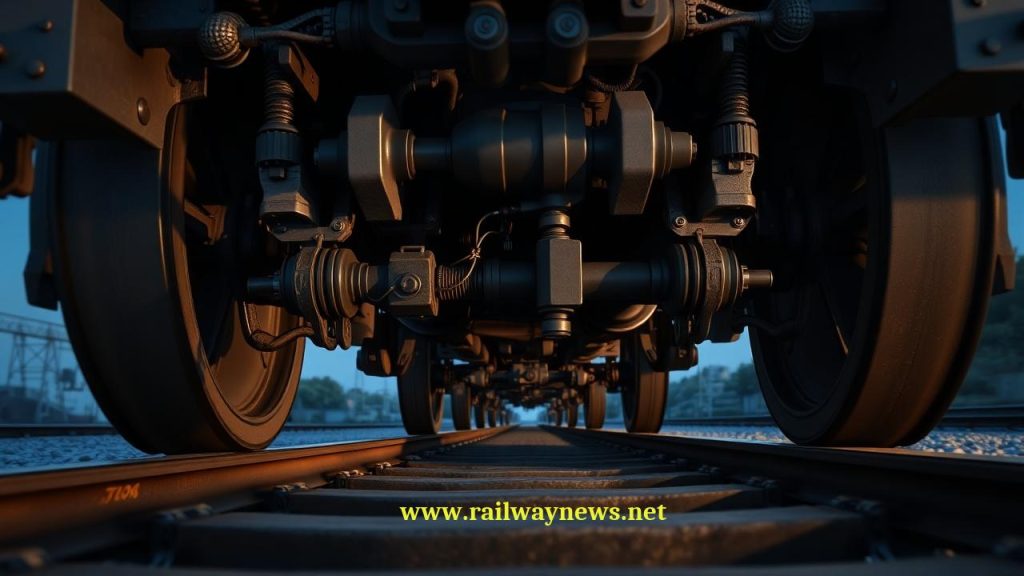
Understanding EN 15624: Empty-Loaded Changeover Devices in Railway Braking Systems
EN 15624 is a critical European standard that specifies the requirements for the design, performance, and testing of empty-loaded changeover devices used in the braking systems of railway vehicles. These devices are essential for ensuring safe, efficient, and reliable braking performance, particularly for freight wagons where the difference between an empty and a fully loaded state can be substantial.
The primary function of an empty-loaded changeover device is to adjust the braking force applied to the wheels based on the vehicle’s current weight or axle load. By doing so, it optimizes braking performance, prevents wheel damage, and significantly enhances operational safety across varying load conditions.
The Critical Role of Load-Sensing in Railway Braking
The physics of braking a railway vehicle is heavily dependent on its mass. A fully loaded freight wagon can weigh three to four times more than an empty one. This massive variation presents a significant challenge for the braking system. The core problem lies in managing the adhesion between the wheel and the rail.
- Braking an Empty Vehicle: If the braking force designed for a fully loaded vehicle is applied to an empty one, the force will easily overcome the available adhesion. This results in the wheels locking up and sliding along the rail, a condition known as a “wheel flat.” Wheel flats cause significant damage to both the wheel tread and the track, leading to costly maintenance and potential derailment risks.
- Braking a Loaded Vehicle: Conversely, if the braking force designed for an empty vehicle is used on a fully loaded one, the force will be insufficient to decelerate the vehicle effectively. This leads to dangerously extended stopping distances, posing a severe safety hazard, especially in emergency situations.
The empty-loaded changeover device solves this problem by acting as a load sensor, signaling the braking system to apply an appropriate, proportional level of force.
Technical Requirements and Specifications in EN 15624
EN 15624 provides a detailed framework for manufacturers and operators, detailing specific technical criteria that these devices must meet. The standard focuses on functionality, reliability, and interoperability within the European railway network.
Functional Requirements
The standard defines how the device must operate. The key requirement is its ability to accurately detect the vehicle’s load state and switch the braking system between “Empty” and “Loaded” modes. This changeover is typically triggered at a pre-defined changeover weight.
- Actuation Mechanism: The device must have a reliable mechanism to sense the load. This is commonly achieved either mechanically (based on the deflection of the vehicle’s suspension springs) or pneumatically (based on the air pressure within the suspension system).
- Changeover Point: The standard specifies tolerances for the changeover weight at which the device must switch. This ensures consistent performance across different vehicles of the same type.
- Output Signal: The device must provide a clear and unambiguous signal to the distributor valve of the braking system, which then regulates the brake cylinder pressure accordingly.
Performance and Durability Criteria
Railway components operate in a harsh environment. EN 15624 mandates stringent performance and durability requirements to ensure long-term reliability.
- Environmental Resistance: Devices must be designed to withstand a wide range of temperatures, humidity, and exposure to contaminants like brake dust, ballast, and de-icing fluids. This includes requirements for sealing (e.g., IP rating) to prevent internal corrosion and failure.
- Vibration and Shock Resistance: The standard outlines specific tests to ensure the device can endure the constant vibration and mechanical shocks inherent in railway operations without loss of function or accuracy.
- Endurance: Devices undergo extensive life-cycle testing to simulate years of service, guaranteeing their mechanical and functional integrity over a long operational lifetime.
Testing and Validation Procedures
To ensure compliance, EN 15624 specifies a rigorous set of testing protocols that must be performed and documented.
- Laboratory Tests: These include functional tests to verify the accuracy of the changeover point, leakage tests for pneumatic components, and environmental tests in climate chambers.
- Type Approval: A device must successfully pass all specified tests to receive type approval, certifying it as compliant with EN 15624 and suitable for use on the railway network.
– Field Tests: On-vehicle tests are conducted to validate the device’s performance under real-world operating conditions, confirming its correct integration with the vehicle’s suspension and braking system.
Common Types of Empty-Loaded Changeover Devices
While the standard is performance-based, it implicitly covers the main technologies used in the industry. The two primary categories are mechanical and pneumatic devices, each with distinct characteristics.
| Feature | Mechanical Changeover Device | Pneumatic Changeover Device |
|---|---|---|
| Actuation Principle | Senses the physical deflection of the wagon’s suspension springs under load. A sensor arm or lever measures this movement. | Senses the air pressure within the pneumatic (air) suspension bellows. Higher load results in higher required air pressure. |
| Complexity | Generally simpler in design, relying on levers, springs, and mechanical linkages. | More complex, involving pneumatic valves, sensors, and tubing integrated with the air suspension system. |
| Typical Application | Predominantly used on freight wagons with conventional steel spring suspension systems. | Used on modern freight wagons and vehicles equipped with air suspension systems. |
| Maintenance | Requires periodic inspection and lubrication of mechanical joints and checking for wear or damage to linkages. | Requires checking for air leaks in tubing and connections and ensuring the correct function of pneumatic valves. |
| Advantages | Robust, simple, and does not require a pneumatic supply from the suspension system. | Often provides a more precise and continuous (proportional) adjustment of braking force, not just a simple empty/load switch. |
Conclusion: A Standard for Safety and Efficiency
EN 15624 plays a fundamental role in modern railway operations by standardizing a component that is crucial for braking safety and efficiency. By ensuring that empty-loaded changeover devices are reliable, accurate, and durable, the standard helps to prevent costly wheel and track damage, reduce the risk of accidents caused by excessive stopping distances, and promote interoperability across Europe’s extensive rail network. Compliance with EN 15624 is not merely a regulatory formality; it is a vital contribution to a safer and more economical railway industry.

Railway infrastructure, rolling stock and transport technologies specialist focused on global rail industry developments, high-speed rail systems, signaling technologies and freight transportation. Covering railway investments, public transport modernization, rail operations and international mobility projects across Europe, Asia and North America.