
European Rail Reports 70% Rising Extreme Weather Impacts
European rail managers confirmed 70% rising extreme weather impacts, with Germany facing €1.4 billion in flood repairs.
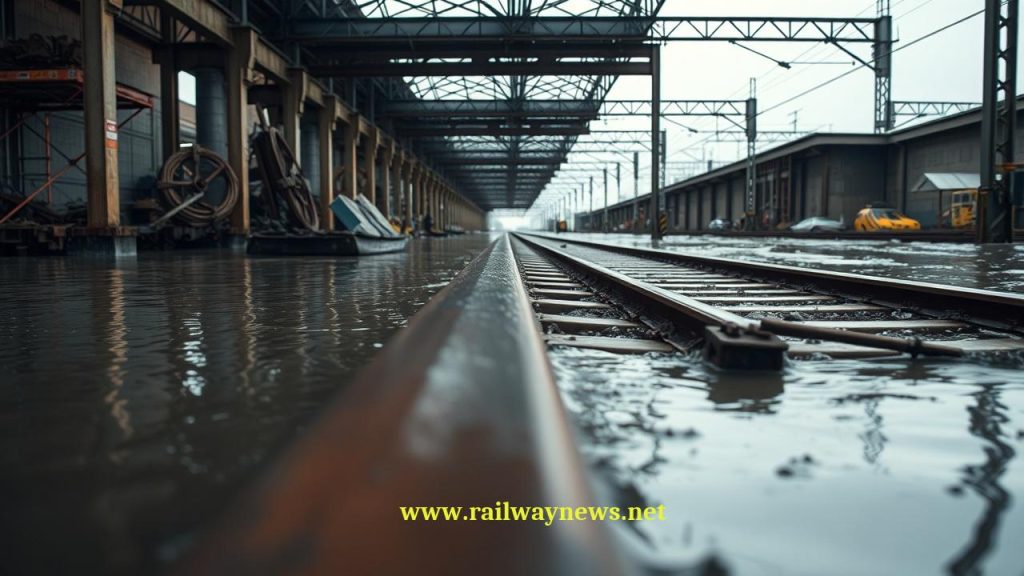
⚡ In Brief: A new report finds 70% of European rail infrastructure managers see rising impacts from extreme weather, with incidents like Germany’s €1.4 billion flood damage highlighting a major risk, while only 37% use future climate projections for new asset design.
BRUSSELS, BELGIUM – A new analysis of European rail infrastructure reveals increasing vulnerability to extreme weather, with 70% of network managers observing a greater impact on operations. The report quantifies recent damages, including a single flood event in Germany costing €1.4 billion, while highlighting that the cumulative economic loss from extreme weather in the EU has reached €738 billion since 1980.
What Does This Report Cover?
The report’s primary conclusion is that the European rail network’s climate resilience is not keeping pace with increasing weather-related hazards. It identifies floods, storms, and landslides as the principal threats, with flooding cited as the most significant risk by a majority of infrastructure managers. On a continental scale, weather-related disruptions are estimated to cause between one and three full years of lost rail service annually. The analysis shows a critical gap in strategic planning: less than half of infrastructure managers have a formal climate change adaptation plan, and only 37% incorporate IPCC climate projections into the design standards for new infrastructure assets.
Key Report Findings
| Parameter | Value |
|---|---|
| Report Name | Not disclosed in source material |
| Total Value | Damage examples: €1.4B (Germany, 2021), €450M (Greece, 2023), €212M (Spain, 2023) |
| Parties Involved | European rail infrastructure managers |
| Timeline / Completion | Data analysis reflects an upward trend over the past decade, peaking in 2018 |
| Country / Corridor | Pan-European; specific incidents cited in Germany, Belgium, Italy, Greece, and Spain |
How Does This Compare to Global Standards?
The challenges facing Europe’s rail sector mirror warnings issued for other critical industries across the continent. The World Bank has highlighted a similar climate adaptation gap in EU agriculture, stressing the urgent need for large-scale interventions to manage escalating climate risks to food production and rural economies. This parallel indicates that the lack of proactive, forward-looking adaptation is not unique to the rail industry but reflects a broader, systemic challenge for European infrastructure and economic planning. The report’s findings align with global data showing a significant rise in the frequency and intensity of extreme weather events worldwide. (Source: World Bank, NBC New York)
Editor’s Analysis
The disparity between known, escalating climate risks and the slow institutional response represents a significant unmanaged liability for European governments and rail operators. The continued reliance on historical weather data rather than future climate projections for over 60% of new projects is a critical failure in asset management that locks in vulnerability for decades. This issue extends beyond transport, reflecting a wider need for EU-level policy to mandate climate-resilience standards across all critical infrastructure sectors, as climate models suggest extreme outcomes are possible even at internationally agreed-upon warming targets. (Source: Sonnenseite)
FAQ
Q: What is the single biggest weather threat to European rail?
A: Flooding is identified as the most significant risk by the majority of infrastructure managers. Floods accounted for 44% of the €738 billion in total economic losses from extreme weather in the EU between 1980 and 2023.
Q: How much is this costing the rail network?
A: While a total network-wide cost was not provided, specific incidents have incurred massive expenses, including €1.4 billion for flood repairs in Germany (2021) and an estimated €450 million for storm recovery in Greece (2023).
Q: Are railway operators prepared for future climate change?
A: The report suggests preparedness is low. Less than half of infrastructure managers have a formal climate adaptation plan, and only 37% use official IPCC climate scenarios when designing new assets, indicating most are building for past, not future, conditions.

Railway infrastructure, rolling stock and transport technologies specialist focused on global rail industry developments, high-speed rail systems, signaling technologies and freight transportation. Covering railway investments, public transport modernization, rail operations and international mobility projects across Europe, Asia and North America.
RELATED POSTS

October 8, 2026 1:15 pm
Alstom secured a €1bn contract to build 13 automated trains,...

October 1, 2026 7:09 am
United States regulators confirmed a September 30 deadline for the...

October 8, 2026 12:18 pm
Siemens Mobility signed an agreement with VinSpeed to supply 350...

October 4, 2026 5:14 pm
Alstom secured a CA$4.7 billion order from VIA Rail Canada...

October 5, 2026 6:12 pm
AECOM and Jacobs secured a contract in September 2026 to...

October 1, 2026 12:13 am
Illinois approved $1.5 billion annually for the Northern Illinois Transit...