
EU Standard EN 16116-2: Preventing Falls on Freight Wagons
EN 16116-2 ensures staff safety on freight wagons. This standard mandates robust, ergonomic design for steps and handrails, preventing slips, trips, and falls.
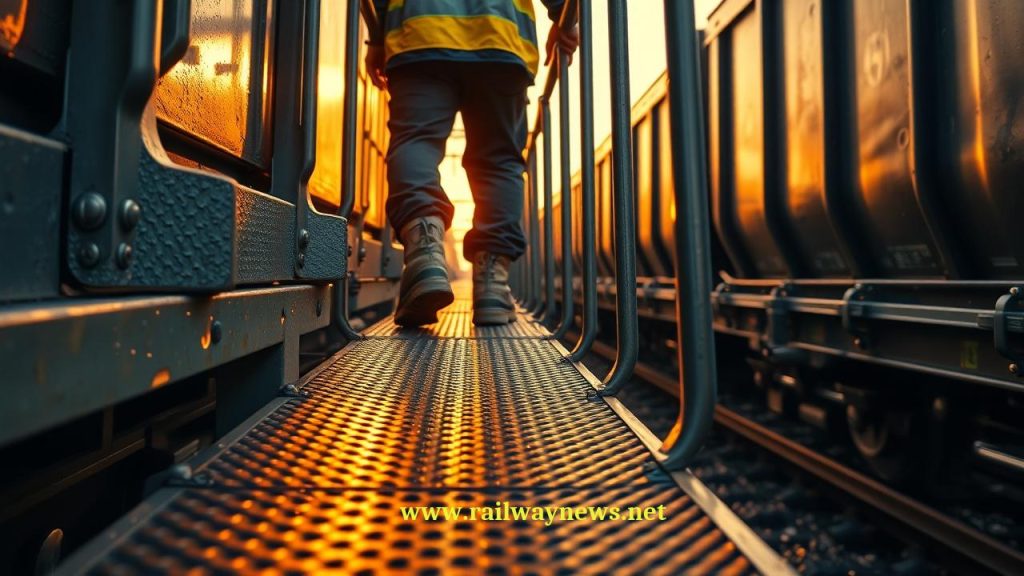
A Technical Guide to EN 16116-2: Staff Access on Freight Wagons
EN 16116-2 is a European Standard that specifies the design requirements for steps, handrails, and associated access points used by staff on railway freight wagons. This standard is critical for ensuring the safety of personnel, such as shunters, train crew, and maintenance staff, who need to move on, around, or access equipment on wagons during operational duties.
The primary goal of EN 16116-2 is to mitigate risks associated with slips, trips, and falls by standardizing the geometry, strength, and positioning of access systems. By providing a common set of design rules, it promotes interoperability and a consistent level of safety across the European rail network.
Scope and Core Principles of the Standard
The scope of EN 16116-2 is exclusively focused on new or modified freight wagons. It is Part 2 of a larger series, with EN 16116-1 covering other types of rolling stock like locomotives and passenger vehicles. The standard is built upon several fundamental design principles:
- Ergonomics: All access components must be designed with the human user in mind, considering factors like body dimensions, the need to wear personal protective equipment (PPE) like gloves and heavy boots, and typical movements performed during shunting or inspection.
- Safety by Design: The standard mandates proactive safety measures, such as non-slip surfaces and minimum clearance for hands and feet, to prevent accidents before they happen, especially in adverse weather conditions like rain, snow, or ice.
- Structural Integrity: Steps, handrails, and platforms must be robust enough to withstand the significant static and dynamic forces they are subjected to during normal operations, including shunting impacts and vibrations.
- Gauge Compliance: The design and placement of all access components must not infringe on the vehicle’s structural gauge, ensuring the wagon can operate safely without conflicting with line-side infrastructure.
Detailed Technical Requirements for Steps
Steps are one of the most critical components addressed by the standard. EN 16116-2 provides precise geometric and performance criteria to ensure their safety and usability. Key technical specifications often include:
- Dimensions: The standard defines minimum requirements for the usable width and depth of a step tread to ensure a secure footing. It also specifies the vertical distance (rise) between consecutive steps to allow for a natural climbing motion.
- Surface Properties: Step surfaces must be designed to be highly slip-resistant. This is typically achieved through perforated or embossed metal plates that allow water, oil, and debris to drain away and provide a high-friction surface.
- Positioning: The location of steps, particularly shunter’s steps at the ends of wagons, is strictly defined relative to the track and the wagon body. This includes height above the railhead and lateral position.
- Load Capacity: Each step must be proven, through calculation or physical testing, to support a specified vertical load without permanent deformation. This simulates the weight of a heavy-set staff member with equipment.
Detailed Technical Requirements for Handrails and Grab Handles
Handrails and grab handles provide essential stability for staff. The standard ensures they are functional, reliable, and correctly positioned to offer three-point contact (two hands and one foot, or one hand and two feet) whenever an individual is climbing or moving.
- Cross-Section and Diameter: The standard specifies a suitable diameter or cross-section for handrails to ensure a firm, full-hand grip, even when wearing thick gloves.
- Hand Clearance: A minimum clearance must be maintained between the handrail and any adjacent wagon structure. This “knuckle clearance” prevents hand injuries and ensures the rail can be gripped securely from any angle.
- Positioning and Orientation: Handrails must be placed in logical positions relative to steps and platforms. The standard provides guidance on the optimal height and orientation (vertical, horizontal, or angled) to assist movement.
- Structural Strength: Handrails must be able to withstand significant pulling and pushing forces applied in various directions, simulating a person using the rail to pull themselves up or brace against a sudden movement.
Comparison of Access Systems on Freight Wagons
Different tasks require different types of access. EN 16116-2 addresses various systems, each with specific design considerations. The table below compares common access types found on freight wagons.
| Access System Type | Key Design Consideration (per EN 16116-2) | Typical Location | Primary User |
|---|---|---|---|
| Shunter’s Step | Highly specific geometry, extreme slip resistance, and positioning for safe riding during shunting operations. Must withstand high impact loads. | At the four corners of the wagon, low down. | Shunting staff. |
| End Platform / Gangway | Requires continuous handrails, a non-slip floor surface, and defined minimum width to allow passage between coupled wagons. | At the end of the wagon underframe. | Train crew, shunters. |
| Side Access Ladder | Consistent step spacing (rise), adequate handholds, and potential fall protection requirements for ladders of significant height. | On the side of tank wagons or wagons with high-level equipment. | Maintenance staff, operators. |
| Access to Operating Equipment | Steps and handrails providing secure access to components like handbrake wheels or release valves. Must not obstruct equipment operation. | Adjacent to specific equipment on the underframe or body. | Train crew, maintenance staff. |
Materials, Durability, and Maintenance
Compliance with EN 16116-2 extends beyond initial design to material selection and long-term durability. Components must be manufactured from materials resistant to corrosion, UV degradation, and mechanical wear. Steel components are typically hot-dip galvanized or coated to protect against the harsh railway environment. The design must also facilitate inspection and maintenance, ensuring that worn or damaged components can be easily identified and replaced to maintain the safety integrity of the wagon throughout its service life.
Frequently Asked Questions (FAQ) about EN 16116-2
Here are some common questions regarding the application and importance of this standard.
What is the primary purpose of EN 16116-2?
Its primary purpose is to standardize the design of steps, handrails, and access ways on railway freight wagons to ensure the safety of staff who work on or around them, preventing slips, trips, and falls.
Does EN 16116-2 apply to passenger trains?
No. This standard is specifically for freight wagons. Access for staff on passenger trains, locomotives, and other rolling stock is covered by EN 16116-1.
What are the key elements specified by the standard?
The standard specifies detailed requirements for the dimensions, positioning, structural strength, materials, and surface characteristics of access components like steps, platforms, and handrails.
Why is slip resistance a critical factor in EN 16116-2?
Slip resistance is critical because freight yard operations often take place outdoors in all weather conditions, including rain, ice, and snow. A highly slip-resistant surface is a fundamental safety feature to prevent falls, which can lead to serious injury.

Railway infrastructure, rolling stock and transport technologies specialist focused on global rail industry developments, high-speed rail systems, signaling technologies and freight transportation. Covering railway investments, public transport modernization, rail operations and international mobility projects across Europe, Asia and North America.