
EU Rail: EN 45545-5 Mandates Electrical Fire Safety
EN 45545-5 ensures paramount fire safety for railway electrical equipment. It prevents ignition and contains fires, protecting passengers and staff across all rail vehicles.
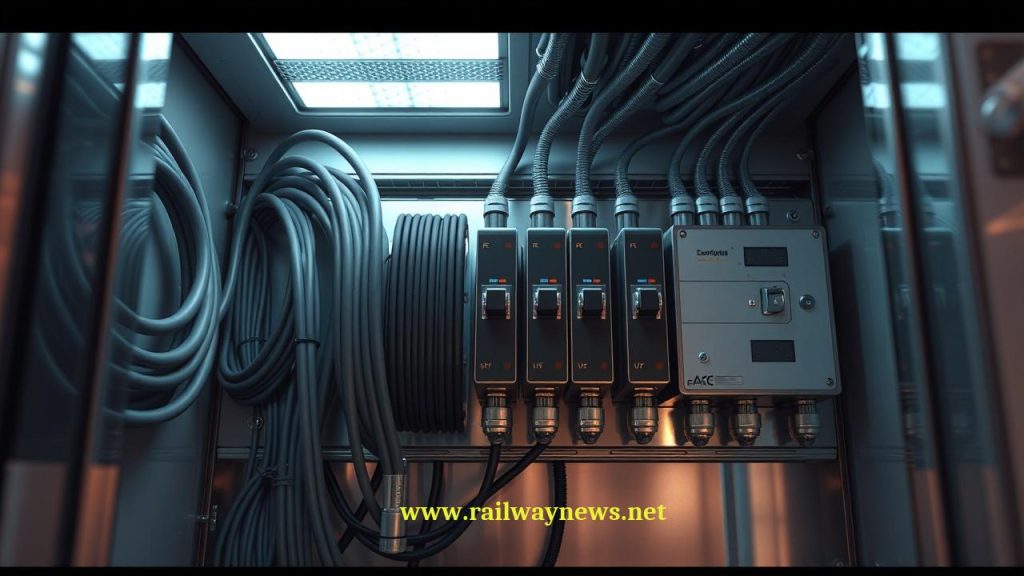
What is EN 45545-5: Fire Safety for Electrical Equipment
EN 45545-5 is a key part of the European standard for fire protection on railway vehicles. This specific section establishes the mandatory fire safety requirements for the selection and installation of electrical equipment. Its primary goal is to minimize the probability of a fire starting from electrical sources and to limit the effects of any fire that may occur, thereby ensuring the safety of passengers and staff.
The standard applies to a wide range of rail vehicles, including high-speed trains, regional and suburban trains, metros, trams, trolleybuses, track-guided buses, and magnetic levitation vehicles. It addresses the inherent risks associated with electrical systems, which are a leading potential source of ignition on board.
Scope and Core Principles of EN 45545-5
The scope of EN 45545-5 is detailed, covering all electrical equipment and its installation on railway vehicles. This includes, but is not limited to, high-voltage and low-voltage switchgear cabinets, power converters, transformers, batteries, wiring, cables, and electronic control units. The fundamental principle is a risk-based approach, focusing on two main pillars: fire prevention and fire containment.
Key Objectives
- Prevention of Ignition: Implementing design measures to prevent electrical equipment from becoming an ignition source. This involves managing overcurrents, short circuits, high temperatures, and electrical arcing.
- Control of Fire Spread: Ensuring that if an ignition does occur within an electrical unit, it is contained and its spread to other parts of the vehicle is prevented or delayed.
- Minimizing Fire Hazard: Limiting the heat release, smoke production, and toxicity of fumes from materials used in and around electrical equipment, which is primarily achieved by referencing material requirements in EN 45545-2.
Detailed Technical Requirements
EN 45545-5 outlines specific technical solutions and design rules to achieve its safety objectives. These are divided into measures for fire prevention and measures for fire containment and control.
Design Measures for Fire Prevention
To reduce the likelihood of an electrical fire, the standard mandates several design considerations:
- Overcurrent Protection: All electrical circuits must be protected by appropriately rated fuses or circuit breakers to prevent overheating caused by excessive current.
- Short-Circuit Protection: The design must prevent short circuits, which can be caused by insulation failure, contamination, or mechanical damage. This includes ensuring adequate clearance and creepage distances.
- Prevention of Overheating: Components must be selected and installed to operate within their specified temperature limits. This often requires effective thermal management, such as ventilation or cooling systems for high-power equipment like inverters and transformers.
- Arcing and Sparking Prevention: Equipment must be designed to minimize the risk of electrical arcs and sparks, especially in the presence of potentially flammable materials. This is critical for switchgear and contactors.
Fire Containment and Control Measures
If a fire starts, its impact must be limited. EN 45545-5 specifies requirements for this, including:
- Use of Fire Barriers: Electrical enclosures and cabinets housing high-energy equipment must act as fire barriers. They must be capable of containing a fire for a specified period without it spreading. These barriers are tested according to the requirements of EN 45545-3 (Fire resistance requirements for fire barriers).
- Segregation: Separating redundant or critical electrical circuits to ensure that a single fire event does not lead to a complete loss of essential vehicle functions (e.g., braking, communication).
- Installation Rules for Cables: Electrical cables must be installed in a way that prevents them from propagating fire along their length. This involves using cables that meet the stringent fire performance requirements of EN 45545-2 and may include specific installation techniques like fire stops in cable ducts.
Requirement Sets for Electrical Equipment (E-Numbers)
A central concept in EN 45545-5 is the use of specific “Requirement Sets” for different types of electrical equipment. These are designated with an “E” prefix (e.g., E1, E4, E5). Each set defines a specific combination of preventive and protective measures tailored to the risk associated with that equipment type. The table below outlines some key examples.
| Requirement Set | Typical Equipment / Application | Key Safety Objective |
|---|---|---|
| E1A / E1B | LV/HV switchgear and controlgear assemblies (electrical cabinets) | Containment of an internal fire. The enclosure must prevent flame and hot gases from escaping. |
| E3 | External electrical installations (e.g., roof-mounted or underframe equipment) | Preventing fire spread to the inside of the vehicle and resisting external fire sources. |
| E4 | Electrical cables | Limiting flame spread and ensuring low smoke density and toxicity. This directly references material tests in EN 45545-2. |
| E5 | Transformers and reactors containing flammable liquids | Containment of flammable liquid, fire resistance, and prevention of pool fires. |
| E10 | Printed Circuit Boards (PCBs) | Ensuring the base material of the PCB has low flammability to prevent it from becoming a source of fire propagation. |
| E15 | Battery systems | Preventing and containing thermal runaway, managing flammable gas emissions, and fire containment within the battery enclosure. |
Interaction with Other Parts of EN 45545
EN 45545-5 does not exist in isolation. It works in close concert with other parts of the EN 45545 series to provide a holistic fire safety solution.
- EN 45545-2 (Requirements for fire behaviour of materials and components): This is the most critical link. While EN 45545-5 specifies that an electrical enclosure must be built, EN 45545-2 defines the required fire performance (flame spread, heat release, smoke toxicity) of the materials used to build it. For instance, cables must meet the R15/R16 material requirements from Part 2.
- EN 45545-3 (Fire resistance requirements for fire barriers): When Part 5 requires an electrical cabinet to act as a fire barrier, the performance criteria and test methods (e.g., integrity, insulation) are defined in Part 3.
- EN 45545-6 (Fire control and management systems): For high-risk areas like power converter cabinets, Part 5 may necessitate the installation of a fire detection and extinguishing system, the requirements for which are detailed in Part 6.
Conclusion: An Essential Standard for Rail Safety
EN 45545-5 is a cornerstone of modern railway vehicle fire safety. By providing detailed, risk-assessed requirements for electrical equipment, it directly addresses one of the most significant sources of fire on board. Its structured approach, combining preventative design measures with robust containment strategies, ensures that electrical systems are not only functionally reliable but also fundamentally safe. Compliance with this standard is essential for any manufacturer or operator in the European railway sector to guarantee the highest level of protection for passengers, crew, and assets.

Railway infrastructure, rolling stock and transport technologies specialist focused on global rail industry developments, high-speed rail systems, signaling technologies and freight transportation. Covering railway investments, public transport modernization, rail operations and international mobility projects across Europe, Asia and North America.