
EU Invests €175M in Montenegro Rail: Boosts TEN-T Network
EU invests €175.6M in the Bar–Golubovci railway line, boosting capacity and connectivity. This project strengthens Montenegro’s EU integration and green transport.
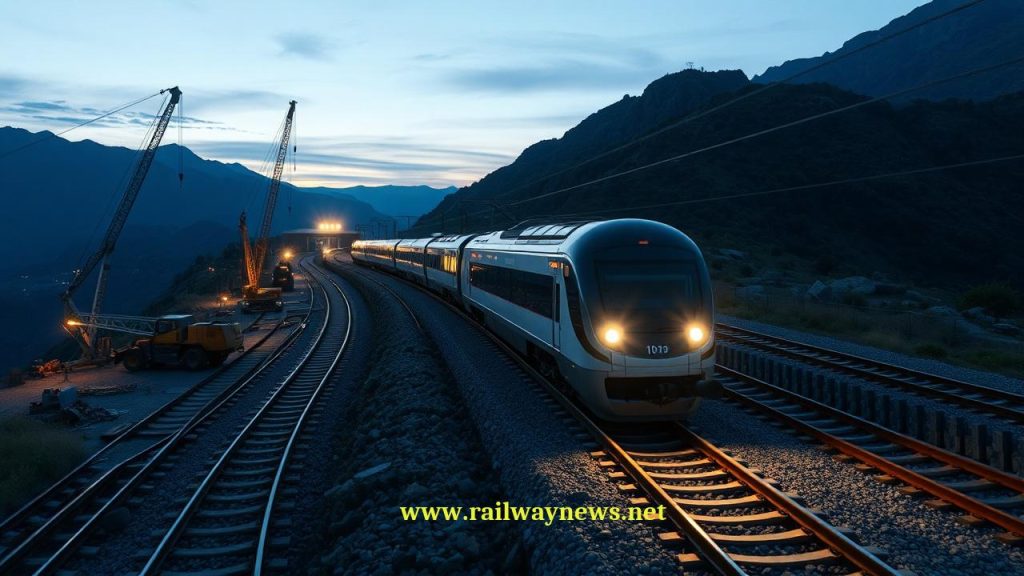
The European Union has announced a landmark €175.6 million financial package to reconstruct a vital 39 km section of Montenegro’s railway network, reinforcing its strategic commitment to integrating the Western Balkans. This investment in the Bar–Golubovci line, part of the extended TEN-T Core Network, is a cornerstone of a larger €230.8 million project designed to modernize a critical trade and passenger corridor connecting the Adriatic coast to Central Europe.
| Category | Details |
|---|---|
| Project Name | Reconstruction of Bar–Golubovci Railway Line |
| Total Investment | EUR 230.8 Million |
| Key Financiers | EU/WBIF (€112.6M), EIB (€63M), EBRD (€50M), Govt. of Montenegro (€5.2M) |
| Line Length | 39 km |
| Strategic Corridor | Rail Route 4 (Belgrade–Bar), TEN-T Core Network |
The detailed funding arrangement, a key component of the EU’s Economic and Investment Plan for the Western Balkans, was solidified with the signing of a €63 million loan from the European Investment Bank (EIB). This is complemented by a substantial €112.6 million grant from the European Commission, channelled through the Western Balkans Investment Framework (WBIF). The total project cost of €230.8 million is further supported by a €50 million loan from the European Bank for Reconstruction and Development (EBRD) and a €5.2 million national contribution from the Government of Montenegro. “With the conclusion of the EUR 63 million loan agreement with the European Investment Bank, a stable and favourable source of financing has been secured for one of the key infrastructure projects in the railway sector,” stated Montenegro’s Minister of Finance, Novica Vuković.
Upon completion, the modernization of the Bar–Golubovci line is set to deliver transformative improvements in operational efficiency, safety, and service quality. The upgrades will allow for increased train speeds and enhance the overall reliability of the network, boosting its capacity to an estimated 1.3 million passengers and 1.85 million tonnes of freight annually. This strategic overhaul is designed to catalyse a modal shift from road to rail, contributing significantly to Montenegro’s green transition goals and strengthening its resilience to climate change. “By modernising the Bar–Golubovci railway, we are not only improving safety, efficiency and service quality, but also strengthening Montenegro’s role as a key transport hub between the Western Balkans and the European Union,” commented Montenegro’s Minister of Transport, Maja Vukićević.
This investment extends beyond mere infrastructure renewal; it represents a significant geopolitical move by the EU to bolster its influence and foster economic integration in the Western Balkans. In a global landscape where major powers are competing for infrastructure influence, as seen in China’s extensive railway investments in Africa, the EU’s model of combining grants, favourable loans, and technical assistance (via programmes like JASPERS) presents a compelling alternative. By funding critical links in the TEN-T network, the EIB and European Commission are not only facilitating trade but are also embedding European technical and environmental standards, thereby accelerating Montenegro’s alignment with the EU and solidifying Europe’s strategic transport corridors.
Key Takeaways
- Major Financial Commitment: The EU and its financial institutions are providing over 97% of the €230.8 million required for the project, demonstrating a strong commitment to Montenegro’s development.
- Enhanced Connectivity and Capacity: The project will significantly upgrade a vital section of Rail Route 4, increasing speeds and capacity to handle 1.3 million passengers and 1.85 million tonnes of freight per year.
- Strategic Integration: The investment strengthens the TEN-T Core Network, improves connectivity between the Western Balkans and the EU, and supports Montenegro’s EU accession ambitions and green transition.
Editor’s Analysis
The financing of the Bar–Golubovci line is a textbook example of the EU’s strategic infrastructure policy in action. This is not merely about upgrading 39 kilometers of track; it is a calculated investment in regional stability, economic integration, and geopolitical influence. In the Western Balkans, a region courted by various global powers, such projects serve as a powerful tool of EU soft power. By providing a transparent, standards-driven investment package, the EU reinforces its position as the partner of choice for candidate countries like Montenegro. This project directly counters alternative investment models and binds the region’s economic future more tightly to the European single market, ensuring that critical transport arteries are aligned with EU standards and strategic interests for decades to come.
Frequently Asked Questions
- What is the total cost of the Bar–Golubovci railway project?
- The total estimated cost for the reconstruction of the 39 km railway line is EUR 230.8 million.
- Which institutions are funding the project?
- The project is funded by a coalition of European institutions and the Montenegrin government. The financing includes a €112.6 million EU grant, a €63 million EIB loan, a €50 million EBRD loan, and a €5.2 million contribution from Montenegro.
- What are the main benefits of this railway reconstruction?
- The primary benefits include increased train speeds, improved safety and reliability, and enhanced capacity for both passenger (1.3 million annually) and freight (1.85 million tonnes annually) transport. It will also promote a shift from road to rail, supporting Montenegro’s green transition and strengthening its connection to the EU’s TEN-T network.

Railway infrastructure, rolling stock and transport technologies specialist focused on global rail industry developments, high-speed rail systems, signaling technologies and freight transportation. Covering railway investments, public transport modernization, rail operations and international mobility projects across Europe, Asia and North America.
RELATED POSTS

October 8, 2026 12:18 pm
Siemens Mobility signed an agreement with VinSpeed to supply 350...

October 5, 2026 6:12 pm
AECOM and Jacobs secured a contract in September 2026 to...

October 6, 2026 2:14 am
Union Pacific launched export rail shipments with Ferromex to deliver...

October 4, 2026 11:08 pm
Sound Transit confirmed the September 30 opening of Seattle Pinehurst...
October 6, 2026 9:17 am
Illinois approved $1.1M in state funds to upgrade two McHenry...
October 6, 2026 12:16 am
FTA awarded $233 million in grants to eight US rail...