
Eswatini Rail Link: 2026 Construction Update
Eswatini Rail Link Project: A new 150km rail line boosting freight transport between South Africa and Eswatini, creating jobs and economic growth.
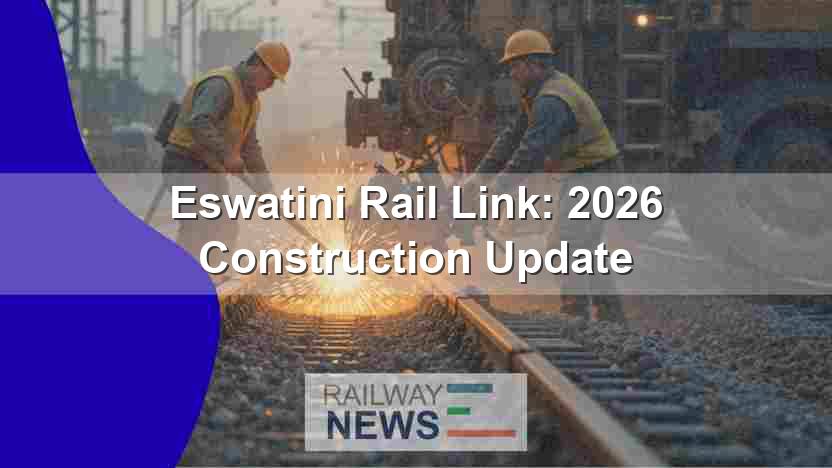
The Eswatini Rail Link (ESRL) is a strategic, cross-border infrastructure project engineering a 150 km heavy-haul railway corridor to enhance freight capacity between South Africa and Eswatini. The project establishes a dedicated General Freight Business (GFB) route, strategically diverting cargo from the Richards Bay coal line to increase overall network efficiency and unlock regional economic potential.
| Attribute | Details |
|---|---|
| Project Name | Eswatini Rail Link (ESRL) |
| Location | Mpumalanga, South Africa & Kingdom of Eswatini |
| Route | 150 km corridor connecting Lothair (SA) to Sidvokodvo (Eswatini), integrating into the line to the Port of Richards Bay (SA). |
| Project Type | Greenfield (50km SA, 100km Eswatini) & Brownfield Upgrades |
| Estimated Cost | ~ US$1.34 Billion |
| Status (as of Nov 2025) | Under Construction / Final Funding Stages |
| Key Stakeholders & Contractors | Transnet Freight Rail (TFR), Eswatini Railways (ESR), RCE Consultants (Design), TEAM Engineering (Pre-construction), Aurecon (EIA) |
Technical Specifications
The ESRL is engineered as a high-capacity freight line designed to accommodate 26-tonne axle loads. The project’s scope is divided between a 50 km greenfield section in South Africa and a 100 km greenfield section in Eswatini, linking Lothair to the existing Sidvokodvo rail hub. It also includes brownfield upgrades to the connecting lines from Ermelo to Lothair and from Sidvokodvo to Richards Bay to support increased traffic. The line’s design overcomes challenging topography through significant civil engineering works, including 28 viaducts, 28 major bridges, and 110 culverts. Operationally, the corridor is designed for 2.5 km long trains, comprising up to 200 wagons each, maximizing cargo throughput and operational efficiency.
Key Takeaways
- Strategic Decongestion: The ESRL establishes a dedicated general freight corridor, diverting non-coal traffic from the vital Richards Bay Coal Line. This separation of traffic increases the capacity and reliability of both commodity-specific and general freight networks.
- Economic Integration: By providing a direct, high-capacity rail link between Eswatini and South Africa’s industrial heartland (Gauteng) and a major export port, the project is a catalyst for regional trade, investment, and industrial growth.
- Modern PPP Framework: The project’s structure as a cross-border Public-Private Partnership (PPP) serves as a model for future large-scale infrastructure development in Southern Africa, aiming to blend public oversight with private sector efficiency and financing.
Frequently Asked Questions (FAQ)
When will the Eswatini Rail Link be completed?
While the initial projected completion date was 2023, the Eswatini Rail Link project has undergone extended development and funding phases typical for an infrastructure project of this scale. As of late 2025, with major design and environmental clearances complete, construction is underway. The revised estimated completion is now targeted for the 2027-2028 period, contingent on construction timelines and final partnership agreements.
Who is building the Eswatini Rail Link?
The Eswatini Rail Link is a bilateral project led by South Africa’s state-owned Transnet Freight Rail (TFR) and Eswatini Railways (ESR). The detailed design and pre-construction services have been managed by specialist firms including RCE Consultants and TEAM Engineering, with environmental impact assessments led by Aurecon. The construction and operational phases are structured as a Public-Private Partnership (PPP), with both governments actively engaging private sector partners for execution and financing.

Railway infrastructure, rolling stock and transport technologies specialist focused on global rail industry developments, high-speed rail systems, signaling technologies and freight transportation. Covering railway investments, public transport modernization, rail operations and international mobility projects across Europe, Asia and North America.