
EN 15355: The Brain Behind European Rail Braking Safety
Explore EN 15355, the European standard for distributor valves, the core of UIC pneumatic braking. It ensures railway safety, reliability, and interoperability across the network.
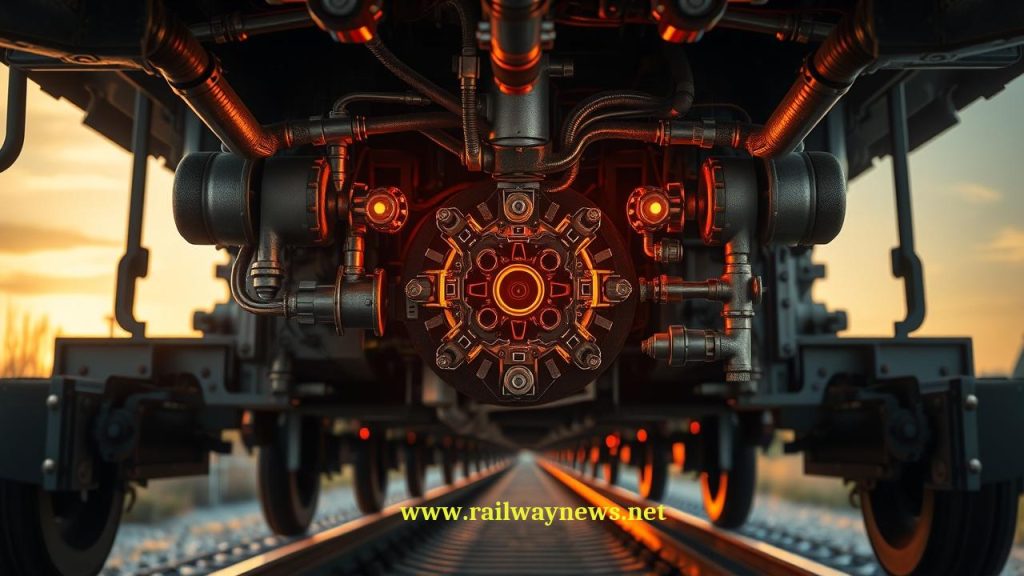
What is EN 15355: The Heart of UIC Pneumatic Braking
EN 15355 is a European Standard that specifies the requirements for the design, performance, testing, and quality assurance of distributor valves and distributor-isolating devices for pneumatic brake systems on railway vehicles. This standard is fundamental to ensuring the safety, reliability, and interoperability of braking systems across the European rail network, particularly for conventional UIC (International Union of Railways) type brakes.
The distributor valve is arguably the most critical component in a conventional air brake system. It functions as the “brain” of the braking equipment on each wagon or coach, interpreting the commands sent by the locomotive driver via changes in the main brake pipe pressure and translating them into a precise and controlled brake application or release.
The Core Function of a Distributor Valve
In a UIC-type pneumatic brake system, a continuous brake pipe runs the length of the entire train, charged with a nominal pressure (typically 5 bar). The locomotive driver initiates braking by reducing this pressure. The distributor valve on each vehicle senses this pressure drop and performs a series of crucial actions:
- Sensing Pressure Changes: It detects the reduction in brake pipe pressure initiated by the driver.
- Translating the Signal: It translates this pressure drop into a corresponding, and typically amplified, air pressure into the vehicle’s brake cylinder.
- Using Local Air Supply: It does not use the air from the brake pipe to apply the brakes. Instead, it uses a local supply of compressed air stored in an auxiliary reservoir on the same vehicle. This ensures that braking is powerful and consistent along the entire train.
- Graduated Application & Release: It allows for finely controlled, partial brake applications and releases, giving the driver precise control over the train’s speed.
- Inexhaustibility: It ensures that repeated brake applications do not deplete the system’s ability to brake effectively.
Key Technical Requirements under EN 15355
EN 15355 outlines a detailed set of technical and performance criteria that a distributor valve must meet to be certified for use. These requirements are essential for safe and predictable train operation.
Performance Characteristics
The standard defines precise operational parameters to ensure all valves on a train behave uniformly, regardless of the manufacturer.
- Sensitivity and Insensitivity: The valve must be insensitive to small, slow pressure drops in the brake pipe (e.g., due to minor leaks) to prevent unwanted brake applications. However, it must be sensitive enough to react promptly to a deliberate application by the driver.
- Propagation Time: This is the speed at which the brake signal travels from the front to the rear of the train. EN 15355 specifies maximum propagation times to ensure near-simultaneous brake application along the train, preventing dangerous in-train forces.
- Filling and Release Times: The standard dictates the time it takes for the brake cylinder to reach a certain pressure (application time) and to vent its pressure (release time). These times vary depending on the selected brake setting (e.g., ‘G’ for freight or ‘P’ for passenger).
- Graduability: The valve must respond proportionally to any level of pressure reduction in the brake pipe, allowing for smooth and controlled braking.
- Emergency Braking: In response to a rapid and complete drop in brake pipe pressure, the valve must direct the maximum possible pressure to the brake cylinder in the shortest possible time to achieve an emergency stop.
Design and Construction
Durability and reliability are paramount for such a safety-critical component. The standard covers:
- Materials: Requirements for materials ensure resistance to corrosion, wear, and extreme temperatures encountered in railway operation.
- Environmental Conditions: The valve must be designed to operate reliably despite constant vibration, shock, humidity, and a wide range of ambient temperatures.
- Interfaces: Standardised dimensions and port connections are specified to ensure that a valve from one manufacturer can be replaced with one from another without modification to the vehicle’s pipework.
Distributor Valve Settings: G, P, and R
Most distributor valves feature a manual changeover handle to select different operating modes tailored to the type of train. EN 15355 defines the performance for these settings, which primarily alter the application and release timings.
| Setting | Full Name | Typical Use | Key Characteristic |
|---|---|---|---|
| G | Goods (Güterzug) | Freight trains | Slow application and release times (approx. 18-30s application, 45-60s release). This prevents high longitudinal forces (slack action) in long, heavy freight trains. |
| P | Passenger (Personenzug) | Passenger trains and fast freight trains | Faster application and release times (approx. 3-5s application, 15-20s release). This allows for smoother and more responsive braking suitable for passenger comfort and higher speeds. |
| R | Rapid / High Power (Rapide) | High-speed passenger trains | Similar to ‘P’ but with an added high-pressure feature (Mag-Reg valve) that applies a higher initial pressure to the brake cylinder at higher speeds for increased braking force. |
The Role of Distributor-Isolating Devices
EN 15355 also covers the distributor-isolating device. This is a critical safety feature, usually a cock or handle, integrated with the distributor valve. Its purpose is to allow the brake system on a single vehicle to be isolated from the rest of the train if it develops a fault. When activated, it vents the vehicle’s brake cylinders and auxiliary reservoir, releasing the brakes on that vehicle, but allows the main brake pipe to remain continuous and functional for the rest of the train.
Conclusion: The Foundation of Interoperable Braking
EN 15355 is more than just a technical specification; it is a cornerstone of railway safety and interoperability in Europe. By standardising the performance of the distributor valve—the heart of the pneumatic brake—it ensures that wagons and locomotives from different operators and countries can be coupled together to form a train that brakes predictably, reliably, and safely. This uniformity is essential for the seamless operation of international freight and passenger services across the continent.
Frequently Asked Questions about EN 15355

Railway infrastructure, rolling stock and transport technologies specialist focused on global rail industry developments, high-speed rail systems, signaling technologies and freight transportation. Covering railway investments, public transport modernization, rail operations and international mobility projects across Europe, Asia and North America.