
EN 13272: New European Rail Lighting Safety & Comfort
EN 13272 is the European standard for railway lighting, ensuring passenger and crew safety, comfort, and performance. It illuminates modern trains for a superior travel experience.
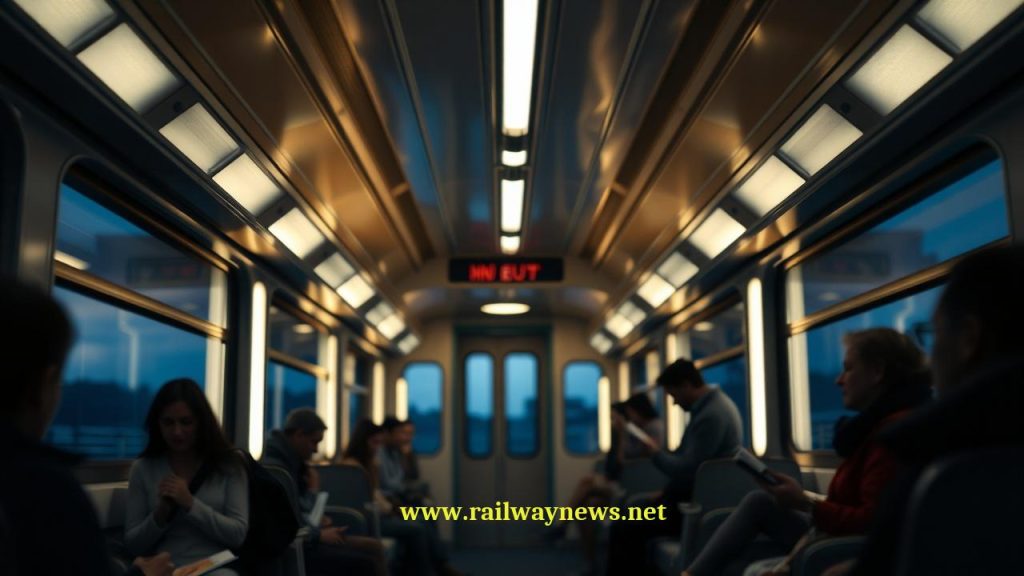
Understanding EN 13272: The European Standard for Railway Rolling Stock Lighting
EN 13272 is a European standard that specifies the requirements for electrical lighting systems in the rolling stock of public transport systems, such as mainline trains, metros, and trams. The standard’s primary goal is to ensure adequate visual conditions and comfort for both passengers and crew, directly contributing to safety, performance, and the overall travel experience.
This standard provides a detailed framework for designers, manufacturers, and operators, covering all aspects of interior lighting from general illumination to specific task lighting and emergency systems. It harmonizes lighting requirements across different networks, promoting interoperability and a consistent level of quality in the European railway sector.
Key Objectives and Scope of EN 13272
The standard is built upon several core principles designed to balance functional requirements with human-centric design. The main objectives include:
- Passenger Safety and Comfort: Ensuring sufficient light levels for safe movement within the vehicle, boarding, and alighting. It also aims to create a visually comfortable environment, minimizing eye strain and glare.
- Crew Performance and Safety: Providing optimal lighting conditions for the driver’s cab to ensure clear visibility of controls, instruments, and the track ahead, without causing distracting reflections or glare.
- Energy Efficiency: While setting minimum performance criteria, the standard implicitly encourages the use of modern, energy-efficient lighting technologies like LED, which are crucial for reducing the operational costs and environmental impact of rolling stock.
- Uniformity and Consistency: Establishing clear, measurable criteria for illuminance, uniformity, and colour rendering to ensure a consistent and high-quality lighting environment across all new and refurbished rolling stock.
- Emergency Preparedness: Defining the minimum performance requirements for emergency lighting systems to ensure safe egress from the vehicle in the event of a power failure or incident.
Core Technical Requirements of EN 13272
EN 13272 details specific photometric parameters that lighting systems must meet. These are verified through measurement and calculation to ensure compliance.
Illuminance Levels
Illuminance, measured in lux (lx), is the amount of light falling on a surface. The standard specifies minimum average illuminance levels for different areas within the rolling stock to ensure tasks can be performed safely and comfortably. These values are typically measured on a defined horizontal or vertical plane (e.g., at seat level, floor level, or on a control panel).
Uniformity
Uniformity (Uo) is as crucial as the illuminance level. It is the ratio of the minimum illuminance to the average illuminance on a given surface (Uo = Emin / Eav). A high uniformity value indicates an even distribution of light, free from harsh shadows or overly bright spots. Poor uniformity can cause visual discomfort and may hide potential hazards on the floor. The standard sets minimum uniformity ratios for various zones.
Glare Control
Glare is the sensation of excessive brightness that can cause visual discomfort or a reduction in the ability to see. EN 13272 addresses this by limiting the luminance of light sources and their positioning. For passenger areas, this ensures a comfortable ambiance, while in the driver’s cab, strict glare control is a critical safety factor to prevent reflections on the windscreen and ensure the driver maintains a clear view of the outside world and signaling systems.
Colour Rendering and Colour Temperature
The standard specifies requirements for the quality of light. This includes:
- Colour Rendering Index (CRI): A measure of how accurately a light source reveals the true colours of objects. A higher CRI (typically Ra > 80 is required) is essential for correctly identifying safety signs, reading materials, and creating a natural-looking environment.
- Correlated Colour Temperature (CCT): Measured in Kelvin (K), this describes the perceived “warmth” or “coolness” of the light. While the standard allows a range, the choice of CCT can significantly influence passenger perception of comfort and cleanliness.
Emergency Lighting
A critical safety component, the emergency lighting system must activate automatically upon main power failure. EN 13272 stipulates the minimum illuminance levels for emergency conditions (e.g., typically a few lux at floor level), the duration for which the system must operate on its backup power source, and its placement to illuminate escape routes, doorways, and emergency equipment.
Comparison of Lighting Requirements for Key Areas
The specific requirements vary depending on the function of each area within the rolling stock. The following table provides a simplified overview of typical values mandated by EN 13272.
| Area of Application | Minimum Average Illuminance (lx) | Minimum Uniformity (Uo) | Key Considerations |
|---|---|---|---|
| Passenger Saloons (General Areas) | 150 lx (on horizontal plane) | 0.4 | Focus on comfort, glare control, and high CRI for a pleasant atmosphere. |
| Reading / Table Areas | 300 lx (on task plane) | 0.6 | Higher illuminance and uniformity required for visual tasks like reading. |
| Vestibules, Gangways & Doorways | 100 lx (on the floor) | 0.3 | Safety is paramount; ensuring steps, obstacles, and door mechanisms are clearly visible. |
| Driver’s Cab (Control Desk) | 300 lx (adjustable) | 0.6 | High illuminance, excellent uniformity, and strict control of glare and reflections. Dimmability is essential. |
| Emergency Lighting | >5 lx (on floor centerline) | 0.1 (or 1:40 ratio) | Must be instantly available and last for a specified duration to guide evacuation. |
Testing and Verification for Compliance
To declare conformity with EN 13272, rolling stock lighting must undergo rigorous testing. This process involves photometric measurements performed inside a completed vehicle under controlled conditions. Inspectors use calibrated lux meters and luminance meters to verify that the illuminance, uniformity, and glare levels meet the specified values in each designated area. The colour properties (CRI and CCT) of the luminaires are also verified against manufacturer data sheets and direct measurements.
Conclusion: The Importance of EN 13272 in Modern Railways
EN 13272 is more than just a technical document; it is a cornerstone of modern passenger rolling stock design. By setting clear, enforceable standards for electrical lighting, it directly enhances safety for both passengers and crew. Additionally, it plays a vital role in shaping the passenger experience, contributing to a sense of comfort, security, and well-being. For railway operators and manufacturers, adherence to EN 13272 ensures product quality, regulatory compliance, and interoperability within the extensive European rail network, driving the industry towards a higher standard of excellence.

Railway infrastructure, rolling stock and transport technologies specialist focused on global rail industry developments, high-speed rail systems, signaling technologies and freight transportation. Covering railway investments, public transport modernization, rail operations and international mobility projects across Europe, Asia and North America.