
EIB Approves EUR 65M Loan for Morocco Rail Rehabilitation
EIB approved a €65 million total rail rehabilitation package for ONCF in Morocco, blending a €50M loan and a €15M EU grant for climate adaptation.
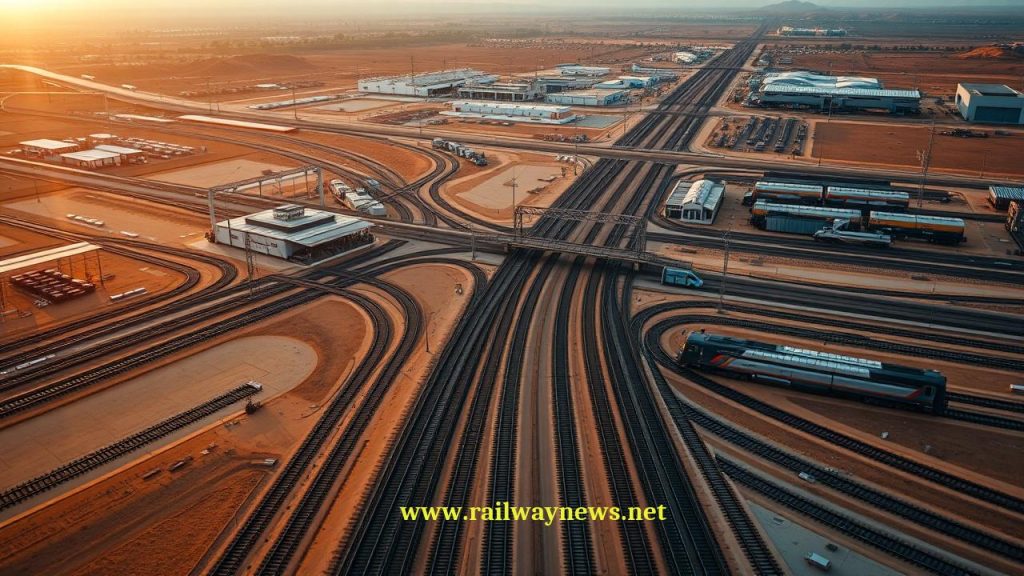
⚡ In Brief: The European Investment Bank approved a EUR 365 million transport package for Morocco, including a EUR 50 million loan and a EUR 15 million EU grant to national rail operator ONCF for railway rehabilitation and climate resilience measures.
RABAT, MOROCCO – The European Investment Bank (EIB) signed agreements providing EUR 365 million for Morocco’s road and rail networks during President Nadia Calviño’s first official visit to the kingdom. The rail component consists of a EUR 50 million loan for ONCF’s Railway Rehabilitation project and a EUR 15 million European Union grant for climate adaptation works.
How Is the Funding Structured?
The total EUR 365 million package splits into a EUR 300 million loan to Autoroutes du Maroc (ADM) for highway resilience and a EUR 65 million rail envelope directed at ONCF. Within the rail portion, the EUR 50 million EIB loan covers rehabilitation of existing railway infrastructure, while the EUR 15 million EU grant finances specific measures to bolster the network against climate change impacts such as extreme heat and flooding. The two operations are backed by a European guarantee and form part of the larger EUR 740 million in EIB Global financing agreements signed with Morocco in 2025, the institution’s largest annual commitment to the country since 2012.
Key Funding Data
| Parameter | Value |
|---|---|
| Fund / Programme Name | EIB Transport Financing Package – ONCF Railway Rehabilitation Project |
| Total Value | EUR 365 million (rail: EUR 65 million) |
| Parties Involved | European Investment Bank, ONCF (Moroccan National Railways), Autoroutes du Maroc, European Union Delegation to Morocco |
| Timeline / Completion | Not disclosed |
| Country / Corridor | Morocco; national rail and highway networks |
How Does This Compare to Similar Funding Programs?
The EUR 50 million ONCF loan is significantly smaller than the EUR 300 million loan the EIB provided in 2010 for the Tangier–Casablanca high-speed line (Al Boraq), which inaugurated Africa’s first high-speed service in 2018. (Source: EIB, 2010) That earlier financing supported greenfield infrastructure construction, while the new package targets rehabilitation and climate-proofing of the existing conventional network. Separately, the Moroccan government is advancing the USD 10.3 billion Kenitra–Marrakech high-speed rail project—Africa’s longest—outside this EIB envelope. (Source: Construction Review Online, 2025) The current EIB rail investment aligns with a broader push to strengthen freight corridors serving Tangier Med port, where shipping line Hapag-Lloyd is increasing its stake in the TC3 container terminal from 10% to 20% in pursuit of its 30-terminal target by 2030. (Source: Maritime Executive, 2025) No comparable EU grants earmarked solely for rail climate resilience have been previously announced for Morocco, making the EUR 15 million grant a notable new instrument.
Editor’s Analysis
The EIB’s shift from financing large-scale rail expansion to targeted rehabilitation and climate adaptation reflects a maturation of Morocco’s railway network and the lender’s response to rising physical climate risks on existing assets. The grant component signals the EU’s willingness to deploy concessional climate finance in North Africa, a model that could be replicated for other shock-prone corridors. With the Kenitra–Marrakech high-speed line set to reshape domestic mobility, ONCF’s parallel rehabilitation efforts will be essential to maintain feeder services and freight reliability to Tangier Med, which handled 9.1 million TEU in 2024. (Source: Tanger Med Port Authority, 2025)
FAQ
Q: What specific works will the ONCF loan finance?
A: The loan will cover rehabilitation of existing track, signalling, and structures, with the EU grant funding dedicated climate adaptation measures such as improved drainage, heat-resistant materials, and slope stabilization. Detailed project lists have not been disclosed.
Q: Is this funding related to the Kenitra–Marrakech high-speed rail line?
A: No. The USD 10.3 billion Kenitra–Marrakech high-speed project is a separate undertaking by ONCF and is not part of this EIB package. The current EUR 65 million rail funding focuses on rehabilitation and climate resilience of the conventional network.
Q: How does this affect rail freight and the Tangier Med port?
A: More resilient rail infrastructure can reduce service interruptions on routes linking Tangier Med to inland logistics zones, supporting the port’s expansion and the growing container terminal investments by carriers such as Hapag-Lloyd. No direct capacity increase figures have been tied to the rehabilitation loan.

Railway infrastructure, rolling stock and transport technologies specialist focused on global rail industry developments, high-speed rail systems, signaling technologies and freight transportation. Covering railway investments, public transport modernization, rail operations and international mobility projects across Europe, Asia and North America.
RELATED POSTS

October 8, 2026 1:15 pm
Alstom secured a €1bn contract to build 13 automated trains,...

October 1, 2026 7:09 am
United States regulators confirmed a September 30 deadline for the...

October 8, 2026 12:18 pm
Siemens Mobility signed an agreement with VinSpeed to supply 350...

October 4, 2026 5:14 pm
Alstom secured a CA$4.7 billion order from VIA Rail Canada...

October 5, 2026 6:12 pm
AECOM and Jacobs secured a contract in September 2026 to...

October 1, 2026 12:13 am
Illinois approved $1.5 billion annually for the Northern Illinois Transit...