
Eco-Friendly Rail HVAC: Propane’s Green Revolution
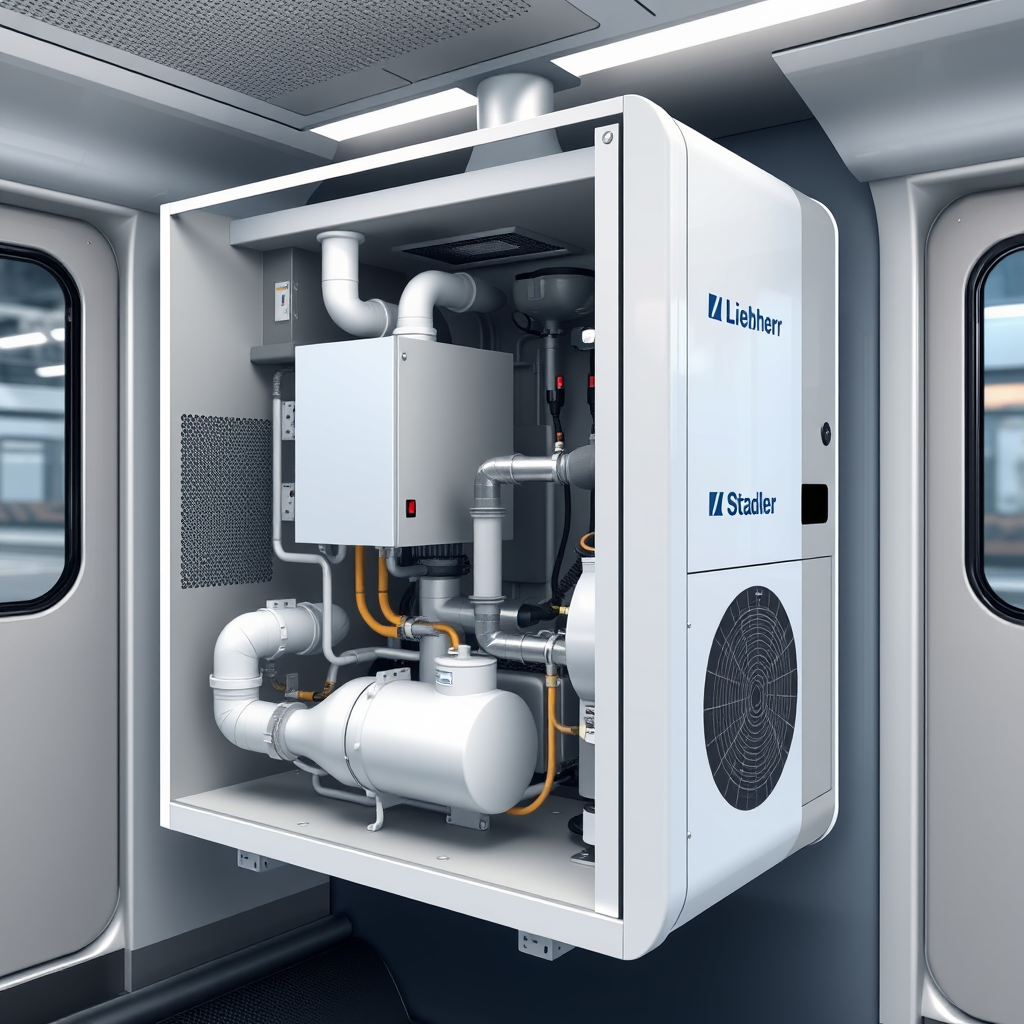
Liebherr Transportation Systems’ propane-based Heating, Ventilation, and Air Conditioning (HVAC) technology has been successfully integrated into Stadler Polska’s order for 80 HVAC units on Finland’s VR Group EMUs, marking a significant step towards sustainable railway vehicle design by reducing the industry’s reliance on environmentally damaging refrigerants.
Introduction
The railway industry is undergoing a significant transformation driven by a global commitment to environmental sustainability. This article explores a crucial aspect of this shift: the adoption of eco-friendly Heating, Ventilation, and Air Conditioning (HVAC) systems in modern railway rolling stock. Specifically, we will examine the recent unveiling of Liebherr Transportation Systems’ (Liebherr TS) propane-based HVAC technology, a significant development highlighting the industry’s move away from traditional, environmentally damaging refrigerants. This innovative approach, implemented in a substantial order for Stadler Polska, underscores the growing importance of sustainable practices across the entire lifecycle of railway vehicles, extending beyond simply reducing emissions from train propulsion. We will analyze the technical aspects of this new technology, its benefits, and the broader implications for the future of railway HVAC systems. The transition to more sustainable alternatives presents both technical challenges and significant opportunities for innovation and improved operational efficiency within the rail sector.
The Rise of Sustainable HVAC in Rail
Historically, railway HVAC systems relied heavily on synthetic refrigerants like R-410A and R-134a, known for their high Global Warming Potential (GWP). These gases significantly contribute to climate change, making their continued use unsustainable. Regulations and growing public awareness have propelled the industry to seek alternatives. Liebherr TS’s propane-based HVAC system represents a significant step forward in this transition. Propane (R-290), while possessing a flammability risk, exhibits a markedly lower GWP (3) compared to synthetic refrigerants, making it a more environmentally responsible choice. The successful integration of propane in this system, validated through collaboration with TÜV Süd (a leading technical inspection agency), showcases a commitment to safety and efficacy.
Stadler Polska and VR Group Order: A Case Study
The order from Stadler Polska for 80 HVAC units for 20 FLIRT (Fast Light Innovative Regional Train) Electric Multiple Units (EMUs) destined for Finland’s VR Group serves as a compelling case study. The order includes saloon HVAC units, heat recovery units, and cab units. The inclusion of heat recovery units underscores the commitment to energy efficiency, further minimizing the environmental impact. This large-scale adoption by a major rolling stock manufacturer highlights the viability and market readiness of propane-based HVAC technology within the rail industry. The phased delivery, starting mid-September 2024 and concluding by the end of 2026, demonstrates a planned and systematic implementation strategy.
Technological Aspects and Operational Considerations
The successful implementation of propane-based HVAC systems requires careful consideration of safety protocols. While propane is flammable, advancements in system design and rigorous testing, as exemplified by the TÜV Süd collaboration, have mitigated the associated risks. Additionally, the adoption of heat recovery technology enhances efficiency, reducing energy consumption and operational costs. The integration of such technology needs to be carefully considered during the design phase of new rolling stock to ensure optimal performance and reliability. The lifecycle cost analysis of these systems, incorporating factors like maintenance and refrigerant replacement, needs to be considered to assess overall economic viability. This holistic approach is crucial for wide-scale adoption.
Conclusions
The introduction of Liebherr TS’s propane-based HVAC system marks a significant milestone in the railway industry’s pursuit of sustainability. The substantial order from Stadler Polska for VR Group’s FLIRT EMUs demonstrates the growing acceptance and viability of this technology. This shift away from high-GWP synthetic refrigerants towards propane represents a crucial step in reducing the environmental footprint of railway operations. The successful collaboration with TÜV Süd underscores the commitment to safety and regulatory compliance. However, successful long-term adoption will depend on continued technological advancements to address safety concerns associated with propane’s flammability. Additionally, detailed lifecycle cost analyses comparing propane-based systems to existing technologies are crucial for promoting wider industry adoption. The future of sustainable railway HVAC systems lies in a balanced approach, carefully weighing environmental benefits against operational safety and economic considerations. The widespread adoption of such technologies will play a vital role in the rail industry’s overall commitment to a greener future, reducing its carbon footprint and contributing to global efforts in combating climate change. The success of this initiative serves as a compelling example for other manufacturers and operators, driving the broader transition towards a more sustainable railway sector.

Railway infrastructure, rolling stock and transport technologies specialist focused on global rail industry developments, high-speed rail systems, signaling technologies and freight transportation. Covering railway investments, public transport modernization, rail operations and international mobility projects across Europe, Asia and North America.
RELATED POSTS

October 8, 2026 1:15 pm
Alstom secured a €1bn contract to build 13 automated trains,...

October 1, 2026 7:09 am
United States regulators confirmed a September 30 deadline for the...

October 4, 2026 5:14 pm
Alstom secured a CA$4.7 billion order from VIA Rail Canada...

October 8, 2026 12:18 pm
Siemens Mobility signed an agreement with VinSpeed to supply 350...

October 5, 2026 6:12 pm
AECOM and Jacobs secured a contract in September 2026 to...

October 4, 2026 11:08 pm
Sound Transit confirmed the September 30 opening of Seattle Pinehurst...