
ECA Reports 17-Month Delays in Western Balkans Rail
The European Court of Auditors reported that EU-funded rail projects in the Western Balkans face average delays of 17 months, putting the 2030 deadline at risk.
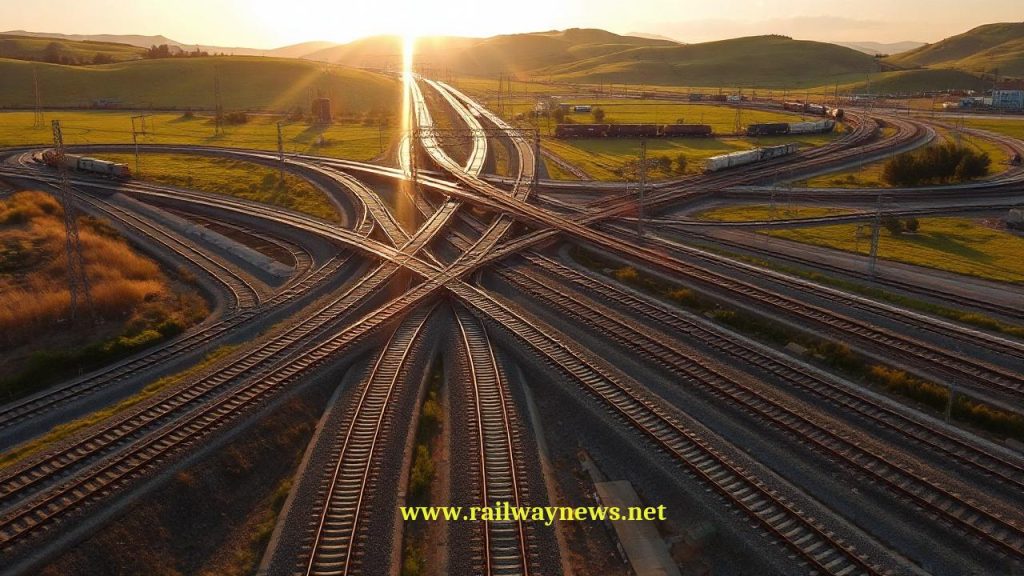
⚡ In Brief: The European Court of Auditors found EU-funded Western Balkans transport projects face average 17-month start-up delays, with €2.665 billion allocated under the WBIF and the 2030 core network deadline now unlikely to be met.
BRUSSELS – The European Court of Auditors (ECA) published a special report concluding that EU transport infrastructure funding across the Western Balkans is unlikely to meet the 2030 core network completion target. The transport sector allocation under the Western Balkans Investment Framework (WBIF) totals €2.665 billion, of which €527 million was disbursed between 2015 and mid-2025. Auditors examined 12 projects worth €341.6 million across Bosnia and Herzegovina, Kosovo, North Macedonia, and Serbia.
How Is the Funding Structured?
The WBIF blends European Commission grants with loans from international financial institutions (IFIs) to co-finance infrastructure projects across the Western Balkans. The European Commission has transferred €899 million to the joint fund since 2015, representing 86% of total contributions. IFIs manage both the loan portfolios and day-to-day grant monitoring on behalf of the Commission. Six railway grants were approved across the four audited countries, but three of those lines remain unelectrified and continue to operate with diesel traction, reducing the environmental return on the EU’s investment. The ECA found that project applications were frequently approved before preparatory documentation—including cost-benefit analyses and validated detailed designs—was complete, contributing to a typical 17-month delay between grant approval and project start.
Key Funding Data
| Parameter | Value |
|---|---|
| Fund / Programme Name | Western Balkans Investment Framework (WBIF) |
| Total Value (Transport Sector) | €2.665 billion EU budget allocation; €527 million disbursed (2015–mid-2025) |
| Parties Involved | European Commission (86% contributor, €899M since 2015); international financial institutions; Western Balkan governments |
| Timeline / Completion | 2030 core network deadline; ECA assessment: unlikely to be met |
| Country / Corridor | Bosnia & Herzegovina, Kosovo, North Macedonia, Serbia; corridors include Railway Route 10, Corridor X, Corridor Xc, Corridor VIII |
How Does This Compare to Similar Funding Programs?
The WBIF’s multi-country, grant-and-loan blending model differs structurally from single-corridor national programs. By comparison, the UK’s East West Rail project—a single corridor linking Oxford and Cambridge—is procuring a strategic delivery partner through a £300 million consultancy framework expected to run from August 2027 to August 2039 (Source: East West Rail Company, 2025 procurement notice). Where East West Rail concentrates oversight in one dedicated partner across three connection stages, the WBIF distributes monitoring responsibilities across multiple IFIs, a structure the ECA found resulted in inconsistent risk assessment reporting and gaps in procurement oversight. The WBIF’s €2.665 billion transport envelope is approximately seven times the value of the East West Rail consultancy framework, but is spread across four national jurisdictions with differing administrative capacities. The EU’s 2030 connectivity target for the Western Balkans core network—now in doubt—parallels the timeline pressure visible in other major European corridor programs, though the ECA noted the Commission’s own monitoring indicators (GDP growth, trade value, Human Development Index) were too broad to capture transport-specific outcomes.
Editor’s Analysis
The ECA’s finding that three of six audited railway lines remain unelectrified and diesel-operated carries sharper economic consequences than the report’s environmental framing alone suggests. Serbia’s rail freight market is projected to show continued growth through 2025, with expansion across agriculture, intermodal, chemicals, and industrial sectors signalling resilient goods-side demand (Source: Reuters market analysis, June 2025). Unelectrified corridors unable to handle higher-speed, higher-frequency electric freight services risk diverting that growth to road transport—exactly the outcome EU connectivity funding was designed to reverse. The Commission’s 2022 strengthening of sustainable transport checks acknowledges the problem, but the ECA’s case study of Railway Route 10 in Kosovo—where tunnel collapses since 2020 have disrupted traffic and left signalling and electrification uninstalled as of June 2025—demonstrates that tightened selection criteria alone cannot compensate for weak implementation capacity at the beneficiary level.
FAQ
Q: Why is the 2030 deadline for the Western Balkans core transport network unlikely to be met?
A: The European Court of Auditors identified average project start-up delays of 17 months, further delays of over two years during implementation due to design changes and permit issues, and approval of projects before preparatory documentation was complete. These accumulated delays make the 2030 target unachievable without significant acceleration.
Q: Which specific railway corridors are affected by the EU funding delays?
A: The ECA audited 12 projects including Railway Route 10 in Kosovo, Corridor X and Corridor Xc in Serbia, and Corridor VIII in North Macedonia. Three of six railway lines that received grants remain unelectrified and operate diesel trains, and the Corridor VIII section connecting to Bulgaria was funded before the full corridor had clear operational agreements with neighbouring countries.
Q: What is the total amount of EU funding disbursed so far for Western Balkans transport projects?
A: Of the €2.665 billion EU budget allocation for the transport sector under the WBIF, €527 million had been disbursed between 2015 and mid-2025. The European Commission contributed €899 million to the overall WBIF joint fund since 2015, accounting for 86% of total contributions.

Railway infrastructure, rolling stock and transport technologies specialist focused on global rail industry developments, high-speed rail systems, signaling technologies and freight transportation. Covering railway investments, public transport modernization, rail operations and international mobility projects across Europe, Asia and North America.
RELATED POSTS

October 1, 2026 7:09 am
United States regulators confirmed a September 30 deadline for the...

October 1, 2026 12:13 am
Illinois approved $1.5 billion annually for the Northern Illinois Transit...

October 1, 2026 6:10 am
Amtrak approved a System Expansion Committee on July 30 to...

October 1, 2026 4:10 am
DART launched two public ridership dashboards in March 2026 to...
October 1, 2026 3:12 am
Greenbrier confirmed Brian Comstock as new president and CEO effective...
October 1, 2026 5:14 am
Siemens confirmed delivery of the first new S200 train to...