
East Coast Main Line: £33M Landslide Prevention
The Browney Curve project, involving £33 million in landslide prevention along the East Coast Main Line near Durham, showcases a significant investment by Network Rail (NR) that highlights the importance of proactive infrastructure maintenance for ensuring rail safety and operational efficiency. The comprehensive solution includes deep pile installation, improved drainage, embankment regrading, and ecological enhancements to prevent landslides, demonstrating how technical solutions can mitigate risks while minimizing disruption to passenger services.
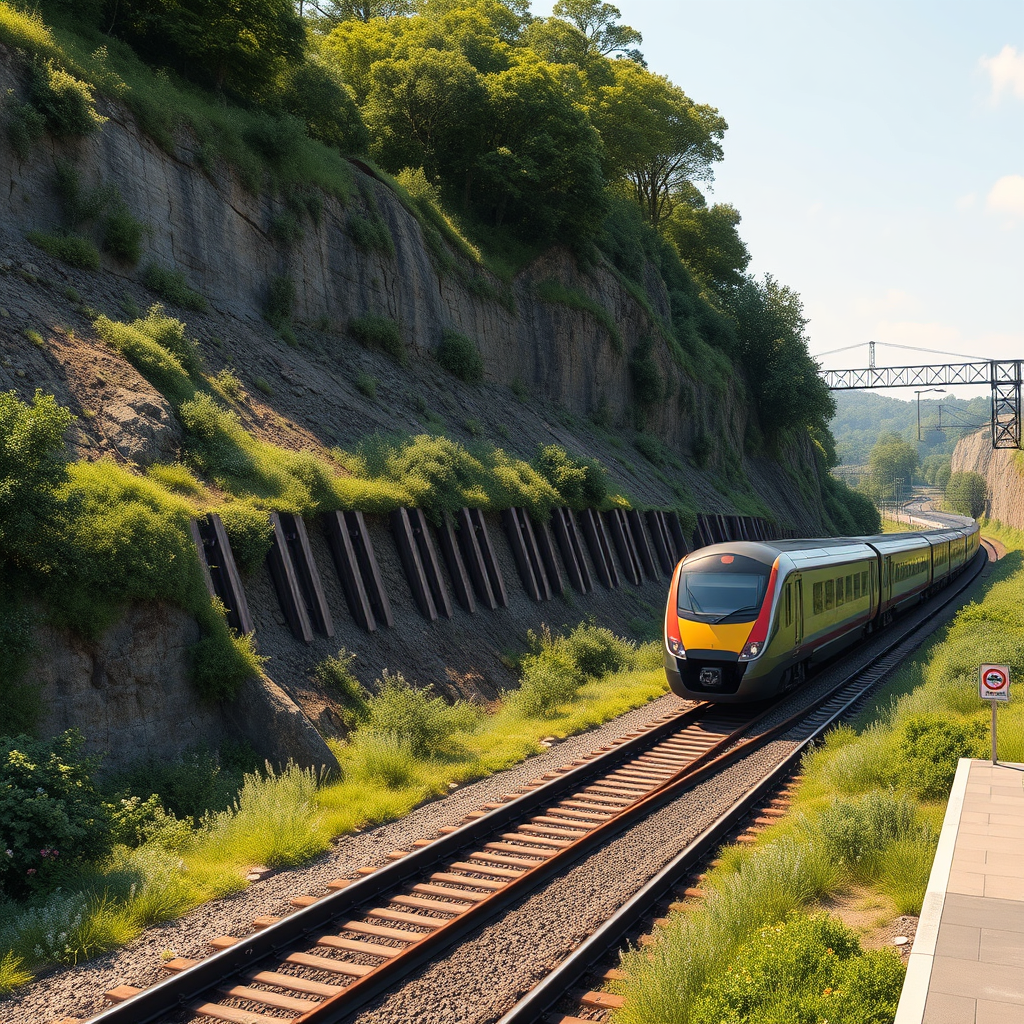
This article examines a significant investment by Network Rail (NR) in landslide prevention along the East Coast Main Line (ECML) near Durham, England. The £33 million ($42.6 million) project, one of the largest of its kind undertaken by NR’s Eastern region, highlights the crucial role of proactive infrastructure maintenance in ensuring rail safety and operational efficiency. The project’s scope encompasses a range of engineering solutions, from deep piling and improved drainage to embankment regrading and ecological enhancements. This detailed analysis explores the technical aspects of the project, its impact on rail operations, and the broader implications for railway safety standards and environmental stewardship. The success of this initiative serves as a valuable case study for other rail networks facing similar geotechnical challenges, demonstrating the importance of detailed risk assessment and preventative measures in mitigating landslide risks and ensuring the long-term stability of critical rail infrastructure. Additionally, the discussion will contextualize this project within the larger framework of NR’s commitment to safety following past incidents and its integration of environmental considerations into infrastructure development.
Engineering Solutions for Landslide Prevention
The core of the Browney Curve project involves addressing the inherent instability of the 1km embankment. The installation of 529 piles, driven up to 25 meters deep, provides significant ground stabilization. These piles act as deep anchors, reinforcing the soil and preventing lateral movement. Simultaneously, improvements to the drainage system are crucial. Waterlogged soil significantly reduces its shear strength, increasing the risk of landslides. The project addresses this by improving existing drainage infrastructure and potentially implementing new systems to effectively channel water away from the embankment. Finally, the widening and regrading of the embankment itself reduces its slope angle, thereby decreasing the overall force driving potential landslides. This multi-pronged approach demonstrates a detailed understanding of geotechnical engineering principles.
Minimizing Disruption to Rail Services
A remarkable aspect of this large-scale project is the minimal disruption to passenger services on the busy ECML. Trains running between London and Scotland have continued to operate throughout the majority of the construction period. This success underscores meticulous planning and execution, with careful coordination between NR, its contractor (Story), and train operating companies. Innovative construction techniques, phased implementation, and effective communication were likely key factors in achieving this operational continuity. The ability to complete a project of this magnitude with minimal service interruption underscores the efficiency and expertise of the involved teams.
Environmental Considerations and Sustainability
The project extends beyond purely engineering solutions, incorporating environmental considerations. The planting of trees and wildflower meadows serves a dual purpose. The root systems of these plants bind the soil, enhancing its stability and further reducing landslide risk. Moreover, this initiative contributes to the biodiversity and aesthetic improvement of the area, demonstrating a commitment to sustainable infrastructure development. This approach is increasingly important in rail projects, highlighting the opportunity to integrate environmental benefits with essential infrastructure upgrades.
Lessons Learned and Future Implications
The Browney Curve project offers valuable lessons for the rail industry. The proactive approach taken by NR, investing in preventative measures before a catastrophic event occurs, is commendable. This contrasts sharply with reactive measures often necessitated by past incidents, as evidenced by the admission of health and safety failings following the Carmont derailment. The project’s emphasis on thorough drainage improvements directly addresses past failings. The integration of ecological considerations adds another layer of sustainability and resilience to the project. The success in minimizing disruption to rail services demonstrates the possibility of balancing large-scale infrastructure projects with operational continuity. This case study should encourage other rail networks to adopt a similarly proactive approach to geotechnical risk management and prioritize integrated, sustainable solutions. The £33 million investment is a clear demonstration of NR’s commitment to both safety and environmental responsibility, proving that proactive, well-planned investment in landslide prevention is a cost-effective and ultimately safer approach to long-term rail infrastructure maintenance.

Railway infrastructure, rolling stock and transport technologies specialist focused on global rail industry developments, high-speed rail systems, signaling technologies and freight transportation. Covering railway investments, public transport modernization, rail operations and international mobility projects across Europe, Asia and North America.
RELATED POSTS

October 8, 2026 1:15 pm
Alstom secured a €1bn contract to build 13 automated trains,...

October 1, 2026 7:09 am
United States regulators confirmed a September 30 deadline for the...

October 4, 2026 5:14 pm
Alstom secured a CA$4.7 billion order from VIA Rail Canada...

October 8, 2026 12:18 pm
Siemens Mobility signed an agreement with VinSpeed to supply 350...

October 5, 2026 6:12 pm
AECOM and Jacobs secured a contract in September 2026 to...

October 4, 2026 11:08 pm
Sound Transit confirmed the September 30 opening of Seattle Pinehurst...