
Dudley VLR Project: Rail Line, Innovation Centre, West Midlands
Dudley’s new Very Light Rail (VLR) line and innovation center are open, boosting UK rail tech and regional connectivity.
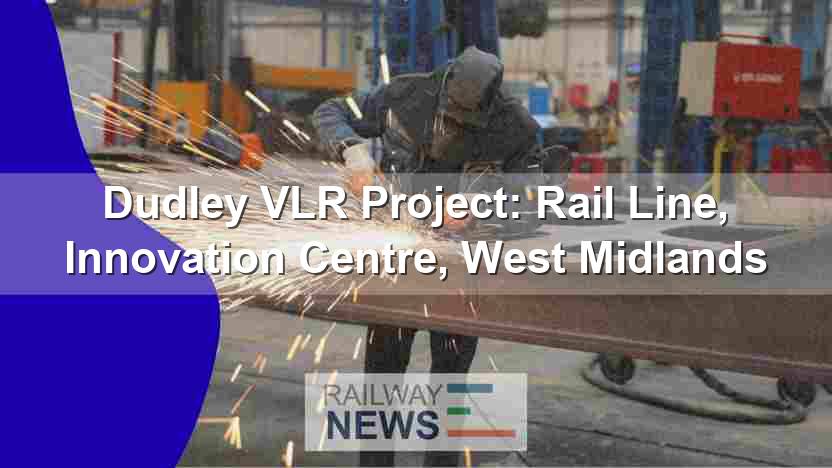
This article explores the development and implementation of a Very Light Rail (VLR) system in Dudley, UK. The project, a collaborative effort between industry, academia, and local government, aimed to create a state-of-the-art VLR innovation centre and a short operational rail line for testing and passenger service. The overarching goal was to advance VLR technology, demonstrating its viability for providing affordable, low-carbon public transportation solutions, particularly in regional and rural areas. This initiative aligns with broader UK efforts to improve regional connectivity, reduce carbon emissions in the transport sector, and stimulate economic growth through job creation and technological advancement within the rail industry. The project’s success hinges on the successful design, construction, testing, and operation of the VLR system, alongside the establishment of a sustainable innovation centre capable of fostering further development in VLR technology and attracting investment in the region. This case study provides valuable insights into the challenges and opportunities associated with deploying innovative rail technologies and their impact on regional development.
Project Overview and Funding
The Dudley VLR project involved the construction of a new rail line and an innovation centre dedicated to the development and testing of VLR vehicles. The line, consisting of two tracks (one for testing and one for passenger service), extends from the new innovation centre to Dudley Port station, improving connectivity to Dudley town centre, Birmingham City Centre, Dudley Zoo, and Black Country museums. The project was a joint venture led by Dudley Metropolitan Borough Council and Warwick Manufacturing Group (WMG) at the University of Warwick. The core VLR technology is being developed by Revolution VLR, a consortium including Transport Design International (TDI), WMG Innovative Solutions, Unipart Rail, Prose, and Trelleborg. The project received significant funding from various sources, including the Black Country Local Enterprise Partnership’s Growth Deal, European funding, private sector investment, and Dudley Council contributions. Initial funding was secured through the Enabling Innovation Team (EIT) of the Rail Safety and Standards Board (RSSB)’s Radical Train challenge.
The Very Light Rail (VLR) Technology
The heart of the project is the development of a novel VLR vehicle. Designed for efficiency and affordability, the VLR boasts a lightweight construction (less than one tonne per linear meter), using a modular composite bodyshell and off-the-shelf components to minimize manufacturing and operational costs. Key technological features include a self-powered bogie incorporating a hybrid propulsion system and kinetic energy recovery system. The first demonstrator vehicle is an 18-meter bi-directional unit with a capacity of 120 passengers. The project also includes crucial safety assessments, applying existing heavy rail safety standards to the VLR design and producing a discussion paper for stakeholder review. The VLR design incorporates data gathered from the existing PPM Class 139 railcar operated by Pre-Metro Operations in Stourbridge as a reference point.
The Innovation Centre
The innovation centre, located at the site of the old Dudley Train Station, is a key element of the project. Its design includes a substantial triple-height engineering hall for vehicle assembly and testing, alongside office spaces, R&D laboratories, meeting rooms, exhibition areas, an auditorium, and a cafe to support collaborative research and development. The facility is designed to foster innovation and collaboration within the VLR sector, attracting investment and furthering technological advancement.
Project Implementation and Timeline
Project activities commenced in June 2014. The innovation centre’s construction began in the second half of 2015, with completion expected in the latter half of 2016. The five-year project timeline aimed for the commencement of passenger services shortly after the innovation centre’s completion. Key players in the project’s execution include Cullinan Studio (feasibility study for the innovation centre), Mott McDonald (feasibility study for track re-opening), and various technology providers such as Cummins, Magnomatics, Magtec, and Goodwolfe Energy. The project’s success relies on effective collaboration and coordination between all stakeholders, including Network Rail, West Midlands ITA, Knowledge Transfer Network, RSSB, Centro, and GKN Land Systems.
Conclusions and Project Assessment
The Dudley VLR project represents a significant investment in the future of light rail technology in the UK. The project’s success is measured not only by the successful construction and operation of the VLR line and vehicles but also by its contribution to regional economic development and the advancement of VLR technology globally. The creation of approximately 50 jobs in the initial manufacturing phase represents a tangible benefit for the local economy, a number likely to increase once passenger services begin. The project demonstrates the viability of public-private partnerships in developing and deploying innovative rail technologies. The integration of various funding sources highlights the importance of collaborative funding models for large-scale infrastructure projects. The establishment of the innovation centre will serve as a lasting legacy, fostering further research, development, and commercialization of VLR systems. The careful consideration of safety standards within the design process ensures that the technology is both innovative and safe. The project’s ultimate success lies in its capacity to demonstrate the economic, environmental, and social benefits of VLR, paving the way for broader adoption of this sustainable transportation solution. The detailed evaluation of its impact, including passenger numbers, operating costs, and environmental performance, will be crucial for informing future VLR deployments. This project’s focus on collaboration and innovation sets a strong example for similar undertakings worldwide.
| Project Parameter | Value |
|---|---|
| Project Name | Very Light Rail (VLR) Innovation Centre and Rail Line, Dudley |
| Project Type | VLR System Development and Deployment |
| Line Length | (Not specified in the text, but connects the innovation center to Dudley Port station) |
| Number of Tracks | Two (one for testing, one for passenger service) |
| Number of Stations | At least two (Innovation Centre and Dudley Port) |
| Cities Connected | Dudley, Birmingham (indirect connection) |
| Total Project Budget | £35 million (approximately $53.7 million) |
| Innovation Centre Budget | £15 million (approximately $23 million) |
| Rail Line Budget | £20 million (approximately $30.7 million) |
| Estimated Job Creation (Initial Phase) | Approximately 50 |
Company Information:
- Transport Design International (TDI): A transportation design and engineering consultancy.
- Warwick Manufacturing Group (WMG): A research and development group at the University of Warwick.
- Unipart Rail: A supplier of rail components and services.
- Prose: (Further information needed)
- Trelleborg: A global industrial solutions provider.
- Cullinan Studio: An architectural and design practice.
- Mott McDonald: A global engineering, management, and development consultancy.
- Cummins: A power generation company.
- Magnomatics: A developer of high-performance electric motors and generators.
- Magtec: A manufacturer of electric and hybrid vehicle powertrains.
- Goodwolfe Energy: (Further information needed)
- Network Rail: The owner and infrastructure manager of most of the railway network in Great Britain.
- West Midlands ITA: (Further information needed)
- Knowledge Transfer Network (KTN): A UK organisation that helps businesses and researchers to work together.
- Rail Safety and Standards Board (RSSB): The independent body responsible for setting railway standards in Britain.
- Centro: The transport authority for the West Midlands region.
- GKN Land Systems: A manufacturer of driveline and automotive components.

Railway infrastructure, rolling stock and transport technologies specialist focused on global rail industry developments, high-speed rail systems, signaling technologies and freight transportation. Covering railway investments, public transport modernization, rail operations and international mobility projects across Europe, Asia and North America.