
Dartmoor Line Reopening: A Railway Revitalization Success
The Dartmoor Line’s successful reopening in Devon exemplifies how innovative project management techniques and stakeholder collaboration can accelerate railway infrastructure revitalization, demonstrating the potential for future projects across the UK rail network to benefit from strategic planning and efficient execution.
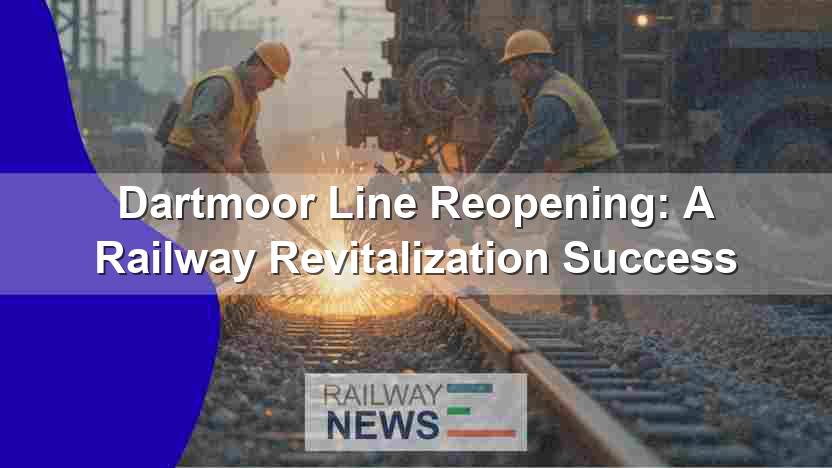
This article examines the successful reopening of the Dartmoor Line in Devon, England, after a five-decade hiatus. The project, completed in a remarkably short nine months, serves as a compelling example of effective railway infrastructure restoration and the potential benefits of targeted government investment. We will explore the key factors contributing to the project’s success, including the application of innovative project management techniques, the collaborative efforts of various stakeholders, and the wider implications of such revitalization initiatives within the context of national transport policy and environmental sustainability. The analysis will delve into the technical challenges overcome during the restoration, the financial aspects of the undertaking, and the potential for future expansion and similar projects across the UK rail network. Ultimately, the Dartmoor Line’s reopening offers valuable lessons for future railway restoration endeavors, highlighting the importance of strategic planning, efficient execution, and a commitment to reconnecting communities through improved transport infrastructure.
Project Speed and Efficient Execution
The Dartmoor Line’s restoration, completed within nine months, showcases the effectiveness of the Rail Project SPEED (Strategic Programme for Enhanced Efficiency and Delivery) approach employed by Network Rail. This methodology emphasizes streamlined processes, collaborative working, and proactive risk management to accelerate project delivery. The project involved the laying of 17.7 kilometers of new track, the installation of 24,000 concrete sleepers, and the use of 29,000 tons of ballast. Additionally, extensive repairs were carried out on 21 structures, including four bridges, demonstrating the scale and complexity of the undertaking successfully managed within the compressed timeframe. The project’s swift completion underscores the potential of efficient project management techniques in revitalizing underutilized railway lines.
Stakeholder Collaboration and Funding
The successful reopening of the Dartmoor Line was a collaborative effort involving several key stakeholders. The Department for Transport (DfT), Network Rail, and Great Western Railway (GWR) worked together seamlessly, coordinating resources and expertise to ensure the project’s timely completion. The £40 million ($53.83 million USD) investment from the government’s “Restoring Your Railway” programme was crucial in funding the extensive track and infrastructure improvements. This program, launched in January 2020, specifically targets the reinstatement of previously closed lines and stations, demonstrating a commitment to expanding rail access and connectivity across the UK. The collaborative approach highlights the value of cross-sector partnerships in large-scale infrastructure projects.
Technological Advancements and Modernization
The Dartmoor Line reopening also incorporated technological advancements. Network Rail’s completion of a 25-kilometer Beyond Visual Line of Sight (BVLOS) drone flight for surveying, the longest of its kind in the UK, highlights the integration of innovative technologies in railway infrastructure projects. The use of drones for aerial surveying improves efficiency and reduces the reliance on traditional, more time-consuming methods. The integration of such technologies not only streamlines the project process but also signals a broader trend toward the modernization of railway maintenance and construction practices.
Socioeconomic Benefits and Environmental Impact
The reopening of the Dartmoor Line offers significant socioeconomic benefits to the communities it serves. It provides a viable alternative to road transport, reducing congestion and carbon emissions. The improved connectivity enhances accessibility for residents of Okehampton and surrounding areas, boosting local economies through increased tourism and improved commuting options. This aligns with the government’s broader “levelling up” agenda, aimed at reducing regional inequalities and fostering economic growth across the country. The shift towards greener, cleaner modes of transport, emphasized by Prime Minister Boris Johnson, is a critical aspect of the project’s success, contributing to both environmental sustainability and broader national transport objectives.
Conclusions
The reopening of the Dartmoor Line after over 50 years stands as a testament to the power of strategic planning, collaborative partnerships, and efficient execution in railway revitalization. The successful implementation of the Rail Project SPEED methodology, coupled with substantial government investment from the “Restoring Your Railway” fund, enabled the completion of a complex infrastructure project within a remarkably short timeframe. The collaboration between the DfT, Network Rail, and GWR, highlighting the importance of coordinated efforts among various stakeholders, significantly contributed to the project’s success. Additionally, the incorporation of advanced technologies such as BVLOS drone surveys showcased the evolving technological landscape within the railway industry, demonstrating a commitment to innovation and efficiency. The wider socioeconomic benefits, including improved connectivity, reduced carbon emissions, and economic growth in the region, underscore the significant positive impact of such initiatives. The Dartmoor Line’s reopening serves as a powerful example of how targeted investments and innovative approaches can revitalize underutilized railway infrastructure, reconnecting communities, and contributing to a more sustainable and efficient transport system. It offers a compelling blueprint for future railway restoration projects across the UK and potentially globally, demonstrating the feasibility and value of reinstating lines previously deemed obsolete.

Railway infrastructure, rolling stock and transport technologies specialist focused on global rail industry developments, high-speed rail systems, signaling technologies and freight transportation. Covering railway investments, public transport modernization, rail operations and international mobility projects across Europe, Asia and North America.
RELATED POSTS

October 8, 2026 1:15 pm
Alstom secured a €1bn contract to build 13 automated trains,...

October 1, 2026 7:09 am
United States regulators confirmed a September 30 deadline for the...

October 8, 2026 12:18 pm
Siemens Mobility signed an agreement with VinSpeed to supply 350...

October 4, 2026 5:14 pm
Alstom secured a CA$4.7 billion order from VIA Rail Canada...

October 5, 2026 6:12 pm
AECOM and Jacobs secured a contract in September 2026 to...

October 4, 2026 11:08 pm
Sound Transit confirmed the September 30 opening of Seattle Pinehurst...