
Daegu Line 3 Monorail Project: South Korea, Daegu
Daegu Line 3, South Korea’s first straddle-type monorail: 23.3km driverless system, 30 stations (opened 23 Apr 2015). Hitachi trains, 70km/h, 398 peak passenger capacity.
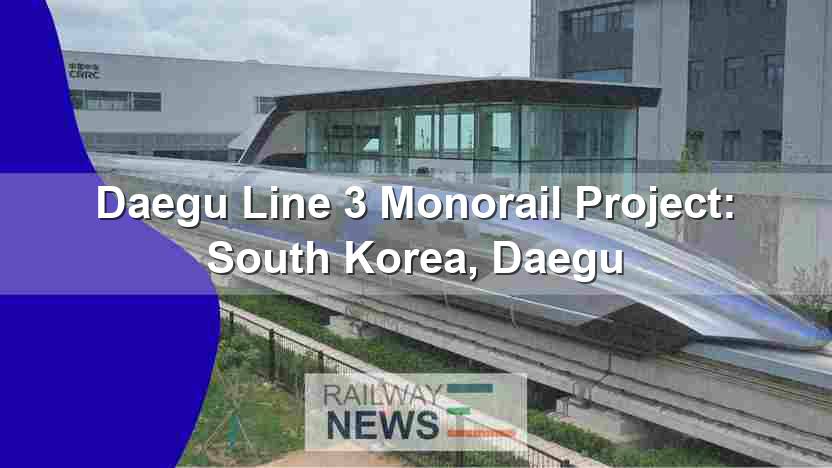
This article explorers into the technological advancements and infrastructural complexities of Daegu Urban Railway Line 3 (Daegu Line 3), South Korea’s first straddle-type monorail system. The project, a significant undertaking in urban mass transit development, showcases the integration of cutting-edge automatic train control (ATC) systems, innovative passenger comfort features, and sophisticated construction techniques. We will examine the project’s planning, execution, and technological components, highlighting the key players involved and analyzing the success of its implementation. The analysis will focus on the technical aspects of the system, from its automated operation to its unique design features, and will also consider the broader context of the project within the expansion of South Korea’s railway network. The aim is to provide a detailed understanding of Daegu Line 3, offering valuable insights into the challenges and triumphs of building a modern, efficient, and passenger-centric urban rail system.
Project Overview and Implementation
Daegu Line 3, a 23.3km automated urban rail system, connects the northwestern (KNU Medical Centre) and southeastern (Yongji Station) parts of Daegu, significantly improving the city’s public transportation infrastructure. The Daegu Metropolitan City, owner of the system, entrusted construction to its subsidiary, Urban Railroad Construction Headquarters, with operation handled by the Daegu Metropolitan Transit Corporation. The project involved constructing 30 stations, two car depots, and two specialized bridges spanning the Geumhogang River and Sincheon Stream. The system utilizes a digital Automatic Train Protection (ATP)/Automatic Train Operation (ATO) driverless system, showcasing a high level of automation and technological sophistication. This automated system, along with the Automatic Train Supervision (ATS), ensures safe and efficient train movement and operation.
Technological Features and Passenger Amenities
Daegu Line 3 boasts a fleet of 28 Hitachi monorail train sets, each comprising three carriages. These trains, capable of reaching a top speed of 70km/h but averaging 30km/h on the line, offer a passenger capacity of 265, expandable to 398 during peak hours. The design incorporates several noteworthy features: the lightweight aluminum body reduces noise and weight; the integrated driving, guiding, and stabilizing wheels ensure smooth operation; an exterior skirt further minimizes operational noise; and dedicated wheelchair spaces and seating areas cater to passengers with disabilities and pregnant women. A unique feature is the “mist-glass” window technology using liquid-crystal screens that automatically adjust transparency for enhanced privacy in residential areas. Safety measures include sprinkler-type fire extinguishers, emergency spiral chutes for rapid evacuation, and emergency communication systems like intercoms and public address systems.
Construction and Infrastructure
The construction of Daegu Line 3 involved the manufacture and installation of 1,316 pre-stressed concrete (PSC) track beams, transported to the site using specialized 130-wheel trailers. This monumental task was followed by the construction of the stations, including their interiors, exteriors, and exits, along with electrical, communication, and signaling infrastructure. A consortium of major South Korean construction companies – POSCO E&C, GS Construction, Daewoo E&C, Hyundai E&C, SK E&C, and Daelim – undertook the construction project. Hitachi Transportation Systems Korea, a subsidiary of Hitachi, Ltd., was responsible for supplying the monorail vehicles, track switches, and signaling systems.
Project Summary and Conclusion
Daegu Line 3 stands as a testament to South Korea’s commitment to advanced urban rail infrastructure. The project’s success is a result of effective collaboration between governmental agencies, construction consortiums, and technology providers. The integration of automated train control systems, passenger-centric amenities, and innovative construction methods reflects a forward-thinking approach to urban transportation. The system’s initial projected ridership of 84 million passengers annually underscores its significance in addressing Daegu’s transportation needs. Future expansion plans, including a proposed 4km extension by 2031, further solidify its role in the city’s evolving transport network. The successful completion and operation of Daegu Line 3 provide a valuable case study for other cities planning similar urban rail projects, demonstrating the feasibility and benefits of incorporating advanced technologies and prioritizing passenger comfort and safety.
| Project Parameter | Specification |
|---|---|
| Line Length | 23.3 km |
| Number of Stations | 30 |
| Type of System | Straddle-type Monorail (Automated) |
| Connecting Cities/Areas | KNU Medical Centre to Yongji Station, Daegu |
| Number of Train Sets | 28 |
| Train Cars per Set | 3 |
| Total Number of Cars | 84 |
| Projected Annual Ridership (Year 1) | 84 million |
| Main Contractor Consortium | POSCO E&C, GS Construction, Daewoo E&C, Hyundai E&C, SK E&C, Daelim |
| Monorail Supplier | Hitachi Transportation Systems Korea |
Company Information:
- Hitachi, Ltd.: A global conglomerate with a significant presence in various industries, including transportation systems.
- POSCO E&C: A major South Korean construction company.
- GS Construction: A large South Korean construction company.
- Daewoo E&C: A significant South Korean construction company.
- Hyundai E&C: A major South Korean construction and engineering company.
- SK E&C: A substantial South Korean construction company.
- Daelim: A prominent South Korean construction company.
- WOOJIN Industrial Systems: A South Korean industrial systems company.
- Pyunghwa Engineering Consultants: A South Korean engineering consultancy.

Transport and railway industry editor covering global rail infrastructure, sustainable mobility, urban transit systems and next-generation railway technologies with a focus on accessible and industry-focused reporting.