
CTA Unlocks Lakeview Land: Red Line Project Spurs Development
CTA seeks developers for prime Lakeview land after Red Line upgrades, fostering transit-oriented communities. This boosts ridership and offers long-term economic benefits.
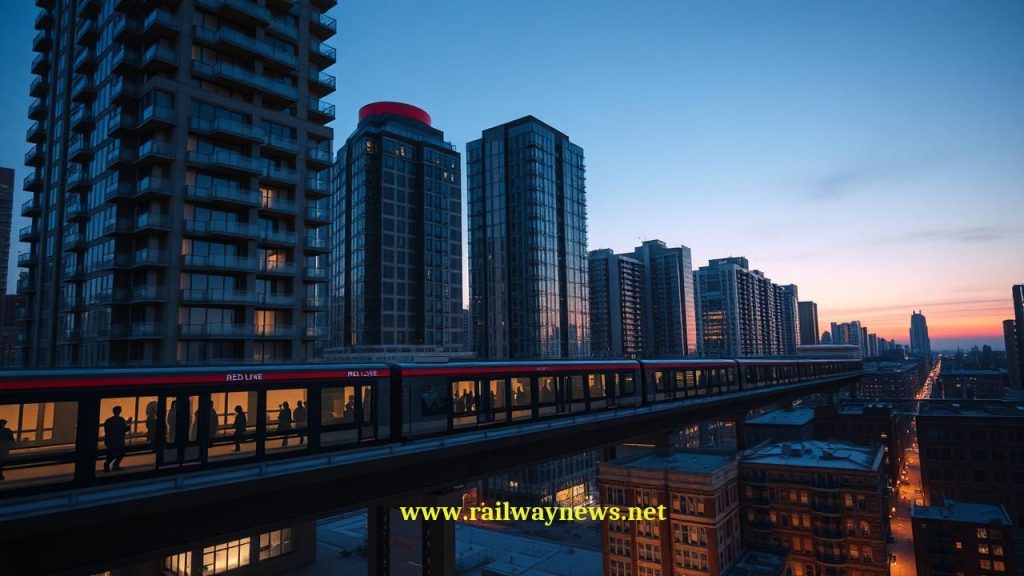
CHICAGO, USA – The Chicago Transit Authority (CTA) is seeking development partners for three prime land parcels in the city’s Lakeview neighborhood, a strategic move to foster transit-oriented communities as its massive Red and Purple Modernization (RPM) Phase One project concludes. This initiative comes as Chicago’s wider transit network navigates a complex financial landscape, with regional authorities calling for $1.5 billion in new annual funding to sustain and expand services.
| Category | Details |
|---|---|
| Organization | Chicago Transit Authority (CTA) |
| Action | Request for Proposals (RFP) for land sale and redevelopment |
| Location | Three parcels in Lakeview Neighborhood, Chicago |
| Associated Project | Red and Purple Modernization (RPM) Phase One |
| RFP Submission Deadline | February 25, 2026 |
The Chicago Transit Authority has officially issued three Requests for Proposals (RFPs) to redevelop land acquired for the construction and staging of the RPM Phase One project. With major construction in the area now substantially complete, the CTA is transitioning these parcels from logistical assets to community-building opportunities. This redevelopment effort is a key component of the agency’s Transit-Oriented Development (TOD) Plan, which was established in 2018 to encourage dense, mixed-use development near transit hubs, thereby boosting ridership and creating vibrant neighborhoods. Proposals for the three sites are due by February 25, 2026.
The land has been made available following the successful execution of one of Chicago’s most ambitious transit infrastructure upgrades in a generation. The RPM Phase One project addressed a critical bottleneck in the CTA network by building the Belmont Bypass, a flyover structure that carries the Brown Line tracks over the Red and Purple Line tracks, eliminating a junction where trains had to cross each other’s paths. This engineering feat has significantly improved service reliability and capacity. The project also involved the complete reconstruction of more than a mile of elevated track structures, support columns, and viaducts between the Belmont and Addison stations, replacing infrastructure that was over a century old.
This move to monetize surplus land occurs within a challenging financial context for public transportation in the Chicago region. While the CTA has secured major federal capital commitments, such as a $1.973 billion pledge for its separate Red Line Extension project, the agency is currently utilizing a line of credit for some project expenses pending state funding and bond issuances. More broadly, the Regional Transportation Authority (RTA) and transit advocates are campaigning for $1.5 billion in new, sustainable annual operating funds to avert a looming fiscal cliff and modernize services across the CTA, Metra, and Pace systems, highlighting the systemic pressure to secure stable, long-term revenue sources.
Key Takeaways
- Value Capture in Action: The CTA is converting temporary construction sites into permanent, transit-supportive developments, a key strategy for capturing the value created by major infrastructure investment.
- Modernization Milestone: The land sale marks a final chapter for the RPM Phase One project, which has already delivered significant operational improvements by decongesting a critical rail junction.
- Financial Headwinds: The redevelopment initiative is proceeding even as Chicago’s transit agencies face a broader operating budget crisis, underscoring the need for creative and sustainable funding and development solutions.
Editor’s Analysis
The CTA’s RFP announcement is a textbook example of a modern transit agency thinking beyond operations and embracing its role as a city-builder. For the global rail industry, this demonstrates a crucial best practice: integrating land use and value capture strategies directly into the lifecycle of major capital projects. By selling construction-staging land for transit-oriented development, the CTA is not just offloading an asset; it is actively seeding future ridership, enhancing the urban fabric, and creating a potential long-term economic benefit for the community it serves. As cities worldwide pour trillions into rail modernization, Chicago’s approach serves as a pragmatic model for how to ensure these investments deliver returns that extend far beyond the tracks themselves, especially in an era of constrained public operating budgets.
Frequently Asked Questions
What was the purpose of the CTA Red and Purple Modernization (RPM) Project?
The RPM Phase One Project was designed to upgrade and modernize a critical section of the CTA’s busiest rail lines. Key components included rebuilding century-old track structures and constructing the Belmont Bypass to eliminate a major rail junction conflict between the Red, Purple, and Brown lines, thereby increasing train capacity and improving service reliability.
Why is the CTA selling this land in Lakeview now?
The parcels of land were acquired by the CTA specifically for construction and staging purposes for the RPM project. Now that this phase of construction is largely finished, the land is no longer needed for transit operations and is being offered for redevelopment in line with the CTA’s 2018 Transit-Oriented Development Plan.
What is Transit-Oriented Development (TOD)?
Transit-Oriented Development is an urban planning strategy that focuses on creating compact, walkable, mixed-use communities centered around high-quality public transportation systems. The goal is to reduce dependence on private automobiles, increase transit ridership, and build sustainable, vibrant neighborhoods.

Railway infrastructure, rolling stock and transport technologies specialist focused on global rail industry developments, high-speed rail systems, signaling technologies and freight transportation. Covering railway investments, public transport modernization, rail operations and international mobility projects across Europe, Asia and North America.
RELATED POSTS

October 1, 2026 7:09 am
United States regulators confirmed a September 30 deadline for the...

October 8, 2026 1:15 pm
Alstom secured a €1bn contract to build 13 automated trains,...

October 4, 2026 5:14 pm
Alstom secured a CA$4.7 billion order from VIA Rail Canada...

October 1, 2026 12:13 am
Illinois approved $1.5 billion annually for the Northern Illinois Transit...

October 6, 2026 2:14 am
Union Pacific launched export rail shipments with Ferromex to deliver...

October 1, 2026 6:10 am
Amtrak approved a System Expansion Committee on July 30 to...