
CTA Secures Temporary Restraining Order for $2 Billion
Chicago Transit Authority secured a temporary restraining order for over $2 billion in frozen federal funding for its Chicago rail projects.
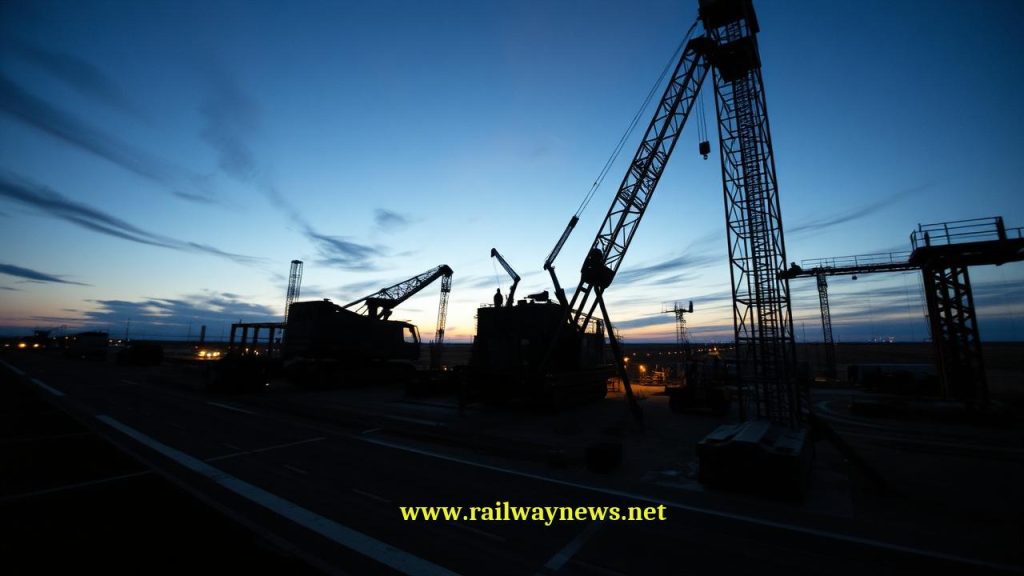
⚡ In Brief: The Chicago Transit Authority secured a temporary restraining order from a U.S. District Court, compelling the federal government to resume payments for over $2 billion in frozen funding for its Red Line Extension and Red and Purple Modernization projects.
CHICAGO, USA – A U.S. federal court has ordered the Department of Transportation to restore access to more than $2 billion in funding for the Chicago Transit Authority (CTA). The ruling, issued in March 2026, grants the CTA a temporary restraining order, preventing an imminent shutdown of two major rail infrastructure projects following a funding pause that began in October 2025.
What Is the Full Scope of This Case?
The legal action addresses a federal funding suspension impacting two critical CTA initiatives: the Red Line Extension and the Red and Purple Modernization (RPM) projects. The CTA alleged the freeze, implemented by the Trump administration, was a form of political retaliation. Without the court’s intervention, all work was scheduled to halt on March 27, which would have triggered costly contractor demobilization and project delays.
Key Case Data
| Parameter | Value |
|---|---|
| Case / Enforcement Action | CTA v. USDOT/FTA – Temporary Restraining Order |
| Total Value | Over $2 billion (frozen federal funding) |
| Parties Involved | Chicago Transit Authority, U.S. Department of Transportation, Federal Transit Administration |
| Timeline / Completion | TRO granted March 2026; payments ordered to resume by March 27, 2026 |
| Country / Corridor | USA / Chicago, IL |
How Does This Compare to Similar Cases?
The CTA’s situation, involving an allegedly political halt of approved funds, contrasts with financial challenges faced by other major U.S. transit agencies. For instance, Seattle’s Sound Transit is currently addressing long-term affordability for its light rail expansion, reviewing cost-saving measures to manage the estimated $4.9 billion to $5.3 billion cost of its West Seattle extension. While Sound Transit’s issues stem from project cost management and future revenue projections, the CTA’s crisis was an acute, external suspension of existing federal commitments that required immediate legal action to avert a complete work stoppage (Source: KOMO News). The official justification from the administration for the funding pause was not disclosed in the available information.
Editor’s Analysis
This court ruling highlights the growing vulnerability of major infrastructure projects to political disputes, moving conflicts from the legislative budget process into administrative actions. The CTA’s use of the court system to enforce a funding agreement could establish a significant precedent for other transit authorities facing similar federal-level interruptions. This trend introduces a new layer of risk and uncertainty for capital planning, potentially forcing agencies to factor legal contingency costs and timelines into multi-billion-dollar infrastructure programs.
FAQ
Q: Which specific projects were affected by the funding freeze?
A: The two projects impacted were the Red Line Extension (RLE) and the Red and Purple Modernization (RPM) Program. The combined value of the frozen federal funding for these projects was over $2 billion.
Q: What would have happened without the court’s restraining order?
A: The Chicago Transit Authority stated that without court intervention, it would have been forced to completely stop all work on both the RLE and RPM projects on March 27, 2026, leading to significant delays and financial penalties.
Q: What was the basis of the CTA’s lawsuit?
A: The CTA sued the U.S. Department of Transportation and Federal Transit Administration, alleging the suspension of funds was impermissible. Other reports indicated the CTA claimed the freeze was a form of political retaliation by the Trump administration.

Railway infrastructure, rolling stock and transport technologies specialist focused on global rail industry developments, high-speed rail systems, signaling technologies and freight transportation. Covering railway investments, public transport modernization, rail operations and international mobility projects across Europe, Asia and North America.
RELATED POSTS

October 1, 2026 7:09 am
United States regulators confirmed a September 30 deadline for the...

October 8, 2026 1:15 pm
Alstom secured a €1bn contract to build 13 automated trains,...

October 4, 2026 5:14 pm
Alstom secured a CA$4.7 billion order from VIA Rail Canada...

October 1, 2026 12:13 am
Illinois approved $1.5 billion annually for the Northern Illinois Transit...

October 6, 2026 2:14 am
Union Pacific launched export rail shipments with Ferromex to deliver...

October 1, 2026 6:10 am
Amtrak approved a System Expansion Committee on July 30 to...