
California High-Speed Rail: Funding Cuts, US Rail Future
California’s high-speed rail project faces $4B funding cut, sparking political feud. Trump admin cancels federal grants, citing project flaws.
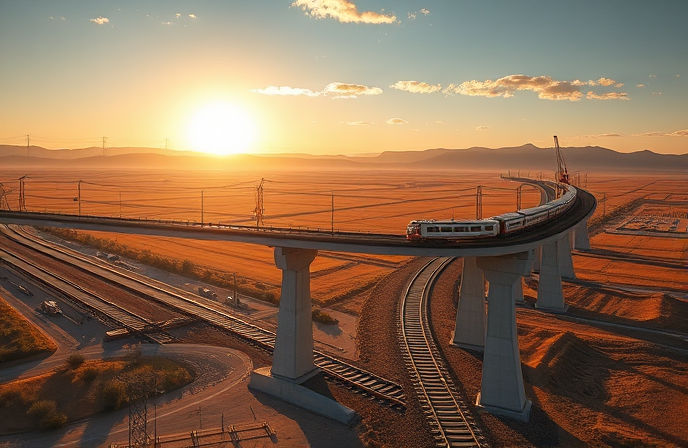
California High-Speed Rail Project Faces Funding Cuts Amidst Political Storm
The California High-Speed Rail Authority (CHSRA), the agency responsible for the development of America’s first high-speed rail system, is reeling from the cancellation of $4 billion in federal funding, with more cuts potentially on the horizon. This decision, announced by the Trump administration and Transportation Secretary Sean Duffy on July 17, 2025, has ignited a fierce political battle, casting a shadow over the project’s future. The funding cuts, targeting the FSP Agreement and the FY10 Agreement, come as the project moves into the track-laying phase. This article explores the circumstances surrounding the funding cuts, the implications for the project, and the ensuing political fallout. We’ll be investigating *who* made the decision, *what* funds were cut, *when* the decision was made, *where* the project is located, *why* the cuts occurred, and *how* the project is responding.
The Financial Decision and the Political Context
The Trump administration’s decision to rescind federal funding is presented as a financial matter, with the Department of Transportation (DoT) describing the project as a “boondoggle,” a term used to describe wasteful government spending. However, President Trump’s frequent characterizations of the project as a “train to nowhere,” and his open disdain for California Governor Gavin Newsom, suggest a political motivation. Secretary Duffy echoed this sentiment, asserting that “Federal dollars are not a blank check – they come with a promise to deliver results,” further implying the CHSRA’s inability to meet its obligations. This has led to accusations of political interference, particularly as the administration cited the CHSRA’s inability to finalize its rolling stock procurement, its significant funding gap, and the lack of a credible plan to secure additional funds. The DoT has also pointed to concerns about the CHSRA’s reliance on volatile non-federal funding, the challenges of electrifying the line, and the inadequacy of the budget contingency to cover potential contractor delays as contributing factors.
The Impact on the Project’s Progress
The cancelled funding represents a significant blow, though a relatively small portion of the project’s overall projected cost of $128 billion, significantly higher than its original estimate of $33 billion. The CHSRA is currently constructing 171 miles of the line, having created 15,500 jobs and completed more than 50 major structures. CHSRA CEO Ian Choudri has vehemently contested the administration’s claims, asserting that the Authority has met all of its obligations and that cancelling the grants is “illegal.” The CHSRA argues that considerable progress has been made, particularly in the Central Valley, with numerous viaducts, overpasses, and underpasses already built. The removal of these funds could cripple the project, particularly by halting the procurement of rolling stock and construction of the initial Merced-to-Bakersfield corridor, targeted for completion by 2033. The project’s reliance on non-federal funding sources also presents a significant risk.
Legal Challenges and State-Federal Dispute
Governor Newsom, condemning the funding reversal, has vowed to challenge the decision in court, accusing the Trump administration of handing the future of high-speed rail to China. He stated, “Trump wants to hand China the future and abandon the Central Valley. We won’t let him.” The Governor and the State of California plan to pursue all available legal options to reverse the federal government’s decision. Legal analysts suggest the arguments may focus on breach of contract and potential violation of federal law, as well as claims that the decision is politically motivated rather than a purely financial assessment. This dispute signals an intensifying conflict over infrastructure funding and the direction of high-speed rail development in the United States, which could have significant ramifications for future projects.
Technical Challenges and Schedule Concerns
The DoT highlighted several technical and scheduling challenges as reasons for the funding cuts. These include missed deadlines for finalizing rolling stock procurement, a significant funding gap to complete the Early Operating Section (EOS), and the lack of a viable path to completing the EOS by 2033, per the commitments made in the FY10 Agreement and the FSP Agreement. The letter from the DoT underscored worries regarding the CHSRA’s reliance on inconsistent funding sources, the complexities of electrifying the EOS by 2033, and the inadequacy of the project’s budget contingency to manage potential contractor delays. CHSRA has delivered a full response to these points, arguing that the issues can be addressed with continued investment. However, the ongoing political tensions introduce a complex set of variables that must be successfully navigated to complete the project.
Conclusion
The cancellation of federal funding for the California High-Speed Rail project marks a pivotal moment in the development of America’s first high-speed rail line. While the Trump administration cites financial and technical issues, the underlying political conflict between the federal government and the state of California casts doubt on the project’s future. The implications extend beyond California, potentially impacting future infrastructure investments across the United States. The project is now at a crossroads: the legal challenges initiated by the state, combined with the ongoing construction efforts, represent the project’s best opportunity for survival. The political posturing, alongside the project’s significant financial and logistical hurdles, highlights the challenges in bringing complex, large-scale infrastructure projects to fruition. Whether the California project can overcome these significant obstacles and realize its vision of modernizing the country’s transportation future remains to be seen.

Railway infrastructure, rolling stock and transport technologies specialist focused on global rail industry developments, high-speed rail systems, signaling technologies and freight transportation. Covering railway investments, public transport modernization, rail operations and international mobility projects across Europe, Asia and North America.
RELATED POSTS

September 6, 2026 5:19 am
Hitachi delivered Taiwan's first N700ST high-speed train from Japan in...

September 5, 2026 4:19 pm
CPK launched formal tender talks with four consortia to design...

September 6, 2026 6:17 am
Hungary ordered a national ban on most freight trains from...

September 6, 2026 1:17 am
Hitachi Toshiba Supreme Consortium confirmed the first of 12 N700ST...

September 7, 2026 8:16 am
Midea, Gree and TCL shipped air conditioners via China Railway...
September 6, 2026 8:17 am
DB InfraGO reopened the Nuremberg-Regensburg line in Bavaria on 31...