
CSX Pioneers Hydrogen Locomotives, Greening Rail Transport
CSX’s successful conversion of three diesel locomotives to hydrogen-powered units marks a pivotal step in the rail industry towards sustainable transportation, demonstrating technological ingenuity and environmental responsibility through repurposing existing components while reducing waste and emissions.
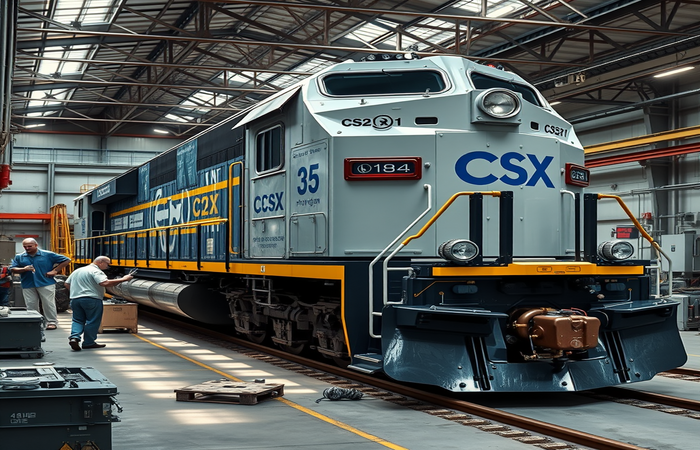
News Article: CSX Pioneering Hydrogen-Powered Locomotives
Introduction:
In a groundbreaking move for the rail industry, CSX has successfully converted three diesel locomotives to hydrogen-powered units, with a fourth slated for completion later this year. This initiative, spearheaded at the Huntington, West Virginia locomotive shop, marks a significant stride toward sustainable rail transportation. The project involves repurposing existing locomotive components, demonstrating a commitment to both environmental responsibility and cost-effectiveness. This article will delve into the specifics of the conversion process, the technological advantages of hydrogen power in rail, and the broader implications of CSX’s pioneering efforts. We’ll explore the engineering ingenuity behind the transformation, the environmental benefits, and the collaborative partnerships that are driving this innovative shift towards a greener future for the rail industry. This endeavor is set to redefine the standards of railway technology and environmental consciousness.
Repurposing and Reconstruction
The core of this project is the meticulous repurposing of existing diesel locomotive components. The Huntington shop team has demonstrated remarkable ingenuity in adapting essential elements such as the cabs, frames, and traction motors. By reusing these vital parts, CSX is not only extending the operational lifespan of its locomotives but also significantly reducing waste and the environmental impact associated with manufacturing new components. This approach highlights a crucial aspect of the sustainability strategy – the circular economy. The team also works to increase the lifespan of the locomotives and reduce the cost of manufacturing and replacement, while being environmentally friendly.
Hydrogen Technology: A Cleaner Alternative
Hydrogen technology offers a compelling alternative to diesel fuel. The primary advantage of hydrogen fuel cells lies in their emissions profile. Unlike diesel engines, which release greenhouse gases and particulate matter, hydrogen-powered locomotives emit only water vapor as a byproduct. This characteristic drastically reduces the environmental footprint of rail operations, contributing to improved air quality and a decrease in carbon emissions. Additionally, hydrogen fuel cells offer potential for greater energy efficiency. Hydrogen fuel cells are also quieter than diesel engines, which can also reduce noise pollution. The combination of these factors positions hydrogen as a key technology in the transition towards sustainable and environmentally responsible rail transport.
Collaborative Partnerships and Innovation
CSX’s move into hydrogen-powered locomotives is not a solitary effort. The project highlights the value of collaboration within the rail industry. The partnership with Canadian Pacific Kansas City (CPKC), unveiled in 2024, underscores the importance of shared knowledge, resources, and expertise in driving innovation. Such collaborations facilitate the acceleration of technological advancements and the scalability of new technologies. Moreover, this project represents CSX’s commitment to pushing the boundaries of rail technology while simultaneously achieving its environmental objectives. The Huntington locomotive shop serves as a center for expertise in sustainable rail solutions, pioneering new methods and paving the way for a cleaner, more efficient future for the rail industry.
Conclusion:
CSX’s successful transition to hydrogen-powered locomotives at its Huntington, West Virginia facility marks a watershed moment for the rail industry. The initiative, rooted in the repurposing of existing locomotive components, demonstrates a strong commitment to sustainability and resourcefulness. By embracing hydrogen technology, CSX is not only reducing its environmental impact by producing only water vapor, but also exploring potential advancements in energy efficiency and operational performance. The collaboration with Canadian Pacific Kansas City further highlights the importance of partnerships in fostering innovation and accelerating the adoption of green technologies. This project sets a precedent, showcasing the feasibility and benefits of sustainable rail practices. The conversion process, meticulously executed by the Huntington team, serves as a blueprint for other railway operators looking to transition to cleaner energy sources. Ultimately, CSX’s efforts reflect a broader trend toward environmentally conscious practices within the rail sector and is poised to redefine the standards of railway technology and its environmental footprint. This initiative is a significant step toward a more sustainable future for rail transport, illustrating how innovation and environmental responsibility can converge to create a positive impact on both the industry and the planet. It is a testament to the ingenuity and commitment of the team involved, setting a precedent for the future of rail travel.
Country and Date: Huntington, West Virginia. The date is not specified, but the news is recent.
Summary of Companies:
CSX: A major North American freight transportation company. They have completed the transition of three diesel engines to hydrogen-powered units, with a fourth to be completed later this year, at its locomotive shop in Huntington, Virginia. CSX unveiled its first hydrogen locomotive in 2024 as part of a partnership with Canadian Pacific Kansas City.
Canadian Pacific Kansas City (CPKC): Is a partner of CSX. They are working together to make the hydrogen-powered locomotives.

Railway infrastructure, rolling stock and transport technologies specialist focused on global rail industry developments, high-speed rail systems, signaling technologies and freight transportation. Covering railway investments, public transport modernization, rail operations and international mobility projects across Europe, Asia and North America.
RELATED POSTS

October 8, 2026 1:15 pm
Alstom secured a €1bn contract to build 13 automated trains,...

October 1, 2026 7:09 am
United States regulators confirmed a September 30 deadline for the...

October 4, 2026 5:14 pm
Alstom secured a CA$4.7 billion order from VIA Rail Canada...

October 1, 2026 12:13 am
Illinois approved $1.5 billion annually for the Northern Illinois Transit...

October 5, 2026 1:13 pm
New York MTA confirmed a late 2026 DEIS release for...

October 1, 2026 6:10 am
Amtrak approved a System Expansion Committee on July 30 to...